"Most scientists now agree
that aging is, at least in part, the result of
accumulating
damage
to the molecules—such
as proteins, lipids, and nucleic acids (DNA and RNA)—that
make up our cells. If enough molecules are damaged,
our cells will function less well, our tissues and
organs will begin to deteriorate, and eventually,
our health will decline. So in many respects, we
appear
to age much like a car does: Our parts start to wear
out, and we gradually lose the ability to function. "
|
Lifestyle or Genes?
The Health Secrets of a 114-Year Old Man -A Galaxy Insight
A research
on the bone health of one of the oldest persons in the world
raises the question of which has the most effect on the human
lifespan:
genetics or a healthy lifestyle or some combination of the two? Research
reveals that there were no genetic modifications which could have
contributed to the longevity of a 114-year old Spaniard. The research
team, directed
by Universitat Autònoma de Barcelona professor Adolfo Díez
Pérez, pointed out a healthy lifestyle, a Mediterranean diet,
a temperate climate and daily cycling until the age of 102 as the
reasons for his excellent health.
The research team studied the bone mass and
analysed the genetics of a man with enviable
health who at the time of the study was 113 years
old. The research was carried out with four other
members of his family: a 101-year-old brother,
two daughters aged 81 and 77, and a nephew aged
85, all of them born and still living in a small
town of the island of Menorca. The research findings
reported that the man's bones were in excellent
conditions: his bone mass was normal, there were
no anomalous curvatures and he had never sustained
a fracture.
With regard to the genetical analysis, researchers
were unsuccessful in finding any mutations in
the Klotho gene, which is generally related to a good
level of mineral density and therefore healthy
bones. Neither did they find any mutations in
the LRP5
gene, which is associated with longevity.
None of the members of the family who participated
in the study presented any mutations in this
gene.
The results of the research do not rule out
the possibility that other genetic mutations
could positively influence longevity. However,
researchers do point out the fact that the excellent
health of this family, and of the 113-year-old
man in particular, is probably due to a Mediterranean
diet, the temperate climate of the island, a
lack of stress and regular physical activity.
The article underlines the fact that until the
age of 102, the man cycled every day and looked
after the family orchard.
The human life-span and the nature vs nurture
question raises the question of why do animals
age so differently? Why is it that a tortoise,
for example, can live well over a hundred years,
while another similarly sized animal would be
lucky to live just 10? What’s the big difference?

Every atom
in the Universe has a frequency.
Whether it's a grain
of sand, a piece of steel, a plant,
animal or an organ in your body,
each cell resonates,
or vibrates, at a specific frequency
or oscillation. Your body consists
of a variety of atoms, which contain
photons,
electrons & an overall bio-electric
energy that runs through it. The way
you take care of your body physically,
emotionally and mentally determines how
many negative frequencies or toxins are
being built up in it. There are four
general ways imbalance in the body is
created. Through toxic substances we
eat, pollution we breathe, exposure to
a negative energetic environment, and
how we process information in our thinking & feeling.
ps "In Japan, fibromyalgia is referred
to as Magnetic Deficiency Syndrome.
So many
modern lifestyle problems can be partially
linked to not getting enough healthy
earth magnetism.
"
|
Scientists say that the secret
lies in genetic expression. A new genetic database
could help reveal how and why animals age so
differently. The process of mapping out this
molecular maze will likely unlock some of the
hidden secrets of increased longevity in humans
along the way.
In some instances, even very closely related
animals have drastically different life spans,
a fact that has puzzled scientists for years.
Mice for example live for about two years while
their rodent cousins, the Southern flying squirrel,
can live for two decades or so. Chimps and humans
are 99 percent genetically identical, so why
do humans live twice as long? New databases are
helping to identify the genetic expressions that
accounts for these vastly varying life spans.

Reverse Ageing
In a study of mice, researchers at Stanford
University and the National Institute on Aging
(NIA), have
now generated a database that catalogues how
gene expression, the measure for how active a
gene is, changes in various parts of the body
as the animal ages. Their findings indicate that
different tissues age quite differently over
time.
Previous studies have examined how gene expression
changes with age in specific parts of the body,
such as the brain or the hearts of both mice
and humans. But the new study, commissioned by
the NIA, simultaneously analyzed the activity
of thousands of genes in 16 different tissues
at different points during the animals' lives.
This has allowed researchers to compare age-related
patterns of gene expression between different
organs.
Lakhovsky’s spectacular
results in the treatment of plants and
animals and human beings were inevitably
bound to antagonize orthodox practitioners
and exponents of popular medical cults.>>> More
|
The results, published earlier
this week in the journal PLoS
Genetics, established that the two main culprits
previously believed to be primary contributors
to the aging process—increased inflammation
and slowed metabolism—are indeed guilty
parties. But the researchers did find large disparities
depending on the different tissues of the body.
For example, expression profiles in the liver,
brain, and muscle changed little with age, whereas
the lungs, eyes, and thymus (an immune organ)
experienced more radical transformations.
The researchers compared their results with
other previous studies analyzing gene-expression.
They analyzed the aging brain, muscle, and kidney
tissue in humans, flies, and worms.
 |
Damage to
each person’s genome, often
called the "Book of Life," accumulates
with time. Such DNA mutations arise from
errors in the DNA copying process, as well
as from external sources, such as sunlight
and cigarette smoke. DNA mutations are known
to cause cancer and also may contribute to
cellular aging.
|
Now
this is where it gets interesting
The researchers
found one central theme to gene expression
and aging in all four species. They all developed
a slowing of the cells’ energy factories.
|
Georges Lakhovsky
In 1925, Georges Lakhovsky published a paper,
His expressed philosophy
was that “the amplitude of cell oscillations
must reach a certain value, in order
that the organism be strong enough
to repulse the destructive vibrations
from certain microbes.” He goes
on to say, “The remedy in my
opinion, is not to kill the microbes
in contact with the healthy cells but
to reinforce the oscillations of the
cell either directly by reinforcing
the radio activity of the blood or
in producing on the cells a direct
action by means of the proper rays.” Lakhovsky’s
Radio-Cellulo-Oscillator (RCO) produced
low frequency ELF all the way through
gigahertz radiowaves with lots of “extremely
short harmonics.” He favored
such a wide bandwidth device so that, “The
cells with very weak vibrations, when
placed in the field of multiple vibrations,
finds its own frequency and starts
again to oscillate normally through
the phenomenon of resonance.” As
a result, Lakhovsky’s RCO is
now more often called MWO (multiple
wave oscillator) for these reasons.
 |
We Live on Earth, Why Do We Need
Electromagnetic Therapy Devices?
This is a very good question.
Why is it that we need pulsed magnetic
therapy, if we can just go outside
and walk barefoot in Nature?
Here is the TWO-FOLD problem we
have today which can be summarized
as Not Enough of the GOOD and too
much of the BAD frequencies"
|
|
In
each species, expression of genes related
to energy production dropped twofold by the
time the species reached the end of its life
span—2 years for mice and around 80
for humans.
|
A scientist explains it this
way. A NORMAL cell has an electrical
potential of 70 millivolts, an AGED cell
at 50 mV, and a CANCER or ill cell is
15 mV. When a cell is in electrical difficulty
the mV and the sodium-potassium balance
are out. The high potential brings the
cells to an equal level basically resetting
them. This allows healing to occur at
a higher pace without stressing the cell.
And the additional energy restores cell
integrity by reorienting it's molecular
structure to allow for easier potential
movement. Basically it bolsters the field
of each cell individually so they support
each other more easily...
|
 |

One professional couple 82 and 73(jewelers
still working) have been using the Mwo
for 3 years,,, in a phone call he claims
his skin had gone back 20+ years |
Slow it Down
I would like to get some info regarding
a device my oncle Nikolas v.. Gu.............
(aged 96) bought at your company. He is
located in the US is telling his sister,
who is my mother and who is located in
Europe, Austria – aged 92) about
the success he is having with that machine
and that he is at least feeling 10 years
younger. So my mother also wants to buy
this “miracle” machine.
Regards,
Tina P..............
Steinwandgasse ....
Austria
|
"This
is the only common property of growing old
between the four different animals," says
Stanford biologist, Stuart Kim. "Maybe
that should alert us to say there is something
unavoidable to getting old."
|
Lakhovsky
believed that living cells are batteries;
the
nucleus holds the positive charge and
the cytoplasm carries the negative.
If cells were irradiated with a range
of electromagnetic oscillations, they
could be "recharged" and
thus rejuvenated. A range of frequencies
is necessary because the cell and its
parts respond to different frequencies.
Mainstream research supports the idea
that "We are electrical
creatures using a biochemical body to exist in an electro-chemical
environment," as Van Tassel wrote. The name "Integratron" actually
applies to a machine, a high-voltage electrostatic generator, that
would supply the range of frequencies to recharge cell structure.
Added to this are certain magnetic field principles and Nikola
Tesla's technique of creating high ionization static fields.
Healthy cells, according
to Nobel prize winner Otto Warburg,
have cell voltages of 70 to 90 millivolts.
Due to the constant stresses of modern
life and a toxic environment, cell
voltage tends to drop as we age or
get sick. As the voltage drops, the
cell is unable to maintain a healthy
environment for itself. If the electrical
charge of a cell drops to 50, a person
has chronic fatigue and gets sick
often. If the voltage drops to 15,
the cell becomes cancerous.
|
|
All cells have small electrically
powered pumps inside of them whose function
is to bring in nourishment, and take
out toxins. Imagine going into a house
where the power is out. The water pumps
wouldn't operate so the toilets wouldn't
work. The would be no running water,
therefore no showers or baths or doing
dishes. The refrigerator wouldn't work
so there wouldn't be any food to eat,
and the food that was in there would
go bad. Add to that a garbage man strike,
and now garbage is piling up. As you
could guess, anyone living in that house
would probably get sick.
It is the same for the cells
of the body. Without enough energy
to operate, the cells become toxic
and malnourished. Then, when presented
with an infectious organism, whether
it is the virus that causes cancer,
or the common cold, they have lost
the vitality to resist.
The fastest way to raise
cell voltages is with an MWO.
Invented by Georges Lakhovsky in
the early 1900's. Dr. Lakhovsky discovered
that healthy cells acted like little
batteries and found out how to recharge
them (raise their voltages). He found
that transmitting energy in the range
between 750,000 hertz and 3,000,000,000
hertz raised the cell's voltage.
He had great results with
all types of physical imbalances,
including cancer. Not only was his
unit able to return sick cells (and
people) to health, but those who
used it regularly noticed that they
never got sick anymore.
They both rely on the same
principle, that is, that life forms
can absorb radio wave energy. The MWO uses
that principle to strengthen the
healthy cells of the body so that
they can resist any physical imbalances.
They both rely on the same principle,
that is, that life forms can absorb
radio wave energy
The
MWO
TESTIMONIALS
|
If, as Bob Beck
suggested in his article, the MWO tends to
take the body cell back down the time-track
to a more youthful, more vital period,
Oops now back to the plot
However, the researchers said there were not
a lot of universal similarities, which raises
the question of how well lab animals can really
serve as models for humans as we attempt to unravel
the longevity mystery. For example, studies have
found that in humans, and some other animals,
that the length of repetitive strips of DNA at
the end of each chromosome, also known as telomeres,
is linked to aging. However, the researchers
didn't find changes in the expression of telomere-related
genes in aging mice.
"I wouldn't say that this means that model
organisms can't be used to study aging in humans," says
Promislow. "It does suggest there is a lot
more going on."
This analysis will likely be the first of many
to come that will take advantage of this new
database, know as AGEMAP.
Scientists are still working on figuring out
the precise functions of the intertwining genetic
networks implicated in aging. AGEMAP serves as
a way to decipher differences in genetic expression
and better map out the ageing process, especially
as it relates to humans.

Click on picture for more information
"The scale of this study is phenomenal," says
Promislow. "In some ways, this shows us
where things are likely to be headed in coming
years in terms of the kinds of experiments people
will do to understand the genetic basis of complex
traits."
Posted by Casey Kazan with Rebecca Sato.
|
The
electromotive force (emf) produced by
the MWO and induced
in the cell nucleus, can raise the
cell's metabolic rate by electrolysis,
and perhaps jog the RNA-DNA "memory" and
reproductive capabilities to their
level at an earlier, younger age, thus
the rejuvenation. Even more subtle
changes might be postulated, such as
a magnetic "progression" of
effects as evidenced by heavy water
in magnetic fields.
PERHAPS
Lakhovsky knew in the 50's what Science
claims to be Discovering
now, about
the Aging process.

|
|
Get
your self an MWO NOW, layaway , or
use your credit card no matter which
way, we will help you acquire one
of these amazing units. Contact us
for a payment plan
Read
More Here
|
|
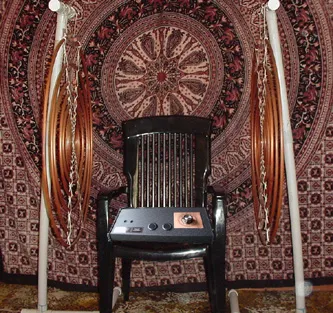
Lakhovsky's Multiple Wave Oscillator
|
Lakhovsky
believed that living cells are batteries;
the nucleus
holds the positive charge and the cytoplasm
carries the negative. If cells were irradiated
with a range of electromagnetic oscillations,
they could be "recharged" and
thus rejuvenated. A range of frequencies
is necessary because the cell and its
parts respond to different frequencies
|
More
Information on the MWO Click here
Related posts:
Can Humans Live to 1,000? Some Experts Claim
We Can — Others
Want to Prevent That
The Immortalist: Aubrey De Grey on Aging -Can
He Keep Us Young?
Enhancing Evolution: Do
Humans have a Moral and Ethical Duty to Improve the Human Race?
End of Aging -The
Next Great Paradigm Shift?
The Story of a Biologist & the Extension of the Human
Life Span
“ Longevity Genes” Solve
Centenarian Paradox
Pathway to Longevity
Discovered
“ Long Live The Queen!” Longevity & Queen
Bees
|