|
Candida is a type of fungus (yeast)
which exists in the body. In a healthy body, it doesn`t
cause any problems, but when an overgrowth occurs, it can
result in a condition called candidiasis. Candidiasis can
lead to many conditions in the body such as thrush, abdominal
bloating, chronic fatigue syndrome, depression and IBS
(Irritable Bowel Syndrome).
Candidiasis
Candidiasis is basically a twentieth century disease,
resulting from medical developments like antibiotics,
birth control pills, ulcer medications, and estrogen
replacement therapy (HRT). And it can be triggered at
a very young age, when children are first being treated
with antibiotics (ear and throat infections).
Candidiasis is a fungal infection that is caused
by a yeast known as Candida albicans.
This fungus is usually present in the mouth,
throat, gastrointestinal tract and the genital
region. It can also be present on the skin.
Under normal circumstances, the fungus does
not pose any risk to the body because the number
of the fungus is kept under control by other
bacteria. However, when the fungus multiplies,
that is when candidiasis sets in.Candidiasis
usually is seen to develop in people with compromised
immune system. If the infection is not treated,
it can become quite serious. Candidiasis can
develop in the blood, and from there it can
affect different organs of the body, including
the brain. |
Although widespread, candidiasis, or yeast overgrowth,
is generally overlooked by the medical establishment
because it's symptoms so closely mimic those of other
conditions. Alternative physicians, however, recognize
the seriousness of candidiasis, and where conventional
medicine has often been ineffective in treating candidiasis,
various alternative methods offer much hope for success.
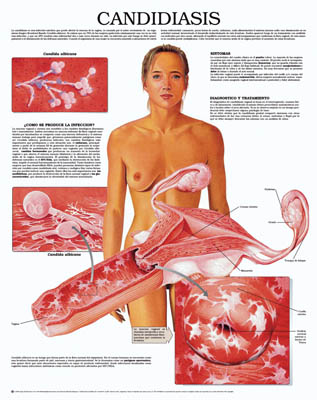
Everyone has candida, a form of yeast ( Candida Albicans
), normally confined to the lower bowels, vagina and
the skin. In healthy individuals with strong, functioning
immune systems, it is harmless and kept in check by "good" bacteria,
called Bifidobacteria and Acidophilus. But if the balance
of the intestinal environment is altered by a compromised
immune system or other factors, then opportunistic candida
proliferates, infecting other body tissues. The candida
becomes pathyogenic, transforming from a simple yeast
into an aggressive ( mycelial ) fungus that can severely
compromise one's health. This condition is known as "candidiasis".

According to James Braley, MD, medical director of Immuno
Labs, Inc., in Fort Lauderdale, Florida, the fungal form
of candida appears to permeate the gastro intestinal
mucosal lining and breaks down barriers to the blood
stream. " When the fungal form of the candida occurs
in the body, allergic substances can penetrate into the
blood more easily, where they form immense complexes,
and even promote food allergy reactions, " Dr Braley
says. Since their symptoms are often interrelated, he
emphasizes that candidiasis should usually be treated
together with food allergies.
Candida Symptoms
•Frequent stomach pains and digestion
problems
• Skin problems (skin infections, eczema, psoriasis, acne)
• Foggy brain / Trouble concentrating
• Constant tiredness and exhaustion
• Anxiety
• Mood swings
• Obsessive compulsive disorder (OCD)
• Anger outbursts
• Irritability
• Headaches
• Intense cravings for sugars, sweets, and breads
• Itchy skin
Just having one or two of the symptoms listed
above does not necessarily mean you have Candidiasis,
but having several of these could be sign of
a Candida overgrowth or food allergy, which has
similar symptoms. |
Candida is the most dangerous of all the germs
that can take over your intestinal tract after
being treated with Antibiotics,Cipro or doxycycline.
It is a member of the vegetable family.
It is a cousin to "molds". Yeasts
are among the oldest living life forms on earth.
They are a single celled life form containing
no chlorophyll. There are many different types
of yeast. Yeasts are common on plant leaves
and flowers, on the surfaces of skin and the
intestinal tract of animals. The type of yeast
that we use to make bread or brew alcoholic
beverages is different then Candida. These
are thought as food yeasts. Candida is not
a food yeast. It is not allowed to be used
in the making bread or beer etc. Candida is
thought of as pathogenic yeast. Pathogenic
means that it can cause disease.
Candida is referred to as "dimorphic",
which means it can exist or live in 2 different
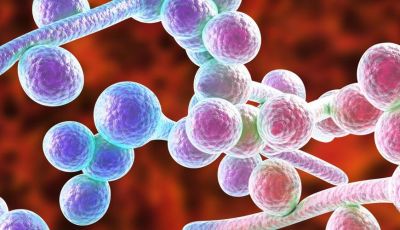
states or forms. As"yeast" it is
a single cell plant life. It has a large, round,
thick spore that is shaped like a chicken egg.
It is asexual, which means it does not need
a mate to reproduce. It reproduces by "budding" or
growing buds. Do you recall seeing buds forming
on the branches of trees or plants? Candida
looks similar. As it grows it resembles a bunch
of grapes. As it spreads it grows more branches,
which then "buds" more bunches of "grapes".
This is the way Candida appears in its other
form or state, which is "fungal".
Here it looks like lots of little beads strung
together by threads. Just like there are safe
yeasts, there are safe fungus. Mushrooms are
an example of a fungus, which does not produce
disease. Eating mushrooms will not cause candida.
Candida eats sugars and some fats that way
animals do. This is how it feeds. Candida loves
the dark, warm and moist environment of the
intestines. It attaches itself to the intestinal
wall and when it is in the fungal form tries
to bury itself deep into your intestinal lining.
It grows roots (like a weed) digging into the
lining of your intestinal tract looking for
food. When it does this it produces infections
and illness in your body.
|
Candida
is the most dangerous of all the germs that can take
over your
intestinal tract after being treated with Antibiotics,Cipro or doxycycline.
Candida albicans is a dimorphic organism.
This means that under normal conditions it is a sugar
fermenting budding yeast. In acidic pH or when our immune
system is weakened, it shifts into its fungal form and
becomes pathogenic (disease causing, harmful). This condition
is known as candidiasis. Candida overgrowth then sets
off a cycle that leads to the further weakening of the
body's defenses, which in turn allows candida to spread
even further.
When the protection of the useful microbes
and that of the intestinal lining is impaired,
proliferation of harmful organisms starts (dysbiosis).
Candida transforms itself from a harmless yeast
form to a pathogenic fungal form, a condition called
candidiasis. Antibiotics contribute to this state
twofold. They kill or suppress many of the useful
bacteria in the intestines (together with the bacteria
they were supposed to kill elsewhere in the body)
and also serve as growth promoting factors for
candida.
Dangers of uncontrolled candida
growth
When Candida growth becomes uncontrolled
the following happens: First, fungal metabolites
and/or toxins interfere with the functioning
of nutrient-uptake and their transfer into the
bloodstream. Then the fungus grows long stringy
structures (rhizoids) that can penetrate the
upper cell layer of the intestinal wall causing
symptoms very similar to those of Irritable Bowel
Syndrome.
Leaky Gut Syndrome
Over time, the rhizoids can penetrate
the gut wall and make it inflamed and porous
causing Leaky Gut Syndrome. The damage to the
gut from candida comes both from impaired biochemical
processes in cells of the intestinal lining and
the physical damage caused by the spread of the
rhizoids. In the next step the rhizoids break
down the barrier between the intestine and the
circulatory system in which case candida can
enter the bloodstream and spread throughout the
body (Systemic candida). Candida can invade virtually
any organ or part of the body where the defenses
(physical and immunological) are weakened.
Leaky Gut Syndrome is thought to be the
underlying cause of bowel disorders and very
likely the stage of candidiasis that contributes
substantially to food intolerances, environmental
sensitivities, allergies and asthma. Source |
 |
Candidiasis Symptoms in Men
Candida yeast infection in men can be regarded to be asymptomatic,
as it rarely cause physical signs, when compared with female yeast
infection. But when symptoms do occur, they include irritation
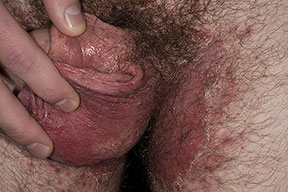
and inflammation of the area in the head of the penis, which may
be accompanied by soreness and itchiness. Reddening of genitals
and small blisters, may also occur in the same area. White discharge,
lesions, and burning sensation are some other symptoms of genital
candidiasis in men which may also be the other male yeast infection
symptoms. |
Candidiasis can affect areas of the body
far removed from candida colonizations in the gastro
intestinal tract and vagina. It's symptoms cover a broad
spectrum and the condition can cause a number of diseases
ranging from allergies, vaginitis, and thrush ( that
is a whitish fungus in the mouth or vagina ), to an invasion
of the genital-urinary tract, eyes, liver, heart, or
central nervous system. At it's most destructive, candidiasis
is involved in autoimmune diseases such as; Addison's
disease and Aids. Other symptoms of candidiasis, according
to Dr Braley, include digestive problems such as bloating,
cramping, gas and diarrhea, respiratory problems, coughing,
wheezing, earaches, central nervous system imbalances,
generalized fatigue, and loss of libido.

Symptoms of Candidiasis
There is a wide array of candidiasis symptoms depending
on individual age, sex, environmental exposures, and
immune systems. These include, but are not limited to:
Chronic fatigue, especially after eating
Depression
Gastro Intestinal problems such as: bloating, gas, intestinal cramps,
chronic diarrhea, constipation, or heartburn
Rectal itching
Allergies ( including both food and airborn )
Severe pre-menstrual syndrome
Impotence
Memory loss, severe mood swings, and feeling mentally " disturbed ".
Recurrent fungal infections such as " jock itch ", athelete's
foot, or ringworm
Extreme sensitivity to chemicals, perfumes, smoke, or other odors
Recurrent vaginal or urinary infections
Prostatitis
A feeling of being light headed or drunk after minimal wine, beer, or
certain foods
These symptoms worsen in moldy places such as basements or in damp climates,
and after eating or drinking yeast or foods containing sugar.
Causes of Candidiasis
Since many of it's symptoms are shared with other conditions,
candidiasis must be diagnosed by examining predisposing
factors in a thoughrough personal medical history. Leon
Chaitow, N.D., D.O., of London England, decribes the
likely candidate for candida overgrowth as someone whose
medical history includes:
Steroid hormone medication such as cortisone, or corticosteroids, often
prescribed for skin conditions such as rashes, eczema, or psoriasis;
prolonged or repeated use of antibiotics which are frequently given for
urinary and ear infections, sinusitis, bronchitis, and other infections;
ulcer medications such as "Tagamet" and "Zantac" or
oral contraceptives. Certain illnesses such as diabetes, cancer, and
aids can also increase susceptibility to candida overgrowth.
 |
|
 |
Many women get vaginal candidiasis,
which causes a thick white discharge accompanied
with itching and burning sensation. The infection
can also develop in the mouth in the form of
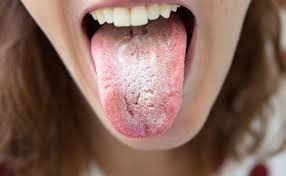
white ulcers on the tongue, gums and insides
of the cheek.
Both men and women are susceptible to candidiasis.
Breastfeeding mothers can pass on the infection
to babies through breast milk.It is very rare
for the infection to pass through sexual contact. |
As Leyardia Black, ND, of Lopez Island, Washington,
points out, " Candidiasis is basically a twentieth
century disease, a disease resulting from medical developments
like antibiotics, birth control pills, and estrogen replacement
therapy. It can be triggered at a very young age, when
children are first being treated with antibiotics." DR.
Chaitow agrees, " Fully thirty five percent of women
using birth control pills have associated causes of acute
vaginal candidiasis, and there are undoubtedly many others
who have less pronouced evidence of yeast overgrowth
as immune competence is gradually compromised by the
hormonal onslaught."

Murray Susser, MD, of Santa Monica, California, points
out that since yeast infections enter the body easily
through the vagina, and yeast festers in estrogen, women
of child-bearing age are more vulnerable to candidiasis.
Also, women who have been pregnant are susceptible, since
hormonal changes encourage candida overgrowth. When men
develop candidiasis, antibiotics, high sugar intake,
or immune suppression from illness, toxins, and stress,
are usually the root cause.
| Some research found that people with gastrointestinal
issues had high levels of Candida in their stool. These
conditions included:
inflammatory bowel disease
ulcerative colitis
Crohn's disease
Mouth Symptoms include:
white areas inside the mouth
red, inflamed tissue underneath the white patches, which may bleed
cracked corners of the mouth
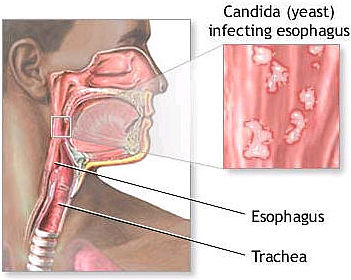
Esophagus
Symptoms include:
pain when swallowing
chest pain under the breastbone
Vagina Symptoms include:
itchy or sore vagina and vulva
thick, white discharge
pain during urination or sex
burning sensation
Blood Sometimes, Candida can spread to infect the
blood. This is known as deep, or invasive, candidiasis,
and
it can be life threatening. |
Frequently, candidiasis is caused by a combination of
factors. As Dr.Chaitow explains, " All too often
more than one influence is operating. Over a few years,
a patient may have had several series of antibiotics
for a variety of conditions while using steroids as well,
perhaps in the form of the contraceptive pill. If the
patient, most commonly a young woman, also happens to
be living on a diet which is rich in sugars, then the
candida is very likely to have spread beyond it's usual
borders into new territory."
Taking antibiotics or steroids for a long period
of time or having a weakened immune system can
lead to candidiasis. Even those suffering from
diabetes or having iron deficiency are prone to
this infection. |
As Dr. Chaitow points out, when the immune system is
completely suppressed, as in Aids, yeast proliferates
freely and colonizes the body and blood stream, leading
to septicemia (blood poisoning). In less drastic but
more prevalent cases, the immune system is temporarily
suppressed and T-helper cells (lymphocytes which pass
into the blood stream to help fight infection) are destroyed.
Such immune suppression can be due to any number of factors,
such as poor diet including ingestion of pesticides and
preservatives, alcohol use, chemotherapy, radiation,
exposure to enviromental toxins, antibiotics which injure
or destroy the T-cells, and stress. Consequently, conditions
are created for opportunistic infections and yeast to
grow.
Parasites
Fungi? Not Me!
Antibiotics
According to Dr. Sausser, antibiotics may be the single
greatest cause of candidiasis, because antibiotic treatment
for infections is non desriminatory, killing the "good " intestinal
chemistry-balancing bacteria, as well as the " bad " infection-causing
bacteria. Both acidophilus and bifidobacteria produce
natural antifungal substances as well as antibacterial
materials as part of their control mechanism over yeast.
One of the activities of the good bacteria is the manufacture
of a B vitamin, biotin, which exerts control over yeast.
When biotin is lacking, as a result of damage by antibiotics
to acidophilus, bifidobacteria, and the microflora ecology,
yeast has a chance to change from it's simple yeast form
into a different organism, an encroaching mycelial (
vegetative ) fungus.
Antibiotics can cause the altered inbalanced intestinal
environment that candida requires to change into it's
mycelial form. Dr. Chaitow explains, " Candida puts
down minute rootlets which penetrate the tissues on which
the yeast is growing. When this happens to be the inner
wall of the intestines, it breaks down the barrier which
exists between the closed world of the bowel and the
body. Toxic debris, yeast waste products, and partially
digested proteins are allowed into the blood stream,
resulting in allergic and toxic reations."
Healthy bifidobacteria and acidophilus intestinal colonies
can usually withstand one or two short episodes of antibiotics
without serious harm. If, however, use of antibiotics
is frequent or prolonged as with a course for acne treatment
or an infection, then the spread of candida becomes inevitable. " A
vicious cycle may develop as a result, antibiotics alter
the balance of intestinal flora and suppress the immune
system. An individual with suppressed immune function
is much more susceptible, not only to candidiasis but
to bacterial infections, which are then treated with
antibiotics, which, in turn, increase the growth of candida
and so on," says Dr. Chaitow.
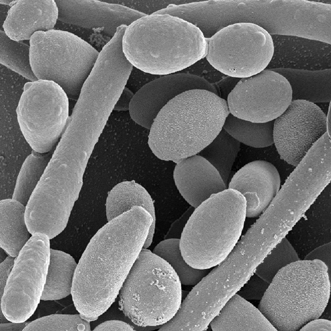
Image courtesy of http://www.chuv.ch/
|
Researchers at the Agency
for Science, Technology and Research's (A*STAR) Institute
of Molecular and Cell Biology (IMCB) have discovered
new molecular mechanisms that provide a more detailed
understanding of how the normally non-cancerous Dr.
Jekyll-like fungus known as Candida albicans transforms
into a serious and often life-threatening Mr. Hyde-like
form.
C. albicans can cause serious and potentially
life-threatening infections in the mouth, blood
and other tissues of people who are undergoing
cancer chemotherapy or radiation treatments,
or who have developed AIDS or other diseases
that damage the immunity of the individual.
In two separate papers published last month
in Developmental Cell and in August in the EMBO
journal, the team of scientists led by Wang Yue,
principal investigator at IMCB, have managed
to reveal previously unknown mechanisms which
are responsible for causing the infectious phase
of C. albicans.
The fungus starts its 'attack' on a patient
by changing its oval shape into a filamentous
form, which has thin, threadlike appendages emerging
from the cell body. Wang's team, who has been
studying C. albicans for more than seven years,
was responsible for identifying the master "controller" protein
called Hgc1 in 20041.
This "controller" functions like a
regulator and tells the fungus when to start
the transformation from the harmless oval shape
to the infectious filamentous form......... Source |
Parasites
are poisoning You
A medical test has been developed in which, after an
overnight fast, the individual is given 100 grams of
pure sugar. Blood samples taken both before the sugar
loading, and an hour after, are mesured for alcohol.
An increase of alcohol indicates yeast "auto-brewery" intoxication.
Another connection between alcohol and candidiasis has
been found in a study of 213 alcoholics at a recovery
center in Minneapolis. Test and questionaire results
indicated that candidiasis is a common complication of
alcoholism due to the combination of high sugar content
in alcohol and the inability of alcoholics to assimilate
nutrients. Additionally, female alcoholics with candidiasis
were significantly sicker than non alcoholic women with
candidiasis.
Many of the symptoms exhibited in alcoholism such as
insomnia, depression, loss of libido, headaches, sinusitis/post-nasal
drip, digestion and intestinal complaints, overlap with
those in candida overgrowth. Obviously, drinking alcohol
increases levels of sugar in the system. But other habits
of alcoholics are also at fault. Many alcoholics tend
to be smokers and so are at risk for respiratory infections
which are treated with ... antibiotics !
Treating Candidiasis
Successful treatment of candidiasis first requires the
reduction of factors which predispose a patient to candida
overgrowth. Secondly, the patient's immune function must
be strengthened. Diet, nutritional supplements, herbal
medicine, ayurvedic mBob
Becks protocolsedicine,,Rife and acupuncture are
some of the choices alternative physicians use to accomplish
these ends.
Try this simple
test to see if you have candida. First thing in
the morning, before
you put ANYTHING in your mouth, get a clear glass.
Fill with water and work up a bit of saliva, then
spit it into the glass of water. Check the water
every 15 minutes or so for up to one hour. If you
have a candida yeast infection, you will see strings
(like legs) traveling down into the water from the
saliva floating on the top, or "cloudy" saliva
will sink to the bottom of the glass, or cloudy specks
will seem to be suspended in the water. If there
are no strings and the saliva is still floating after
at least one hour, you are probably candida yeast
free.
|
|
Diet :
In order to overcome candidiasis, sugar must be avoided in all it's various
forms. These include : sucrose, dextrose, fructose, fruit juices, honey,
maple syrup, molasses, milk products (which contains lactose), most
fruit (except berries), and potatoes (whose starch converts into sugar).
Dr Black says, " In treating candida, my basic dietary taboos
are sweets, alcohol, and refined carbo-hydrates." Many candidiasis
sufferers also have allergies and sensitivity to various foods. Although
candida albicans yeast is not synonymous to yeast in foods, such as
bread, a cross-reaction between the food yeast and candida frequently
occurs. As a result, foods containing or promoting yeast, such as baked
goods, alcohol, and vinegar, should be avoided until possible sensivities
are clearly diagnosed.
According to Dr Susser, sugar in the diet can
greatly contribute to candida overgrowth. When
sugar is eaten, intestinal fermentation creates
a toxin called Acetaldehyde which affects all of
the body's physiological functions, including digestion
and hormonal processes. Yeast thrives on sugar
in order to grow, therefore, a high-sugar diet
is one of the predisposing factors for candidiasis. |
Dr Black states that some of her patients
are very sensitive to yeast and do better staying away
from yeast containing foods. To test for such sensitivity,
she takes patients off all yeast containing foods for
a week. Then she adds such foods back in the diet, one
at a time. If the symptoms reappear, then clearly yeast
containing foods should be avoided. Similarly, Dr Braly
employs a rotation diet when he suspects food allergies.
On this regiment, patients avoid certain suspected allergic
foods and rotate non allergic food every four or more
days. They are then later reintroduced to the suspected
foods after three to six months to see if symptoms are
provoked. Molds are another aspect of candida sensitivity.
These include food molds found in cheeses, grapes, mushrooms,
and fermented foods, and also environmental molds found
in wet climates, in damp basements, in plants and outdoors.
Molds and yeast can also exchange forms. Therefore, the
ingestable molds of cheeses and fermented foods should
be avoided. Avoiding food yeast and molds does not attack
the candida yeast itself, but is an attempt to ease stress
on the immune system caused by substances that can trigger
allergies.
I had my blood analyzed by a dark field
microscope after getting rid of the CFIDS virus
with 2 months of blood electrification and Magnetic
Pulsing. The doctor was practically shocked as
to how healthy my blood looked. It shouldn’t
of looked good after being sick 16 years but
it did. He said he could make a poster of it
to show all hiw clients and say “this is
what your blood should look like”.
19jaguar57 Says: February 25th, 2010 at
8:31 pm |
Dr Susser also advises patients to avoid yogurt because
of it's high sugar content, despite it's high concentration
of lacto-bacilli, which suppresses "bad" bacteria
and keeps other organisms under control. He finds that
freeze-dried acidophilus supplements
in capsule form are more effective in combating bacteria
than even unsweetened raw yogurt. Candida growth can
also be fostered in the diet through consumption of meat,
dairy, and poultry products due to the heavy use of antibiotics.
Traces of antibiotics given to dairy cows can later show
up in milk. Meat eaters should make sure that meat is
free of antibiotic contamination. Organic (hormone and
antibiotic free) meat and poultry should be consumed
whenever possible. For candidiasis patients, sea food
(free of mercury toxins) and vegatable protein are preferable
since they are not only antibiotic free, but lower in
fat. According to Dr Chaitow, both bifido-bacteria and acidophilus should
be supplemented during candidiasis treatment to help
repopulate the bowel, and for antifungal activity. This "good" bacteria
supplementation is called "Pro-biotics". Dr
Chaitow also recommends that other pro-biotic products
such as lactobacillus vulgaricus, be used to assist the
colonizing activities of bifido-bacteria and acidophilus.
Alcohol
Candidiasis patients should also stay away from all
alcohol since it is composed of fermented and refined
sugar. It is also more toxic than sugar and feeds yeast.
According to Dr Susser, alcohol suppresses the immune
system, disturbs the whole adrenal axis, and you can
say ampirically that it makes anyone with candida worse.
Some candidiasis sufferers will feel, and appear to be, intoxicated.
An unsual symptom of certain people with severe candidiasis is the presence
of alcohol in the blood stream even when none has been consumed. First
discovered in Japan, and called "drunk disease," this condition
creates strains of candida albicans which turn acetaldehyde (which is
the chemical created by sugar and yeast fermentation) into ethanol. This
is a process well understood by distillers of homemade brew. These candidiasis
patients whose yeast turns sugar into alcohol are chronically drunk.
They have developed what is only half-jokingly called "auto-brewery
syndrome".
Old Methods of Diet and Anti-Fungals Don't
Work
According to Dr. Simoncini in Italy, if you use diet and anti-fungals
against candida then you cause the candida to burrow deeper into
the body away from the intestines in search of simple carbohydrates
and away from the anti-fungals. Then the candida infection becomes
more invasive and more systemic. Then you can have candida in your
liver, kidneys, lungs etc |
Colloidal
silver provides a three-fold attack on the problems
of candida. First, the colloidal
silver kills off anaerobic bacteria and virii wherever
it comes in contact with them. Therefore, the colloidal
silver virtually provides a secondary immune system
against all types of disease and infections, while
treating the candida. Thus much of the problems of
candida are treated immediately, before the candida
can be cleaned out of the system. Second, colloidal
silver is unusually effective in treating the candida
infection itself. And third, colloidal silver has
a strange and dynamic way of healing injured and
damaged tissues fast. Since yeast infections of all
kinds usually attack and consume the living tissue,
a healing process is badly needed, and colloidal
silver has a very unique way of healing these tissues
fast.
Externally users continually report that
colloidal silver will cure athlete's foot, vaginal yeast
infections, as well as candida infections of the skin
very quickly and then heals the damaged tissues.
What does it mean if someone gets better
using these devices but still doesn't feel totally
healthy? It means that he/she has gotten rid of the
source of the problem but not the results of the problem.
The results may be a congested liver, weakened adrenals,
mineral imbalances, low thyroid output, lessened acidophilus
count in the intestines, weakened cardiovascular system,
kidney stones, gallbladder stones, systemic Candida,
hard to kill intestinal bacteria and parasites, and
countless other nusances.
"This tripulser 9
is great against candida - the most effective
tool I've used. I've been
using it daily for 3 weeks now and it has been
doing wonders - I am very grateful to you for
your efforts. I've had candida for my whole
life and been fighting it for around 2 years
now so
I know how hard it is to kill candida. I've
tried around 30+ remedies and all have worked
to a
certain extent but your zapper is certainly
the most effective. "
Neil S London |
Alternative physicians and biologists
such as Dr. Hulda Clark and Dr. Bob Beck have used
electric current stimulation to control parasites and
candidas. They postulate that, since every species
has its own unique vibration rhythm, it should be possible
to destroy a parasite without harming the host, by
inducing resonance through electric stimulation. This
became the underlying principle for constructing the
zapper, a device that generates an electric current
of appropriate frequency, “recharges” the
human organism and helps to control harmful micro-organisms
Some
interesting units to help with Candida
As Bob Beck has said, the only thing keeping
the devices and procedures mentioned in these pages from
working is if a person doesn't use them. Too many times
I have listened to people complain repeatedly about their
health problems, declaring they are willing to do almost
anything to get relief. Yet these same people somehow
never quite manage to actually do anything.
|
Heavy
Duty Colloidal silver generator
|
|
Bob
Beck Combo unit
 Colloidal
silver generator |
Blood
Electrification |
|
|
Tripulser 3
Micro
Magnetic Pulser |
Colloidal
silver generator |
Blood
Electrification |
|
There are four parts to The Beck Protocol.
Three of them are in the Multi pulser
 |
Multi-Pulsar
3 in
1 Multi System
 Totally
Solid State Design, Totally
Solid State Design,
High
Quality Capacitors
Variable
speed from
1 pulse
to 75 pulses
a minute.
.
Colloidal
Silver Generator
Silver
Rods
Bob
Beck Type blood zapper
Wrist
Straps
Bob
Beck type magnetic
pulser 6500-7000
gauss at 7 pulses
per min
1-60
min
Timer
Intensity
Control
Double
the penetratioin
of the sota pulser
You
can
hear
the
magnetic
pulser
pulse
Doesn't
over
heat
after
a
short
time
120-240
Volts
(The
correct
voltage
is
sent
for
your
country)
click
here for more info |
| |
|
|
The Fourth part to the Bob Beck protocol
Water
Ozone 400mgh
Ideal for purifying air, cleaning fish tanks,
removing airborne dust, smoke, mold, and pet odors,
purifying drinking water, and enriching oils for skin
therapy.
|
SPECIAL |
Multipulser
and the latest 400mgh Ozonator/Ioniser |
|
500mgh
Water Ozonator
1 500 MGH Ozone Generator
2 Air stone
3 Silicone Tube
4 Power Adapter
5 Instructions
|
|
|
|
|
Boost your immnune system
Recovery :
Although self-help is therapeudic for candidiasis, a
health regimen should be undertaken with the guidance
of a practitioner who understands the condition and is
willing to try a variety of treatment options. Recovery
from chronic candidiasis seldom takes less than three
months and is usually well advanced by six months, but
it can take longer to recover completely. Medical studies
show that until bowel candida is under control, local
manifestations will continue to appear (such as vaginal
thrush). Local treatment alone (for thrush, or other
symptoms ) is not enough.
liferesearchuniversal.com/
|