
Email
us
HOME |
RELAXATON
TOOLS ARE WITHIN YOUR REACH !!!
http://www.altered-state.com/mind/david_paradise_xl_plus.htm
http://www.altered-state.com/mind/np10098.htm
http://www.altered-state.com/mind/innerpulse.htm
http://www.altered-states.co.nz/mind/luma10.htm
http://www.altered-states.co.nz/alphathetastim/index.htm
EMOTIONAL
Often feel anxious: Suffer from the "blues:
Over-excitability: Feel unhappy most of the time:
Worry a lot: Become easily discouraged:
Experience little joy: Have frequent crying spells:
Suffer from nightmares: EASILY BECOME IRRITATED:
Seldom pass compliments: Lack a sense of humour:
Have a nervous laugh: Exhibit bad temper:
Feel frustrated : You often find fault with yourself:
Feel "no one cares: Hold uncertain beliefs:
Suffer from overwork because you can't say no: Get embarrassed when people
compliment you:
Stress and Distortions
in Thinking
Stress also affects what people think. When individuals are very
stressed, particularly if they become anxious or depressed, their
ability to think clearly
and objectively may be affected. People can easily feel less capable or weaker
than they truly are, and think that their situation is much worse than it really
is. These kinds of subtle distortions in thinking can be difficult to identify.
When one has a thought such as "I just cannot do anything right" or "this
is hopeless," he or she may take it for granted that the thought is true.
This is not necessarily so because people's thoughts can be completely untrue.
An exaggerated inaccurate thought such as "I'm totally worthless," may
be believed because the feeling behind it is true; it reflects a true feeling
of despair or hopelessness. It is too easy to accept distorted thinking that
goes along with an emotion and act as if it is true. People sometimes deny
that their thinking is affected by their feelings. Believing distorted or negative
thoughts makes it more difficult to work effectively to address one's problems.
If individuals really believe that everything is hopeless and that they will
never do anything right, they are less capable of critically assessing their
situation in order to improve it. If one is depressed and feels hopeless enough,
sometimes it seems easier to throw up his/her hands in despair than to deal
with the real problems. The only way to know if a thought is accurate is to
look directly at the thought as it occurs and examine it.
SOCIAL
Experience a sense of isolation: Harbour resentments
Suffer from loneliness: Lash out at others
Experience lowered sex drive Frequently nag others
Reduced contact with friends Lack of intimacy
Your family relationships are less than satisfactory Feel uncomfortable in
interactions with others
Have poor relations with work associates Often distrusting
Tend to use people for personal gain Don't know, or care, about your neighbours
Clam up in group discussion Seldom take your family out
Think drinking and driving is acceptable
SPIRITUAL
Experience a sense of inner emptiness Life has no meaning
The future looks bleak You are unforgiving
See very few positive things in life Often a martyr
Frequently cynical Feel apathetic
Have self-doubts about your work Constantly need to prove yourself
Feel your life has been wasted Look for "magic" solutions to problems
Doubt your ability to succeed Have a morbid fear of death

Just slow down Lewis Carroll
put the feeling of spinning chaos that comes from go-go-going
too fast in a nutshell when he
wrote
of "life becoming a spasm and history a whiz". Sometimes
you spend days just rushing from one meeting or task to the next,
but no matter how hard you push yourself, you still end up feeling
as if you haven't accomplished anything. As an experiment, see if
you can make a conscious effort to slow down - both your thinking
and your actions. If you do this, you'll be pleasantly surprised
to discover that, despite your slower speed, you will become far
more effective, as well as more relaxed. Try these tips when things
get out of control:
MANAGING STRESS
Learning to successfully manage stress begins with our willingness to take
an honest look at ourselves. Although people and situations do contribute
to stress, the events that affect people from the outside are beyond their
control. It is too easy to blame stress on other people or situations that
the individuals
cannot control. It is more productive to take personal responsibility for the
stress that an individual experiences and to look for things that he or she
can change. One can reduce stress, briefly, by taking a vacation or just by
pulling the covers back over his or her head in the morning. However, the vacation
will not last forever, and eventually one will need to return to face all of
the things that he or she wanted to escape. Instead of hoping that the stress
will disappear, one can remember that stress will always be a part of life.
Success and happiness will depend on how well one can cope with, or manage,
the stress.
Commitment to Change
Once people have identified the stress in their lives, they need to commit
themselves to creating change. It takes time and energy to make change happen.
For many people, the most difficult part of learning to manage stress is finding
the time. It may seem that time-pressure is one of the main causes of stress;
there is just not enough time to accomplish what life demands. When people
feel overwhelmed, it is difficult to begin. How can they find the additional
time necessary to learn to manage stress? This attitude misses the point. Many people spend more time, energy and money on
their cars than they do on themselves. They are more likely to take the time
to change the oil in the car than to take a few minutes to stop and give themselves
a break. But just like a car, if people do not take care of themselves, they
will not function as well and will eventually breakdown. Taking the time to
manage stress is good preventative maintenance for life. The time that it takes
is more than repaid in increased efficiency and happiness.
Stress Management Techniques
Many techniques can help to manage stress. No one technique is best for everybody.
Each person must decide what will work best for him/her. It is not helpful
to recommend exercise for someone who hates physical activity, and it is difficult
for someone to meditate if they hate to sit still. All stress management techniques
are simply tools. These tools can help someone learn to work more skilfully
with stress and to have new and more effective ways to deal with difficult
situations.
They must, however, be actively applied. Even though someone has learned to
use a hammer, he or she still needs to get the hammer out of the toolbox every
time he or she needs to drive a nail. Likewise, just because someone has learned
stress management techniques, he or she still needs to take them out of the
stress management toolbox and put them to work.
No technique will make all stress go away. It is best when people use their
own judgment and intuition to decide which techniques to use. People should
not be afraid to try different things before deciding what is best for them.
Once they have found some strategies that work, they need to commit to practising
them.
Exercise
Exercise is one of the best ways to manage stress. Aerobic exercise, exercise
that makes the heart and lungs work harder, actually helps the body to use
up excess stress-induced hormones. Regular exercise helps the body to react
less dramatically to stress. Some research suggests that exercise also helps
to lift one's spirits and decrease depression.
In beginning an exercise program, it is important to start slowly. It is not
so helpful to start an exercise program with a lot of enthusiasm and then stop
exercising in a week or two because it is too stressful. Of course, it is recommended
that people check with their regular physicians before beginning any exercise
program; however, almost no one is too old or too out-of-shape to begin to
exercise.
Meditation
Meditation is a very effective stress management technique. Meditation sounds
exotic, but it is really just a way to learn to relax and settle the mind.
A relaxed, settled mind is less anxious and copes better with stress. One type
of widely-used meditation is called "mindfulness meditation." It
teaches the meditator to rest his or her mind steadily in the present moment
even during stressful experiences. This creates a deep sense of relaxation
and mental clarity. Anxious fears about the past or the future become less
troubling.
A recent report to the National Institute of Health concluded that, "More
than 30 years of research, as well as the experiences of a large and growing
number of individuals and healthcare providers, suggest that meditation and
similar forms of relaxation can lead to better health, higher quality of life
and lowered healthcare costs." The report went on to say, "Most important,
meditation techniques offer the potential of learning how to live in an increasingly
complex and stressful society while helping to preserve health in the process."
RELAXATON TOOLS ARE WITHIN YOUR
REACH !!!
http://www.altered-state.com/mind/david_paradise_xl_plus.htm
http://www.altered-state.com/mind/np10098.htm
http://www.altered-state.com/mind/innerpulse.htm
http://www.altered-states.co.nz/mind/luma10.htm
http://www.altered-states.co.nz/alphathetastim/index.htm

Other Stress Management Tools
Yoga is another popular stress-management tool. It combines aspects of both
exercise and meditation; it can help people to slow down their minds and create
relaxation in their body. Psychotherapy can also be very effective in reducing
stress. Aspects of one form of psychotherapy, called cognitive therapy, have
been incorporated into many stress-management programs. Other effective and
widely-used stress-management techniques include progressive muscle relaxation,
massage, light and sound and biofeedback. It is also important to remember
that when severe stress begins to cause depression, or affects someone's ability
to function at home or at work, medication prescribed by a doctor or Homoeopath
may be very helpful.
ACTION SECTION
Using mind Technology for relaxation, stress reduction and boosting immune
function
Among the ways mind technology can be effective in boosting immune function
is by: (1) producing deep and lasting relaxation to reduce stress and the damaging
effects it can have on the body and immune system, and permit the body's homeostatic,
self-regulating powers to maintain the immune system at optimal strength; (2)
altering brain body chemistry to produce optimal levels of the various components
of the immune system and to produce feelings of well-being and to increase
self-confidence; and (3) helping change stressful or immune impairing behavior
patterns and attitudes through eliminating negative scripts and atitudes and
using positive suggestions, visualizations, and rescripting, during deeply
relaxed or trancelike states. What follows are some suggestions for ways you
can use mind tools for these purposes.
http://www.altered-states.co.nz/mpower/para.htm Some brain tools can be extremely helpful when used
during a medical treatment session - for enhancing guided imagery;
producing states of heightened receptivity to healing suggestions and
affirmation; opening up the unconscious to permit the emergence of
beliefs, traumas, or attitudes that may be harming your health or immune
function. Hundreds of medical professionals and therapists around the
world are using mind tools as an integral part of their treatment of
various types of illness or immune dysfunction.
http://altered-states.net/mind/david.htm
Michael Dullnig, M.D., of Sacramento, California, for example, has used various
dual-induction and binaural-beat audio tapes in conjunction with his counseling
of HIV-positive patients. In a 1990 study he noted that all patients in the
study showed improvement in psych9ological target symptoms, and some showed
significant increases in T4 cell counts, important components of the immune
system. William Harris, M.D., director of the Penwell Foundation, an organization
for the investigation, research, and application of different modalities for
the treatment of those with AIDS/HIV, has used light/sound (LS) devices with
HIV-positive patients and found them extremely effective. He speculates that
the devices may boost immune function by producing states of deep relaxation,
by enhancing the patients' receptivity to suggestions for healing, by improving
their ability to visualize and the clarity of their visualizations. Says Harris, "I
think that this type of machine may actually be stimulating
. The body
to produce its own chemical substances," and that these natural substances
may enhance immune function and healing.
RELAXATON TOOLS ARE WITHIN YOUR
REACH !!!
http://www.altered-state.com/mind/david_paradise_xl_plus.htm
http://www.altered-state.com/mind/np10098.htm
http://www.altered-state.com/mind/innerpulse.htm
http://www.altered-states.co.nz/mind/luma10.htm
http://www.altered-states.co.nz/alphathetastim/index.htm
These Mind tools should be effective for people to use in conjunction with
treatment, for people who feel that they are not as healthy as they would like
to be, and for those who feel healthy enough but would like to protect themselves
from the possibly damaging effects of stress and environmental toxins and attain
a state of peak or optimal health and well-being.
Relax, Review, Release, Rescript
The human body has an inherent "wisdom" or tendency to move toward
balance, equilibrium, and stability. The optimal state, in which all parts
and systems are functioning and interacting properly, is called homeostasis.
Evidence suggests that our bodies homeostatic or self healing mechanisms work
most effectively when we are relaxed. Stress disrupts homeostasis.
One way stress does this is by disrupting our natural
chemistry. For example, when Type A men (hard-driving, with high levels
of hostility) are under stress, they secrete forty times as much cortisol
and three times as much adrenaline as Type B (less hostile and aggressive
men. Cortisol suppresses immune function. These chemicals also are
a key to the fight or flight response - they rev up the body, leading
to increased blood pressure, faster heart rate, and other stressful
symptoms. That's why Type A men under great stress have high rates
of hypertension (high blood pressure), heart attacks, suppressed immune
function, and other problems.
Relaxation reduces levels of cortisol and adrenaline and allows them to return
to normal. For Example, in comparisons of cortisol levels in subjects relaxing
in a reclining chair in a dimly lit room with subjects using a flotation tank,
the floaters had drops of over 20 percent, while the control group showed no
change. Repeated periods of deep relaxation using mind tools have been shown
to have a threshold effect, so that after several weeks individuals undergo
lasting personality transformations. Several studies suggest that Type A personalities
using brain technology may not only experience reduced blood pressure and boosted
immune function, but may be changed in a more essential way, becoming less
hostile and more satisfied.
RELAXATON TOOLS ARE WITHIN YOUR
REACH !!!
http://www.altered-state.com/mind/david_paradise_xl_plus.htm
http://www.altered-state.com/mind/np10098.htm
http://www.altered-state.com/mind/innerpulse.htm
http://www.altered-states.co.nz/mind/luma10.htm
http://www.altered-states.co.nz/alphathetastim/index.htm
Research has indicated
that subjects with a high level of perceived stress to certain
life events experienced a greatly decreased
level
of immune response - they had only a third of the level of "natural
killer cell activity" of those who experienced the same life events
but perceived them as less stressful, for example, they had steep reductions
in salivary immunoglobulin A (IgA). IgA speeds healing, reduces the
danger of infection, and controls heart rate; reduced Iga is linked
with lowered resistance to disease. It had long been known that deep
relaxation can boost natural killer cell activity and IgA. Now there
is evidence that mind technology can accelerate this effect. In one
study at the Medical College of Ohio, both "wet" and "dry" flotation
produced major increases in IgA; there were no changes in a control
group, which just sat quietly for twenty five minutes.
Regular deep relaxation seems to reset our homeostatic
mechanism so that we have a higher stress tolerance - what was once
perceived as highly stressful is now perceived as less stressful. This
improves immune function.
Also, deep relaxation makes us feel good. In part, this happens because were
released from the stresses of life. In part, it's a result of the release of
the bodys natural happiness molecules.
Simply relaxing for a short period every day can reduce stress, strengthen
immune function, and produce long - lasting reductions in levels of harmful
biochemicals and increases in levels of healing biochemicals.
Stimulating Neurochemicals
Research by Dr. C Norman Shealy and others shows that light stimulation alone
(with the Lumatron and simple red LED goggles) and Light and sound machine
devices can increase levels of a variety of neurochemicals and hormones, including
endorphines and growth hormones. This may explain many of the benefits noted
by users, ranging from alleviation of stress, anxiety, depression and pain,
to increased mental alertness and memory.
RELAXATON TOOLS ARE WITHIN YOUR
REACH !!!
http://www.altered-state.com/mind/david_paradise_xl_plus.htm
http://www.altered-state.com/mind/np10098.htm
http://www.altered-state.com/mind/innerpulse.htm
http://www.altered-states.co.nz/mind/luma10.htm
http://www.altered-states.co.nz/alphathetastim/index.htm
Deep Relaxation
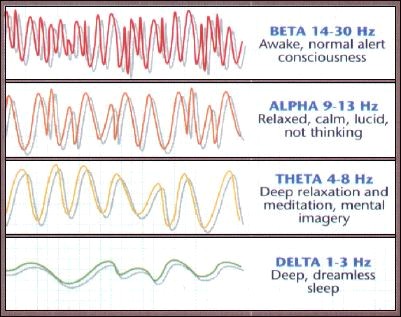
Dr Norman Thomas and his associate David Siever, at the University or Alberta,
gave a group of experimental subjects Light and sound (LS) stimulation at an
alpha frequency for fifteen minutes, while they were being monitored for muscle
tension, using an electromyograph (EMG), and for finger temperature. A control
group, similarly monitored, was asked simply to relax, without any LS devices,
for the same fifteen minutes. Significantly, both the experimental group and
the control group were what the researchers called "resistant" or "non-hypnotisable" subjects.
While the control
subjects stated that they believed they were very relaxed, the
EMG and finger temperature monitors showed
that they were
actually experiencing increased amounts of muscle tension and decreases
in finger temperature (associated with tension or stress). On the other
hand, the LS group showed dramatic increases in relaxation, reaching
profound relaxation states that continued for long periods after the
fifteen minutes of LS. The researchers wrote: "It appears that
audio-visual stimulation offers a simple hypnotic device in otherwise
resistant subjects."
Relaxation for Sedation
In 1988 anesthesiologist Robert Cosgrove Jr., Ph.D., M.D., undertook preliminary
studies of LS. In his initial evaluations, Cosgrove, an authority in pharmaceutics
and biomedical engineering, notes that LS was "clearly very powerful
in its ability to cause deep relaxation in most subjects. Its effectiveness
has been so great that we are very enthusiastic about the prospect of evaluating
the (device) for its sedative properties in patients prior to, during, and
immediately following surgery. We are also undertaking studies to prove (its)
utility in chronic stress."
Deciding on a Stress Management Technique
No single strategy is right for everyone. Each person must take an honest look
at him/herself and decide what makes the most sense. The most important factor
in determining the success of a stress management program is not the type of
technique that is used, but rather the commitment that each person makes to
change. It is difficult for people to change long-standing habits even when
those habits create discomfort, unhappiness and stress. Change is possible,
however, and the most difficult changes often provide the greatest benefit.
Working to reduce stress can enhance happiness and health for many years. It
does make a difference!
Trust
your inner knowing, follow your bliss

MANY ILLNESSES
Many illnesses can be caused or affected by stress: Ulcers, colitis, heart
problems--even colds. It has been said that eight or nine out of every ten
hospital beds are filled with people who have some kind of stress related problem.
Even if you don't get sick from stress, it feels uncomfortable, decreases your
energy, disturbs your sleep, increases irritability, and may cause problems
at home, at work, and everywhere else (increasing the stress--a vicious cycle).
* Seventy to eighty percent of all visits to the doctor are for
stress-related and stress-induced illnesses. * People who live in a high state of anxiety are 4.5
times
more likely to die of a heart attack or stroke.
* Stress contributes to fifty percent of all illnesses
in the
United States.
* Stress-related injuries on the job climbed from
five
percent of all occupational disease claims in 1980 to more
than fifteen percent in 1990.
* The cost of job stress in the United States is estimated
at
$200 billion annually, including costs of absenteeism, lost
productivity and insurance claims.
* Seven of ten respondents to a national poll in 1995
said
they felt stress in a typical workday, while forty-three
percent of those interviewed said they suffer noticeable
physical and emotional symptoms of burnout.
* According to a Johns Hopkins University study of
12,000
workers, the highest stress job categories include: lawyers,
secretaries, data entry and computer operators, special
education teachers and school counselors, typists, health
aides, waiters and waitresses, food preparation workers
and sales personnel. All do demanding work for which
others set the rules.
IDENTIFY SYMPTOMS
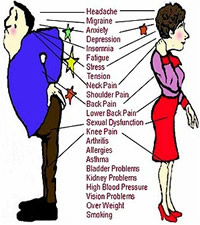
The following exercise may assist you to identify symptoms that could be stress-related
in five areas of human Experience: from frequent physical, mental, emotional,
social and spiritual.
Mark the items that you experience REGULARLY.
SURPRISED
If you are surprised by the number of symptoms you identify, then take immediate
action to improve your stress toughness.
PHYSICAL
A B
Suffer headaches or migraines : Often feel fatigued or worn out:
Experience digestive upsets: Unexplained rashes or itches of the skin
Recurrent and persistent stomach ulcers: Exercise infrequently
Increased consumption of alcohol and tobacco: You are overweight
Occasionally suffer from pounding heart: Suffer from chest pains
Drink more than 4 cups of tea or coffee High Blood Pressure
Smoke more than 10 cigarettes a day: Often aware of body tension
Regularly experience tension in back of neck or head:
Often take sleeping pills or tranquilizers: Frequently catch colds or flu
MENTAL
Mental attitudes are generally negative: You easily get confused
Suffer from mental lethargy: Find it difficult to concentrate
Make negative statements about yourself: Worry over exams
Mind is often in a whirl: Frequently suffer from forgetfulness
EMOTIONAL
Often feel anxious Suffer from the "blues"
Worry a lot Become easily discouraged
Suffer from nightmares EASILY BECOME IRRITATED
Seldom pass compliments Lack a sense of humour
Have a nervous laugh Exhibit bad temper
You often find fault with yourself Feel frustrated
Feel "no one cares Over-excitability
I give and receive affection regularly, almost always often , some times, rarely,
never:
SOCIAL
Experience a sense of isolation: Harbour resentments
Experience lowered sex drive: Frequently nag others
Reduced contact with friends: Lack of intimacy
Feel uncomfortable in interactions with others: Often distrusting
Have poor relations with work associates: I'm a victim
Tend to use people for personal gain: Lash out at others
Clam up in group discussion: Think drinking and driving is acceptable
SPIRITUAL
Experience a sense of inner emptiness: Life has no meaning
The future looks bleak : Feel your life has been wasted
See very few positive things in life: Often a martyr
Have self-doubts about your work: Frequently cynical
Constantly need to prove yourself : Feel apathetic
Look for "magic" solutions to problems: You are unforgiving
Doubt your ability to succeed: Have a morbid fear of death
HUMOR
"Laughter is free, legal, has no calories, no cholesterol, no preservatives,
no artificial ingredients, and is absolutely safe."
Conversations often begin with "Put the gun down, and then we can talk"
"Family meetings" are often mediated by law enforcement officials.
RELAXATON TOOLS ARE WITHIN YOUR
REACH !!!
http://www.altered-state.com/mind/david_paradise_xl_plus.htm
http://www.altered-state.com/mind/np10098.htm
http://www.altered-state.com/mind/innerpulse.htm
http://www.altered-states.co.nz/mind/luma10.htm
http://www.altered-states.co.nz/alphathetastim/index.htm
Do yourself a favor. Practice any or all of these
stress busters. They can mean the difference
between good health and bad.
1.
Laugh. It's one of the healthiest antidotes to stress.
When we laugh, even smile, blood flow to the brain is
increased, endorphins (painkilling hormones that give us a
sense of well-being) are released, and levels of stress
hormones drop.
2.
Socialize. Don't be a loner. Isolation has been tied to
failure to cope adequately with stress, heightened
vulnerability to illness and even premature death.
3.
Get Rid of Anger. It is the single most damaging
stress-related personality trait that precedes a heart attack.
4.
Be Decisive. Indecision prevents you from taking action,
causing a loss of a sense of control and thus intensifying
stress.
5.
Be Assertive. Stand up for your decisions, express your
feelings, disagree with others when you feel differently,
give, as well as accept, compliments.
6.
Get Some Sleep. Lack of adequate sleep can make you
moody, angry and more vulnerable to illness and the daily
stressors that stalk you.
7.
Adapt Your Environment. Color, lighting and noise are
all elements that engage and influence our senses. They can
work against you, adding stress -- or for you, as
environmental stress reducers.
8.
Encourage Yourself. If you're inclined to blame
yourself for your problems -- even when they're not your
fault -- you may be guilty of negative self-talk, which is a
great stress maker. Those who accept mishaps as largely
routine and normal occurrences in life and who talk to
themselves in positive terms about these events have higher
self-esteem and much lower stress levels.
9.
Choose Winners. Seek the company of those who are
optimistic and have high self-esteem. They tend to have
low stress levels and contribute to lower stress levels to
those around them.
10.
Reward Yourself. Go to the movies, browse in a
bookstore. Those who reward themselves by engaging in
something pleasurable realize a boost in the
disease-fighting quality of their immune systems for
several days.
11.
Establish Rituals. People who have high stress in their
lives tend to live surrounded by mental and physical chaos.
Establishing rituals can help prevent and reduce stress by
saving time. It can be a comfort factor in times of stress
when predictability and certainty reassure us that no matter
how bad conditions get, some things remain constant.
12.
Nurture Your Spirituality. Religious or spiritual
beliefs give us a context larger than ourselves, which can
provide us with perspective when we are deeply stressed.
Spirituality needn't take place in a formal place of
worship. It may mean no more than communing with nature
or taking quiet, reflective time out of your day to
contemplate something more than life's mundane stresses.
13.
Take Note. Writing down your feelings in a diary may
help relieve emotional stress. This is especially helpful for
those who have trouble talking about problems. In a study
conducted by psychologist James W. Pennebaker, Ph.D., of
Southern Methodist University, participants wrote for 20
minutes a day over four consecutive days about issue or
emotions that were causing them stress. Those who stuck to
the exercise showed improved mental health and were
better able to cope with stress.
14.
Play Around. The next time you're feeling anxious or
stressed, take a break and do something childish: find
crayons and draw a picture, rent a favorite childhood
movie, borrow some fun children's books or find a few old
favorite toys.
15.
Slow Down. Try moving, talking and behaving in a
relaxed, slower manner and see if it doesn't let some of
your stress ebb away. For instance, drive ten miles per
hour slower; pause at the table before you eat; take an
after-work shower; let the phone ring a few times before
answering.
16.
Get a Pet. Whether it's a dog, cat, bird or fish, a pet
can play a vital role in stress relief. A Johns Hopkins
Medical Center study found that fifty out of fifty-three
people with pets were alive a year after their first heart
attacks, while only seventeen of thirty-nine of those without
lived a year.
17.
Take Vacations. It's an ideal time to gain perspective
on your day-to-day life and to put aside the stress load for
a few days. It's important to get a total change of scenery, a
new environment. Workers who use their vacations to
work at home are not recharging nearly as well as they
would if they were away from home for the same period.
18.
Take Up a Hobby. If you pursue a hobby you
genuinely like, you're apt to get so absorbed in it that you
don't notice time passing. You'll forget stress and reach a
level of total relaxation.
19.
Delegate. Those who don't learn to delegate become
overloaded with unfinished tasks, making them stressed,
less productive and isolated by their excessive
expectations.
20.
Be In Control of Your Finances. A survey of 11,000
adults in Prevention magazine showed the number-one
source of stress is worry over personal finances. Research
also shows that people trying to maintain lifestyles they
can't afford are more likely to have health problems.
21.
Don't Procrastinate. It lessens productivity, not only
compounding stress but also causing the stressful
by-products of guilt, anger and low self-esteem. And the
worse stress gets, the greater the tendency to procrastinate
becomes.
22.
Live by Lists. Having a daily written list of what you
expect to do will help you become more realistic about
your schedule and remind you of tasks you do not want to
forget. By listing a task, you also relieve stress by
removing the thought from your mind, which helps to lessen
mental overload, a common occurrence in stressed people.
23.
Eat Right. What you eat can promote or relieve stress
and help or hinder the body in how it handles the physical
stress response. Stay healthy and stress-resistant by taking
time out for meals, eating at regular times, avoiding sugars
and fats. If you are stressed out and need a break from
anxiety, try foods low in fat and protein and high in
complex carbohydrates for a calming effect. If you're
looking to concentrate your energy to help get you through a
stressful day, look for food that enhances alertness.
24.
Exercise. To work away your tension and fortify
yourself against the negative physical effects of stress, try
these tips: squeeze something (such as a squishy ball); do
an aerobic activity; take a walk; swim.
25.
Relax. Breathe deeply. Visualize something
pleasurable. Meditate. Concentrate on present, tangible
situations. Inhale aromatic oils. Listen to soothing music.
Just to give you an idea of how stress is
controlling our lives, here are some facts for you
to mull over. Don't let them get you down.
26. Buy a light and sound machine.
RELAXATON TOOLS ARE
WITHIN YOUR REACH !!!
http://www.altered-state.com/mind/david_paradise_xl_plus.htm
http://www.altered-state.com/mind/np10098.htm
http://www.altered-state.com/mind/innerpulse.htm
http://www.altered-states.co.nz/mind/luma10.htm
http://www.altered-states.co.nz/alphathetastim/index.htm
 TO
HELL WITH THIS I WANT TO STAY STRESSED:-
"THESE ARE NOT RECOMMENDATIONS"

* NEVER EXERCISE: Exercise wastes a lot of the time that could be spent worrying.
And of course EAT ANYTHING YOU WANT:
*GAIN WEIGHT: Work hard at staying at least 25 pounds over your recommended
weight.
*TAKE PLENTY OF STIMULANTS: The old standards of caffeine, nicotine, sugar,
and cola will continue to do the job just fine.
*AVOID "ALTERNATIVE' PRACTICES: Ignore the evidence suggesting that
light and sound tools, meditation, yoga, deep breathing, and/or mental imaging
help
to reduce stress.
*GET RID OF YOUR SOCIAL SUPPORT SYSTEM: If a few people persist in trying to
be your friend, avoid them.
*PERSONALISE ALL CRITICISM: Anyone who criticises any aspect of your work,
family, dog, house, or car is mounting a personal attack. Don't take the time
to listen, be offended,
*THROW OUT YOUR SENSE OF HUMOR: Staying stressed is no laughing matter, and
it
shouldn't be treated as one.
*MALES AND FEMALES ALIKE-BE MACHO: Never ask for any help, and if you want
it done right, do it yourself!
*BECOME A WORKAHOLIC: Put work before everything else, and be sure to take
work home evenings and weekends. Keep reminding yourself that vacations are
for sissies.
*DISCARD GOOD TIME MANAGEMENT SKILLS: Schedule more activities every day than
you can possibly get done, then worry about it all whenever you get a chance.
*PROCRASTINATE: Putting things off to the last second always produces a marvellous
amount of stress.
*WORRY ABOUT THINGS YOU CAN'T CONTROL: Worry about the stock market,
earthquakes, the approaching Ice Age. You know, all the big issues.
*BECOME NOT ONLY A PERFECTIONIST BUT SET IMPOSSIBLY HIGH STANDARDS: and either
beat yourself up, or feel guilty, depressed, discouraged, and or Inadequate
when you don't meet them.

|
Please
send this page to a friend
|
 |
Top
of Page |