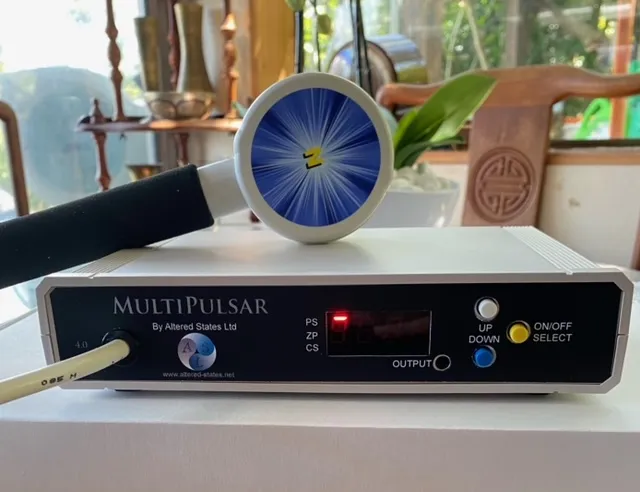
Frequency Specific Microcurrent (FSM) Stimulation is a
fascinating area of alternative health, particularly for
its potential in vision enhancement.

FSM involves the use of low-level electrical currents
to target specific frequencies that match the natural frequencies
of various tissues and conditions in the body. By applying
these currents, proponents believe that cellular function
can be improved, leading to various health benefits, including
vision enhancement.
Conditions Treated: FSM
has been explored for various eye conditions, including
macular degeneration, retinitis pigmentosa, glaucoma, and
general vision enhancement. By targeting specific frequencies
associated with these conditions, FSM aims to improve eye
function and health.
Here are some key points about FSM
for vision enhancement:
| "The mechanism of microcurrent is felt to be
the following; 1) !ncreases the circulation to the
eye,
2) Stimulates
the function of the retinal cells and 3) Reduces scar
tissue. The effects of 10 to 500 microamps on the cellular
level have been documented by Dr. Cheng to increase
ATP production by 500%, increase protein synthesis
by 70% and increase cell transport by 40%. "Dr. Kondrot |
Studies and anecdotal reports suggest that FSM can improve
various aspects of eye health by enhancing circulation,
reducing inflammation, and promoting cellular activity.
For example, improvements have been noted in patients with
age-related macular degeneration (AMD) and other retinal
diseases. Research has documented improvements in vision,
with some patients experiencing significant benefits? (Frequency
Specific Microcurrent)?
Microcurrent improves vascular circulation
Mechanism of Action: FSM is thought to work by increasing
ATP (adenosine triphosphate) production, reducing inflammation,
and promoting cellular repair. This can be particularly
beneficial for eye health, where cellular regeneration
and reduced inflammation can improve vision.
Non-Invasive: "One
of the appealing aspects of FSM is its non-invasive nature.
The currents used are extremely
low , with minimal reported
side effects. This makes it an attractive option for those
seeking alternative treatments."?
Research and Evidence: While anecdotal evidence and some
preliminary studies suggest positive outcomes, FSM is still
considered experimental in mainstream medicine. More rigorous,
large-scale studies are needed to fully validate its efficacy
for vision enhancement.

Case Reports
Practitioner Reports: Many practitioners of FSM therapy
report positive outcomes in their patients, including improvements
in vision. These reports often include individual case
studies where patients experience enhanced visual acuity
and relief from specific eye conditions.
Patient Testimonials: Numerous testimonials from patients
suggest that FSM has helped with various eye issues, including
macular degeneration, retinitis pigmentosa, and general
vision improvement.
Preliminary Studies and Reviews
Review Articles: Reviews on FSM therapy highlight its
mechanisms and potential applications. They discuss the
theory behind how specific frequencies might influence
cellular repair and reduce inflammation, which can be beneficial
for eye health.
Small-Scale Studies: Some small-scale studies and pilot
trials have indicated potential benefits of FSM for eye
health. For instance, a study by Carolyn McMakin, a pioneer
in FSM therapy, has shown promising results in using FSM
for treating various health conditions, including vision-related
issues.
Dr. Carolyn McMakin is
a prominent practitioner and researcher in FSM therapy.
She has published work and conducted seminars
on the applications of FSM across various health conditions.
Her book, "Frequency Specific Microcurrent in Pain
Management," discusses many aspects of FSM, though
it primarily focuses on pain rather than vision. However,
her work lays the foundational understanding of how FSM
can be applied to different conditions, including those
related to the eyes.
Dr. Edythe Heus is another notable figure who has used FSM in her practice.
She has worked with athletes and other
individuals, using FSM to improve overall health and performance,
which may include vision health as part of a holistic approach.
Specific Reports and Research
Case Studies and Anecdotal Evidence: Practitioners like
Dr. McMakin and Dr. Heus have shared numerous case studies
and anecdotal evidence where FSM has positively impacted
patients' vision. These are often found in seminars, practitioner
workshops, and specialized publications within the FSM
community.
.Dr. Joel Rossen and Dr.
Grace Halloran have been pioneers in
this field. Dr. Rossen, who initially focused on TENS
devices for pain management, transitioned to using
FSM for eye conditions. His work, along with Grace
Halloran's, demonstrated some success in treating her
own hereditary Retinitis Pigmentosa using microcurrent
devices. Their collaborative efforts refined the treatment
protocols, leading to the development of the Integrated
Visual Healing program, which has shown promising results?
Published Articles: .
Microcurrent
stimulation in the treatment of dry
and wet macular degeneration
Articles published in the Townsend Letter discussing
Frequency Specific Microcurrent (FSM) and its application
in eye
health.
FSM and Eye Health: Articles in the Townsend Letter
describe how FSM has been used to treat various eye conditions,
including macular degeneration and retinitis pigmentosa.
Dr. Carolyn McMakin has documented the effects of FSM
on the nervous system and inflammatory processes, which
are relevant to eye health. These articles highlight
clinical successes and suggest that FSM can help improve
retinal health and reduce inflammation, which is beneficial
for eye conditions.
Additionally, Dr. Marc Grossman's integrative approach
to macular degeneration, featured in the Townsend Letter,
includes FSM as part of a comprehensive treatment strategy
that also emphasizes nutritional support and lifestyle
changes to improve eye health and reduce inflammation?
(The
current e-Letter)?.
For
more detailed information and to access these articles,
you can visit the Townsend Letter website and search
for articles related to FSM and macular degeneration.
This will provide you with in-depth insights and case
studies on the topic.
Macular Degeneration
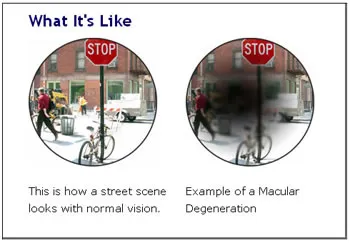
Treatment: Specific articles have
noted the use of FSM in treating dry and wet macular
degeneration, demonstrating improvements in vision. The
articles discuss the underlying mechanisms, such as improved
circulation and cellular repair facilitated by FSM.
Kjartansson J, Lundberg T 1990 Effects Of Electrical
Nerve Stimulation (ENS) In Ischemic Tissue. Scandinavian
Journal of Plastic and Reconstructive Surgery and Hand
Surgery 24: 129-134
Debreceni L, Gyulai M, Debreceni A, Szabo K 1995 Results
Of Transcutaneous Electrical Stimulation (TES) In Cure
Of Lower Extremity Arterial Disease. Angiology 46:
613-618.
Kaada B 1982 Vasodilation Induced By Transcutaneous
Nerve Stimulation In Peripheral Ischemia (Raynauds
Phenomenon And Diabetic Polyneuropathy). European Heart
Journal 3:303-314
Kaada B 1983 Promoted Healing Of Chronic Ulceration
By Transcutaneous Nerve Stimulation. (TNS) VASA 12:
262-269
Microcurrent improves
cellular activity
Cheng, Ngok, The Effects Of Electrical Current On
ATP Generation, Protein Synthesis And Membrane Transport
In Rat Skin, Clinical Orthopedics and Related Research,
171 (Nov.-Dec. 1982) 264-271
Microcurrent and Macular
Degeneration
Edward C. Kondrot, MD. Microcurrent Stimulation: Miracle
Eye Cure. Berekley, CA North Atlantic Books: 1999
Kondrot, EC, Initial results of Microcurrent Stimulation
in the treatment of Age related Macular Degeneration
2000 Townscend Newsletter
Michael, OD, Leland D. and Merrill J. Allen, OD, Ph.D.,
Nutritional Supplementation, Electrical Stimulation
and Age Related Macular Degeneration. Journal of Orthomolecular
Medicine, 8 third Quarter (1993) Number 3
Miller, MD, ND Damon P, The treatment of Macular degneration,
Stargardts Disease, Retinitis Pigmentosa and Other
Retinal Disease with Microcurrent Stimulation Therapy
, 2000

Microcurrent Stimulation in the Treatment of Dry and
Wet Macular Degeneration
In this 2015 study published in the journal Clinical
Ophthalmology we see a small study with 15 people with
both wet and dry macular degeneration. If you are considering
a program utilizing microcurrent stimulation you will
be pleased with the results shown in this study. Only
microcurrent stimulation was used in this study and treatments
were only done once a week. Still, some improvement in
vision was seen, mostly in those in those study participants
with dry macular degeneration. Source

Vitamins
Minerals and supplements
Holistic Approach: FSM fits well within a holistic approach
to health, often combined with other alternative therapies
like acupuncture, nutritional supplements, and lifestyle
modifications to support overall eye health.
The FDA states that microcurrent should not be used with
patients who have pacemakers or have a seizure disorder.
Some practitioners have used microcurrent on patients with
these conditions but it is necessary that one get a letter
of
clearance from their cardiologist or neurologist. .
More Information
Now you can have the best of both worlds
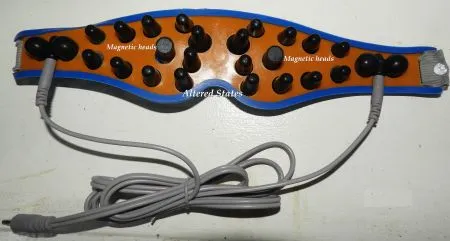
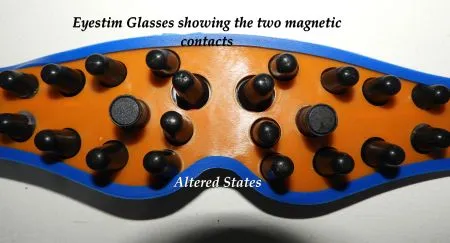
Much of the research on the use of magnetic
fields in eye disorders
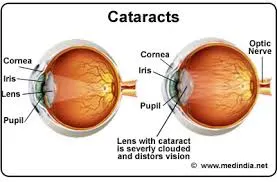
has come from Eastern Europe PEMFs
and the eyes
Frequency
Specific Microcurrent PEMF Stimulation Eye
Mask
for use with Rife Pro machine and BTPro/ owners

Already
have our Rife unit?
Frequency
Specific Microcurrent PEMF Stimulation Eye
Mask
|
BTPro with the
Eyemate option
BT
Pro Multi system
 Full
LED screen
Built
in frequencies
0.5
Hz
1.5
Hz
5.0
Hz
7.83
Hz
10
Hz
100.00
Hz
Plus
the Full BT6-BT11 Beck Protocol 1000.00 Hz + 111.00
Hz
Over
500 Natural Harmonic frequencies
Fully
Rechargeable Batteries/Charger (included),,and the
charger is sent for the voltage of your country
Timer
: 5 - 60 mins
Intensity
Control
Very
portable
Instructions
High
Quality Ear clips
LCD
Screen
|
BT Pro Master
Unit
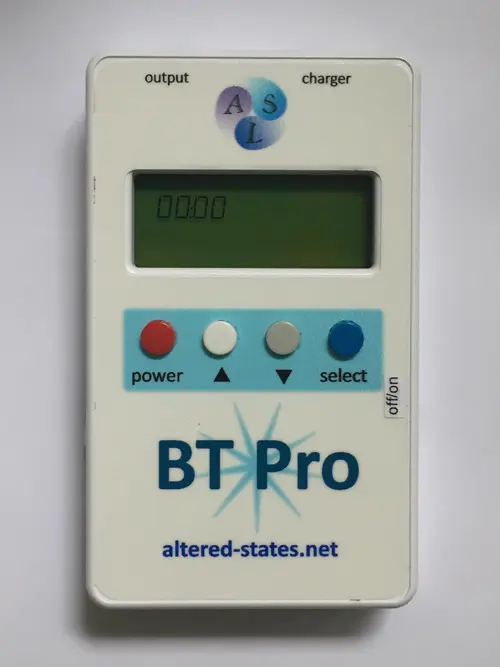
Larger Screen with more information
16bit Processor for faster more accurate
settings
More Amazing Add on programs
Very durable case
The use
of micro current stimulation to help eye problems
Frequency
Specific Micro current Stimulator
Frequencies
5Hz,
292 Hz,, 292.7Hz ,30 Hz, 30.7Hz,,9.1 Hz 9.8Hz and
0.3 Hz ,,10hz ,, 0.7 Hz,, 14Hz 1.5Hz, 3.6 Hz ,95hz
137 Hz, 18Hz 1.5hz, 3.6 hz 137Hz 1Hz
Each
frequency will run for aprox 24 sec.
Eye
mask with pemf and silicon carbon contacts
|
|
|
10
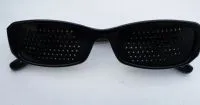
Different Styles |

When your eyes are placed behind normal prescription
glasses, you fall into a trap where you no longer
use the focusing muscles in your eyes to the fullest.
This important ciliary muscle begins to weaken, requiring
visits to your eye doctor for stronger and stronger
glasses. You can reverse this downhill slide and
help develop your eye muscles now by
More
information click here |
|