|
Diabetes and
Pulsed electro magnetic fields
In insulin-dependent diabetes, the diabetic's body fails to make insulin,
a hormone essential to the metabolism of glucose. Glucose enters the
blood stream from the food that we eat and, in the presence of insulin,
is taken up and "burned" by cells that require this essential
fuel. In the absence of insulin, however, glucose accumulates in the
blood causing the condition known as high blood sugar (hyperglycemia),
while the cells starve for fuel.

Without taking insulin injections, the diabetic will slowly starve
to death despite abnormally high blood sugar levels. Why does a diabetic's
body fail to produce insulin? Within the pancreas, the Islets of Langerhans
produce insulin in response to blood glucose.
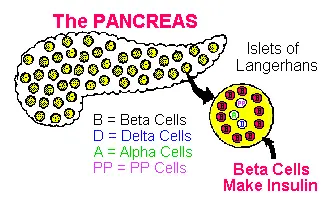
These islets are tiny insulin factories that sense the level of glucose
in the blood stream, and produce insulin in precise proportion to that
level. Therefore, following a meal, blood sugar levels will rise significantly,
and the islets will release a large amount of insulin. This insulin will
cause body cells to take up the sugar, causing blood sugar to quickly
return to its normal range. Once blood sugar is in the normal range,
the islets will reduce the output of insulin to an idling state. In this
way, the islets adjust their production of insulin on a minute-by-minute
basis, always producing just enough insulin to deal with the amount of
blood sugar presently in the blood stream. In insulin-dependent diabetes,
the islets are destroyed by the person's own immune system, which mistakenly
identifies these essential cells as foreign invaders. This self-destructive
mechanism is the basis of many so-called autoimmune diseases. Once the
islets are killed, the ability to produce insulin is lost, and the overt
symptoms and consequences of diabetes begin.
okay thats interesting but can pulsed electro
magnetic field help diabetes,, Firstly
What is Pulsed Electo-Magnetic Field Therapy
A living cell is surrounded by a membrane through which important materials
must pass, -in and out. The membranes’ ability to open and close
is called permeability. Permeability is controlled by an electric phenomenon,
which is influenced by magnetic fields. Pulsed Electro-Magnetic Field
Therapy is the application of pulsating electro-magnetic fields which
support the body to remain healthy and pain-free by stimulating each
and every cell to retain its’ permeability.
How does it work?
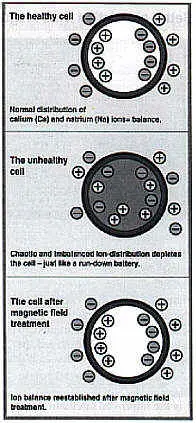
All cells that make up tissue or bone have a weak natural electrical
current flow caused by electrically charged particles called ions.
Pulsating electro-magnetic fields work by stimulating ions and regulating
their function, improving their interaction, which in turn accelerates
healing and prevents cells from degenerating and dying.
But can pulsed electro magnetic
field help Diabetes???
well many scientist think
so
PULSED ELECTROMAGNETIC FIELD THERAPY IN CERTAIN DISEASES
Diabetes mellitus: Blood sugar level in diabetes slowly reduce when
treated with Pulsed electromagnetic Field. The reduction in blood sugar
level can be brought to a near normal or normal stage.
This reduction is mostly because of increased metabolism of glucose
in the tissues and increase in the production of insulin in the pancreas
and its utilization at the receptor level. Gastro-intestinal conditions
in which PEMF Therapy is effective are GASTRITIS, PEPTIC ULCER, ULCERATIVE
COLITIS, IRRITABLE COLON, HEMORRHOIDS etc.
20 Diabetes mellitus (DM)
patients were exposed to impulsed magnetic field, 100 control DM patients
received conservative therapy alone.
270 patients had microangiopathy,
macroangiopathy was diagnosed in 50 patients.
Magnetotherapy in combination
with conservative methods gave good and satisfactory results in 74%
of patients versus 28% in control group.
Metabolism stabilization
resulted in some patients in reduced blood sugar. Use of magnetic field
produced faster and longer response than conservative therapy.
PMID: 8999182, UI: 97062022

Neurosci Behav
Physiol. 2003 Oct;33(8):745-52.
The use of pulsed electromagnetic fields in treatment of patients with
diabetic polyneuropathy.
Musaev AV, Guseinova SG, Imamverdieva SS.
Science Research Institute of Medical Rehabilitation, Baku, Azerbaidzhan.
Clinical and electroneuromyographic studies were performed in 121 patients
with diabetic polyneuropathy (DPN) before and after courses of treatment
with pulsed electromagnetic fields with complex modulation (PEMF-CM)
at different frequencies (100 and 10 Hz). Testing of patients using the
TSS and NIS LL scales demonstrated a correlation between the severity
and frequency of the main subjective and objective effects of disease
and the stage of DPN. The severity of changes in the segmental-peripheral
neuromotor apparatus--decreases in muscle bioelectrical activity, the
impulse conduction rate along efferent fibers of peripheral nerves, and
the amplitude of the maximum M response--depended on the stage of DPN
and the duration of diabetes mellitus. The earliest and most significant
electroneuromyographic signs of DPN were found to be decreases in the
amplitude of the H reflex and the Hmax/Mmax ratio in the muscles of the
lower leg.
Application of PEMF-CM facilitated regression of the
main clinical symptoms of DPN, improved the conductive function of peripheral
nerves, improved the state of la afferents, and improved the reflex excitability
of functionally diverse motoneurons in the spinal cord. PEMF-CM at 10
Hz was found to have therapeutic efficacy, especially in the initial
stages of DPN and in patients with diabetes mellitus for up to 10 years.
Diabetes
In this study, 320 diabetics
received impulsed magnetic field treatment while 100 diabetics (controls)
received conservative therapy alone. Results showed beneficial
effects with respect to vascular complications in 74 percent of the
patients receiving magnetotherapy combined with conservative methods,
compared to a 28-percent effectiveness rate among controls.
I.B. Kirillovm, et al., Magentotherapy
in the Comprehensive Treatment of Vascular Complications of Diabetes
Mellitus, Klin Med, 74(5), 1996, . 39-41.
This study involving 72 diabetics
with purulent wounds found that magnetic fields aided healing
significantly.
R.A. Kuliev & R.F. Babaev,
A Magnetic Field in the Combined Treatment of Suppurative Wounds in
Diabetes Mellitus, Vestn Khir Im I I Grek, 148(1),
January 1992, . 33-36.
Diabetic
ulcers and poor circulation
Have You suffered a foot or leg injury and it has taken a long time
for the wound to heal. Or it doesn't heal at all... the wound just
gets bigger
and deeper. An infection makes it worse.
This scenario will sound familiar to diabetics. Sometimes, however,
this also seems to happen to people who don't have diabetes. Or do they??
A lot of people have diabetes without even realizing it. There must
be at least as many people who don't know they have diabetes as there
are people who do know they have diabetes! This is why it's essential
that diabetes is detected as soon as possible and that people who have
diabetes are properly treated. They need to keep their blood sugar level
under control. Their feet need to be inspected regularly. If not, this
happens...

When you suffer a foot or leg injury, it takes a long time to heal.
Or it won't heal at all; the wound just gets bigger and deeper. An infection
makes it worse.
Why wounds don't heal properly
In the long term, a diabetic's bodily functions start deteriorating.
For instance, the blood circulation is affected, as too are the nerves,
resulting in little or no feeling in the feet. Diabetic patients typically
develop ulcers in the extremities of their body due to poor circulation
and insensitivity? and that's when the trouble starts.
Thin skin?
Your skin is less saturated with blood and becomes thinner. If you wear
the same (wrong) shoes for a long time, stub your toe, tread on a sharp
object? you are more likely to get a cut or blister compared with a person
with healthy skin.
|
Currently, about 250,000 people with diabetes in the United
States undergo leg amputation each year as the end result of chronic
leg ulcers that did not heal from conventional or lack of wound
care |
And you don't feel it?
You have no feeling in your feet, which means you don't feel any pain
and you don't notice the injury.
It won't heal?
The bad blood circulation has another negative effect. Normally, blood
transports different chemicals and cells to the injury site; chemicals
that make the tissue grow together again and cells that fill the gap
in the wound; cells that neutralize all harmful bacteria.
|
Diabetic foot ulcers are sores on the feet that occur in 15% of
diabetic patients some time during their lifetime. The risk of lower-extremity
amputation is increased 8-fold in these patients once an ulcer develops. |
|
Fracture healing is a process of restoring the structural
and biological properties of injured bone. It has been well documented
that diabetes
mellitus (DM), a systemic disease affecting 17 million Americans,
causes increased healing time with a concomitant increase in delayed
unions and nonunions.
Sheldon S. Lin, MD |
A vicious circle?
If you don't realize you have a cut or a scratch, the wound will get
bigger. Healthy tissue dies off. The wound gets deeper and affects underlying
tissue, such as muscles and tendons, and healing becomes increasingly
difficult. The wound becomes an easy 'gateway' for infections. The rest
of your foot or leg may also be affected, resulting in this tissue dying
off too. This is known as gangrene and may ultimately result in the amputation
of your toe, foot or (lower) leg
Diabetes (purulent wounds)
This study involving 72 diabetics with purulent wounds found that
magnetic fields aided healing significantly.\
R.A. Kuliev & R.F. Babaev, "A Magnetic Field
in the Combined Treatment of Suppurative Wounds in Diabetes Mellitus,
" Vestn Khir Im I I Grek, 148(1),January 1992, .
33-36. |
Frequency medicine: The FDA knows it all
If you had to convince the FDA that pulsed electric or magnetic field
can kill pathogens, you would
have a hard time, especially if you were a member of the Alternative
Medicine community.
But, luckily you do not have to. The FDA already knows!
You can find all about disinfection with pulsed electric fields right
here, with a large number of scientific references here
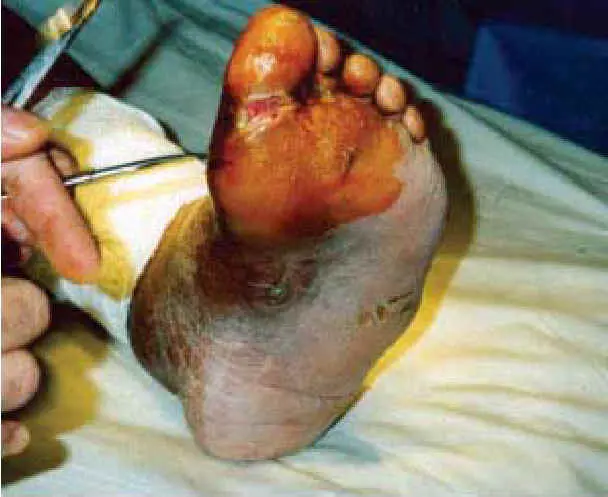
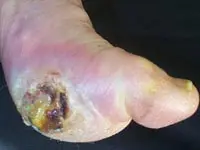
DO PULSED ELECTRO-MAGNETIC FIELDS WORK ON
DIABETIC ULCERS ???
Warning these graphic pictures may disturb some people
Look here
|
|
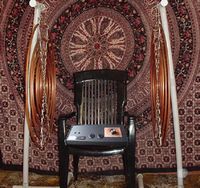
Multiwave
oscillators
When the
outside sources of oscillations are in sympathy,
that is they are exactly the same frequency
as that produced
by the cell, the strength and vigor
of that cell will be reinforced and
become stronger. The cells of disease
causing organisms within an infected
person, produce different frequencies
than that of normal, healthy cells.
Source
PEMF
"Treatment with the multiple-wave oscillator mobilizes the body’s own self-healing
reserves. Thus the range of diseases
that can be treated is infinite. Degenerative
conditions develop when the body’s
self-healing reserves lose their power.
Infections, cancers, inflammations,
skeletal degeneration and organ dysfunctions
then develop, but often such conditions
can be reversed if these reserves are
revived.
More
information click here
|
|
|
Rife
pro optio 2h-7h
"Royal
rife developed "Five" Rife machine prototypes ,the fith rife machine(beam ray)was reported to be the
most powerful"
""I
can assure you that no one, not even myself,
could help but be astounded at the results
we are now obtaining with the assistance
of our new machines and our new band of
MOR's.(Mortal oscillatory rate)" (Letter from Dr. Johnson to Dr. Gruner (copy sent to Dr. Rife) dated, November
4, 1936."."
PEMF
"None
of Dr. Rife's previous instruments ever
had the capability that this instrument
had.. Dr. Johnson pointed this fact out
in his letter. "The major difference between this new Rife Ray #5 Clinical instrument and Dr.
Rife’s previous instruments is the fact that this new instrument could produce over
one hundred harmonic side bands simultaneously.
It was this new harmonic sideband capability
in this Beam Ray Clinical instrument which
makes this sweep we are discussing on this
page possible."
The
worlds most advanved multi purpose Fully Automatic Rife/Hoyland System Read more here
Can a Rife Machine Help?
Enter
in a problem/ see if there is a known frequency
|
|
|
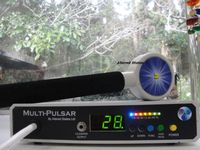
Multipulser
PEMF
Pulser combo
Very
powerful 6500-7000 gauss magnetic pulser
Bob
beck type blood zapper
Colloidal
silver generator
Multipulser
|
|