Pain Management with Pulsed Electromagnetic Fields - by William Pawluk, M.D., MSc
Pain Management with Pulsed Electromagnetic Field (PEMF) Treatment
The issue of pain treatment is an extremely
urgent health and socio-economic problem. Pain, in acute, recurrent and
chronic forms, is prevalent across
age, cultural background, and sex, and costs North American adults an estimated
$10,000 to $15,000 per person annually. Estimates of the cost of pain do
not include the nearly 30,000 people that die in North America each year
due to non-steroidal anti-inflammatory drug-induced gastric lesions. 17%
of people over 15 years of age suffer from chronic pain that interferes
with their normal daily activities. Studies suggest that at least 1 in
4 adults
in North America is suffering from some form of pain at any given moment.
This large population of people in pain relies heavily upon the medical
community for the provision of pharmacological treatment. Many physicians
are now referring
chronic pain sufferers to non-drug based therapies, that is, "Complementary
and Alternative Medicine," in order to reduce drug dependencies, invasive
procedures and/or side effects. The challenge is to find the least invasive,
toxic, difficult and expensive approach possible.
The ability to relieve pain is very variable and unpredictable, depending on the source or location of pain and whether it is acute or chronic. Pain mechanisms are complex and have peripheral and central nervous system aspects. Therapies should be tailored to the specifics of the pain process in the individual patient. Psychological issues have a very strong influence on whether and how pain is experienced and whether it will become chronic. Most effective pain management strategies require multiple concurrent approaches, especially for chronic pain. It is rare that a single modality solves the problem.
Static or electromagnetic fields have
been used for centuries to control pain and other biologic problems,
but scientific evidence of their effect
had not
been gathered until recently. This review explores the value of magnetic
therapy in rehabilitation medicine in terms of static magnetic fields
and time varying
magnetic fields (electromagnetic). A historical review is given and
the discussion covers the areas of scientific criteria, modalities of
magnetic
therapy, mechanisms
of the biologic effects of magnetic fields, and perspectives on the
future of magnetic therapy.
In the past few years a new and fundamentally different approach has
been increasingly investigated. This includes the use of magnetic fields
(MF),
produced by both
static (permanent) and time-varied (most commonly, pulsed) magnetic
fields (PEMFs). Fields of various strengths and frequencies have been
evaluated.
There is as yet no “gold standard”. The fields selected will
vary based on experience, confidence, convenience and cost. Since there
does not appear
to be any major advantage to any one MF application, largely because of
the unpredictability of ascertaining the true underlying source of the
pain, regardless
of the putative pathology, any approach may be used empirically and treatment
adjusted based on the response. After thousands of patient-years of use
globally, there very little risk has been found to be associated with MF
therapies. The
primary precautions relate to implanted electrical devices and pregnancy
and seizures with certain kinds of frequency patterns in seizure prone
individuals.
Magnetic fields affect pain perception in many different ways. These actions are both direct and indirect. Direct effects of magnetic fields are: neuron firing, calcium ion movement, membrane potentials, endorphin levels, nitric oxide, dopamine levels, acupuncture actions and nerve regeneration. Indirect benefits of magnetic fields on physiologic function are on: circulation, muscle, edema, tissue oxygen, inflammation, healing, prostaglandins, cellular metabolism and cell energy levels.
Most studies on pain use subjective measures
to quantitate baseline and outcome values. Subjective perception of pain
using a visual
analogue scale (VAS) and
pain drawings is 95% sensitive and 88% specific for current pain
in the
neck and shoulders and thoracic spine.
Measured pain intensity (PI) changes with pain relief and satisfaction
with pain management. A 5%, 30%, and 57% reduction in PI correlated
with "no," "some/partial," and "significant/complete" relief.
If initial PI scores were moderate/severe pain (NDS > 5), PI had to be reduced
by 35% and 84%, to achieve "some/partial" and "significant/complete" relief,
respectively. Patients in less pain (NDS < or = 5) needed 25% and 29%
reductions in PI. However, relief of pain appears to only partially contribute
to overall
satisfaction with pain management.
Several authors have reviewed the experience with PEMFs in Eastern Europe and the West. PEMFs have been used extensively in many conditions and medical disciplines. They have been most effective in treating rheumatic disorders. PEMFs produced significant reduction of pain, improvement of spinal functions and reduction of paravertebral spasms. Although PEMFs have been proven to be a very powerful tool, they should always be considered in combination with other therapeutic procedures.
Since the turn of this century, a number of electrotherapeutic, magnetotherapeutic and electromagnetic medical devices have emerged for treating a broad spectrum of trauma, tumors and infections with static and PEMFs. Their acceptance in clinical practice has been very slow in the medical community. Practitioner resistance seems largely based on confusion of the different modalities, the wide variety of frequencies employed (from ELF to microwave) and the general lack of understanding of the biomechanics involved. The current scientific literature indicates that short, periodic exposure to pulsed electromagnetic fields (PEMF) has emerged as the most effective form of electromagnetic therapy.
The ability of PEMFs to affect pain is
dependant on the ability of PEMFs to positively affect human physiologic
or anatomic
systems. Research is showing
that the human nervous system is strongly affected by therapeutic
PEMFs. Behavioral and physiologic responses of animals to
static and extremely
low frequency
(ELF) magnetic fields are affected by the presence of light.
Light strengthens
the effects of PEMFs.
One of the most reproducible results of weak, extremely low-frequency
(ELF) magnetic field (MF) exposure is an effect upon neurologic
pain signal processing.
PEMFs have been designed for use as a therapeutic agent for
the treatment of chronic pain in humans. Recent evidence
suggests that PEMFs would
also be an
effective complement for treating patients suffering from
acute pain. Static magnetic field devices with strong gradients
have
also been
shown to have therapeutic
potential. Specifically placed static magnets reduce neural
action
potentials and alleviate spinal mediated pain. The placebo
response may explain
as much as 40% of an analgesia response. The central nervous
system mechanisms responsible
for the placebo response are an appropriate target for magnetic
therapies. Magnetic field manipulation of cognitive and behavioral
processes
is seen in animal behavior studies and in humans. This may
also be one
of the mechanisms
of the use of MFs in managing pain.
Some of the mechanisms of PEMF effects
Magnetotherapy is accompanied by an increase in the threshold
of pain sensitivity and activation of the anticoagulation
system. PEMF treatment
stimulates production
of opioid peptides; activates mast cells and increases
electric capacity of muscular fibers. Long bone fractures that
did
not unite
over 4
months to 4
years are repaired in 87% of cases with 14-16 hr of daily
PEMF treatment. Several of these devices are FDA approved.
PEMF
of 1.5- or 5-mT field
strength, proved
helpful edema and pain before or after a surgical operation.
PEMF for 15-360 minutes increases amino acid uptake about
45%. PEMF for 2 hour induces changes in transmembrane energy
transport
enzymes,
allowing
energy
coupling and increased biologic chemical transport work.
The density of pigeons’ brain mu opiate receptors decreases by about 30% and therefore their pain perception. A 2 hr exposure of healthy humans was found to reduce pain perception and decreased pain-related brain signals. Biochemical changes were found in the blood of treated patients that supported the pain reduction benefit.
Normal standing balance is subject to control by the vestibular area of the brain. PEMF couple with muscular processing or upper body nervous tissue functions. 200-uT PEMFs cause a significant improvement in normal standing balance in adult (18-34 year old) humans. Further evidence of the sensitivity of the nervous system on MFs.
Various MFs with different characteristics reduce pain inhibition in various species of animals including land snails, mice, pigeons, as well as humans. 0.5 Hz rotating MF, 60 Hz ELF magnetic fields and even MRI reduces analgesia induced by both exogenous opiates (i.e. morphine) and endogenous opioids (i.e. stress-induced). Reduction in stress-induced analgesia can be obtained not only by exposing animals to a variety of different magnetic fields, but also after a short-term stay in a near-zero magnetic field. This suggests that even for magnetic field, as for other environmental factors (i.e. temperature or gravity), alterations in the normal conditions in which the species has evolved can induce alterations in physiology as well as in behavior.
MFs applied to the head or to an extremity, for from 1 to 60 minutes, with intervals from several minutes to several hours, randomly sequenced with sham exposures allowed study of brain reactions by various objective measures. From these multiyear studies, the brain shows a non-specific initial response. The changes were "modulatory", meaning that the brain was found to sense EMF exposures vs. sham exposures. The sensory reactions were a weak pain, tickling, pressure, etc. sensations, mediated by the body’s peripheral sensory systems. Reactions could be prevented by local anesthesia of the exposed area. EEGs showed increased low-frequency rhythms, more pronounced when brain damage was present. This explains the common perception of relaxation and sleepiness with MFs. Cell analysis showed that all types of brain cells react to EMFs but astrocytes were most sensitive. They are involved in memory processes and slow wave brain activity.
The benefits of PEMF use may last considerably longer than the time of use. In rats, a single exposure produces pain reduction both immediately after treatment and at 24 hrs after treatment. The analgesic effect is still observed at 7th and 14th day of repeated treatment and even up to 14 days after the last treatment.
PEMFs promote healing of soft tissue injuries by reducing edema and increasing resorption of hematomas. Low frequency PEMFs reduce edema primarily during treatment sessions. PEMFs at very high frequencies (PRFs) for 20-30 minutes cause edema decreases lasting several hours. PRFs induce vasoconstriction at the injury site. They displace negatively charged plasma proteins found in traumatized tissue. This increases lymphatic flow, an additional factor in reducing edema.
In rats exposed for 20 min daily on 3 successive days to PEMFs of 50 mG, the pain threshold increased progressively over the 3 days. The pain threshold following the third magnetic field exposure was significantly greater than those associated with morphine and other treatments. Brain injured and normal rats both showed a 63% increase in mean pain. PEMFs may be very helpful in patients with closed head injuries. The mechanism probably involves the longer acting endorphins rather than enkephalins.
Chronic pain is often a result of aberrantly functioning small neural networks involved in self-perpetuated neurogenic inflammation. High intensity pulsed magnetic stimulation (HIPMS) noninvasively depolarizes neurons and can facilitate recovery following injury. Patients suffering from posttraumatic or postoperative low-back pain, reflex sympathetic dystrophy, peripheral neuropathy, thoracic outlet syndrome and endometriosis had pain relief. Up to ten,10-min exposures to 1.17 T at a rate of 45 pulses/minute were applied to the areas of maximal pain for 6 treatments. One patient became pain free after 4 HIPMS treatments. All patients reported some pain relief. Maximum pain relief occurred 3 hr after treatment. Two patients had complete pain relief and 3 had partial pain relief that lasted for 4 months. The others had pain relief that lasted for 8-72 hours.
Even weak AC magnetic fields affect pain perception and pain-related EEG changes in humans. A 2 hour exposure to 0.2-0.7G ELF magnetic fields caused a significant decrease in pain-related EEG patterns.
Pain relief mechanisms vary by the type of stimulus used. For example, needling to the pain-producing muscle, application of a static magnetic field or external qigong or needling to an acupuncture point all reduce pain but by different mechanisms. Pain could be induced by reduction of circulation in muscle and reduced by recovery of circulation. Pain mediating substances are accumulated in a muscle under reduced circulation and reversed with restoration of circulation. This is why chronic muscle tension is a frequent cause of chronic pain. The effect of a static magnetic field or external qigong is mediated by enhanced release of acetylcholine as a result of activation of the cholinergic vasodilator nerve endings in a muscle artery. Needling an acupuncture point is probably induced by a somato-autonomic reflex through the brain, in the anterior hypothalamus.
In normal subjects, a magnetic stimulus over the cerebellum reduces the size of responses evoked by cortical stimulation. Suppression of motor cortical excitability is reduced or absent in patients with a lesion in the cerebellum or cerebellar nerve pathways. Magnetic stimulation over the cerebellum produces the same effect as electrical stimulation, even in ataxic patients and may be useful for the pain associated with muscle spasticity.
Clinical benefits
In diabetic neuropathy, PEMF treatment
every day for about 12 minutes,
improves pain,
paresthesias and vibration
sensation
and increases
muscular strength
in 85% of patients compared to
controls.
One author reported that, of treated patients followed for 2-60 months, better results happened in patients with post-herpetic pain and those simultaneously suffering from neck and low back pain.
Chronic pain is often accompanied with or results from decreased circulation or perfusion to the affected tissues, for example, cardiac angina or intermittent claudication. PEMFs have been shown to improve circulation. Skin infrared radiation increases due to immediate vasodilation with low frequency fields and increased cerebral blood perfusion in animals. Pain syndromes due to muscle tension and neuralgias improve.
The results of the treatment depend not only on the parameters of the fields but also on the individual sensitivity of the person. The most effective results in clinical use were found with extremely ultra low frequency PEMFs.
Back, neck and shoulder pain
Chronic low back pain affects
approximately 15% of the
United States (US) population
during their
lifetime,
with 93 million
lost work
days and a cost of more
than $5 billion per year. Lumbar
arthritis is a very common
cause of back
pain. 35-40
mT PEMFs,
for
20 minutes
daily
for 20-25
days
for back
pain gives relief
or elimination of pain,
improves results from other rehabilitation
and improves
secondary neurologic symptoms.
Continuous use over the
treatment episode works
best, in about 90-95% of
the
time. Control patients
only show a 30%
improvement. PEMF of 5 to 15 G,
from 7 Hz
to 4 kHz used
at
the site
of pain and related
trigger points for 20 to
45 minutes also
helps.
Some patients remain pain
free 6
months after
treatment. Some return
to jobs they had
been unable to perform.
Short term effects are
thought due to decrease in
cortisol and noradrenaline
and an increase serotonin,
endorphins
and enkephalins.
Longer term
effects may be due to CNS
and/or peripheral nervous
system biochemical
and neuronal
effects in which correction
of pain
messages occurs and the
pain is not just masked as in the case
of medication. Back
pain or
whiplash syndrome
treated
PEMF twice a day for two
weeks along with usual
pain medications
relieves
pain in 8 days vs. 12 days
in the controls. Headache
is halved
in
the PEMF group
and neck and shoulder/arm
pain improved by one third
versus
just medications
alone. Permanent magnetic
therapy can
also be useful
in reducing chronic
muscular low back pain.
Treatment with a
flexible permanent magnetic
pad for 21 days reduces
pain 6 times
more
than placebo.
This
has been effective for
herniated lumbar discs, spondylosis,
radiculopathy,
sciatica and
arthritis. Pain
relief is sometimes experienced
as early as
10
minutes or in some cases
takes as long as 14 days.
Low-power pulsed short
wave 27 Hz diathermy has
successfully
treated persistent
neck pain and
improved mobility.
The neck pains lasted
longer than 8 wk and
did respond to at least
1 course of nonsteroidal
anti-inflammatory
drugs.
A miniaturized,
9V battery-operated, diathermy
generator was fitted into
a soft
cervical collar. Treatment
is
for 3-6 weeks, 8 hr daily.
Analgesics can be
used as needed
and
nonsteroidal
anti-inflammatory
drugs.
75% of patients
improve
in range of motion and
pain within 3 wk of treatment.
For neck pain, PEMFs may have more benefit, compared to physical therapy, for both pain and mobility.
Other pain applications
High frequency PEMF of
10-15 single treatments
every other
day either
eliminates or
improves, even at
2 weeks following
therapy,
80% of
patients with pelvic
inflammatory disease,
89% with back pain,
40% with
endometriosis,
80%
with postoperative
pain, and
83% with lower abdominal
pain of unknown
cause.
In dentistry, PEMFs have also been found only slightly useful in treating dental pain, jaw muscle spasms and swelling during wisdom tooth extraction with a high frequency system. As is often seen in pain studies, a placebo response is high, 30-40% of the time. In periodontal disease bone resorption may be severe enough to require bone grafting. Grafting is followed by moderate pain peaking several hours afterwards. Repeated PEMF exposure for two weeks eliminates pain within a week. Even single PEMF exposure to the face for 30 minutes of a 5mT field and conservative treatment produces much lower pain scores vs. controls.
Pelvic pain of gynecological origin was also found to be benefited by a different high voltage, high frequency system. This includes ruptured ovarian cysts, postoperative pelvic hematomas, chronic urinary tract infection, uterine fibrosis, dyspareunia, endometriosis and dysmenorrhea. Treatment times vary from 15 to 30 minutes on subsequent or alternate days. 90% of patients experience marked, rapid relief from pain with pain subsiding within 1-3 days. Most of these patients don’t require supplementary analgesics.
Post-herpetic neuralgia (PHN), a very common and painful condition, which is often medically-resistant, responds to PEMF for 20-30 minutes daily for 19 treatments over 34 days. The PEMF is a 4-16 Hz and 0.6-T samarium/cobalt magnet system surrounded by spiral coil pads with a maximum 0.1-T pulse at 8 Hz pasted on the pain/paresthesia areas or over the spinal column or limbs. Treatments continue until symptoms improve or an adverse side effect occurred. PEMF therapy is effective in 80%. No pain was made worse. This treatment approach shows that treatment for pain problems may either be localized to the pain or done over the spinal column or limbs, away from the pain.
PEMFs applied to the inner thighs for at least 2 wk is effective short-term therapy for migraine. Greater reduction of headache activity is achievable with longer exposure. PEMF using a high frequency signal to the inner thigh femoral artery area for 1 hr/day, 5 day/wk, for 2 weeks decreases headache. One month after a treatment course, 73% of patients report decreased headache activity vs. only half of those receiving placebo treatment. Another 2-wk of treatment after the 1-month follow-up gives an additional 88% decrease in headache activity. If there is no additional treatment after an initial course 72% still show a benefit. Placebo patients getting active treatment afterwards report much better additional improvement in headache.
Patients suffering
from headache
treated with
a PEMF after
failing acupuncture
and medications,
applied
to the whole
body, 20
min/day for 15 days
get effective
relief
of migraine,
tension and
cervical
headaches
at about one month
after
treatment.
They have
at least
a 50% reduction
in
frequency
or intensity
of
the headaches
and reduction
in analgesic
drug use. Poor results
are seen
in cluster and
posttraumatic
headache.
Chronic pain
frequently
presented
by postpolio
patients
can
be relieved
by application
of
magnetic
fields applied
directly
over
trigger points
using 300
to 500 G
static magnets
for 45 minutes.
Orthopedic
or musculoskeletal
uses
The use
of PEMFs
is
rapidly
increasing
and extending
to soft
tissue
from its
first
applications
to hard
tissue.
EMF
in
current
orthopedic
clinical
practice
is used
to
treat delayed
and non-union
fractures,
rotator
cuff tendinitis, spinal
fusions
and
avascular
necrosis,
all of
which can
be very
painful.
Clinically
relevant
response
to the
PEMF is
generally
not always
immediate,
requiring
daily treatment
for several
months
in
the
case of
non-union
fractures. PEMF
signals
induce
maximum
electric
fields
in the
mV/cm
range
at frequencies
below 5
kHz. Pulse
radiofrequency
fields
(PRF)
consist
of bursts
of sinusoidal
waves
in the
short wave
band,
usually
in the
14-30
MHz range. PRF induces
fields
in the
V/cm range.
PRF
signals
have higher
field strengths
than PEMFs.
PRF signals
have
low frequency
bursts
nearly
equivalent
in size
to PEMFs.
This
means that
PRF signals
have
a broader
band. PRF
applications
are best
for reduction of
pain
and
edema.
The tissue
inflammation
that accompanies
the majority
of
traumatic
and chronic
injuries
is essential
to
the healing
process,
however
the
body often
over-responds
and
the resulting
edema causes
delayed
healing
and pain. For soft
tissue
and musculoskeletal
injuries
and
post-surgical,
post-traumatic
and chronic
wounds,
reduction
of
edema is
thus a
major
therapeutic
goal
to accelerate
healing
and associated
pain. Double-blind
clinical
studies
have
now been
reported
for chronic
wound
repair,
acute ankle
sprains,
and acute
whiplash
injuries.
PRFs accelerated
reduction
of
edema
in
acute ankle
sprains
by 5-fold.
Response
to MFs
is
during
or immediately
after treatment
of acute
injuries.
Responses
are significantly slower
for bone
repair.
The voltage
changes
induced
by PRF
at binding
sites in
macromolecules
affect
ion
binding
kinetics
with resultant
modulation
of biochemical
cascades
relevant
to the
inflammatory
stages
of
tissue
repair.
High strength repetitive magnetic stimulation (rMS) has been found to relieve musculoskeletal pain. Specific diagnoses were painful shoulder with abnormal supraspinatus tendon, tennis elbow, ulnar compression syndrome, carpal tunnel syndrome, semilunar bone injury, traumatic amputation neuroma of the median nerve, persistent muscle spasm of the upper and lower back, inner hamstring tendinitis, patellofemoral arthrosis, osteochondral lesion of the heel and posterior tibial tendinitis. Patients receive rMS for 40 minutes. Mean pain intensity is 59% lower vs. 14% for controls. Patients with amputation neuroma and patellofemoral arthritis obtain no benefit. Those with upper back muscle spasms, rotator cuff injury and osteochondral heel lesions showed more than 85% decrease in pain, even after a single rMS session. Pain relief persists for several days. None have worsening of their pain.
Osteoarthritis (OA) affects about 40 million people in the USA. OA of the knee is a leading cause of disability in the elderly. Medical management is often ineffective and creates additional side-effect risks. The QRS has been in use for about 20 years in Europe. The QRS applied 8 min twice a day for 6 weeks improves knee function and walking ability significantly. Pain, general condition and well-being also improve. Medication use decreases and plasma fibrinogen decreases 14%, C-reactive protein ( a sign of inflammation) drops 35% and the blood sedimentation rate 19%. The QRS has also been found effective in degenerative arthritis, pain syndrome and inflammatory joint disorders. Sleep disturbances often contribute to increased pain perception. The QRS has also been found to improve sleep. 68% report good/very good results. Even after one year follow-up, 85% claim a continuing benefit in pain reduction. Medication consumption decreases from 39% at 8 weeks to 88% after 8 weeks.
Even
strengths
lower
than
the
QRS
may
also
treat
knee
pain
in
osteoarthritis.
Treatment
for
eight
6-min
sessions
over
a
2-wk period
may
give
a
46% decrease
in
pain vs.
an
average
8%
in
the
placebo
group,
sustained
at
the
same
level
even
two
weeks
after
treatment.
A
50
Hz
pulsed
magnetic
field
sinusoidal,
0.035
Tesla
field
PEMF
for
15
min
for
15
treatment
sessions
improves
hip
arthritis
pain
in
86%
of patients.
Average
mobility
without
pain
improved
markedly.
Post-traumatic Sudeck-Leriche syndrome (late stage reflex sympathetic dystrophy - RSD) is very painful pain and largely untreatable by other approaches. Ten 30-minute PEMF sessions of 50 Hz followed by a further 10 sessions at 100 Hz plus physiotherapy and medication reduced edema and pain at 10 days. There is no further improvement at 20 days.
Neuropathic pain syndrome (NPS) patients benefit from pulsed radiofrequency (PRF) treatment. Patients with severe left-sided sciatica and back pain, neuropathic pain in the anterior chest wall had been taking oral medications and had received repeated injections of local anesthetic agents and steroids with poor results. The patients treated with an invasive PRF applied to the related lumbar dorsal root ganglion for 2 minutes or the spinal roots of the thoracic T2-T4 dermatomes experience significant pain relief.
Even chronic musculoskeletal pain treated with MFs for only three days, once per day can eliminate and/or maintain chronic musculoskeletal pain.
A static magnetic foil placed in a molded insole for the relief of heel pain was used for 4 weeks to treat heel pain. 60% of patients in the treatment and sham groups reported improvement. There was no significant difference in the improvement on a foot function index. A molded insole alone was effective after 4 weeks. The magnetic foil offered no advantage over the plain insole, in this study. This study like others with low numbers of patients, may not have had a large enough sample. Placebo reactions in pain studies can be large and differences in benefit may be harder to detect. In addition, since magnetic foils produce fairly weak fields, placement against tissue becomes important, as does consideration of the depth into the body of the target lesion or tissue. Magnetic fields drop off in strength very rapidly from the surface.
Even small, battery-operated PEMF devices with very weak field strengths have been benefit musculoskeletal disorders. Because of the low strength used treatment at the site of pain may need to last between 11 to 132 days, between 2 times per week, 4 hours each or, if needed, continuous use. Use at night could be near the head, e.g., beneath the pillow, to facilitate sleep. Pain scale scores are significantly better in the majority of cases. Conditions that can be considered are arthritis, lupus erythematosus, chronic neck pain, epicondylitis, femoropatellar degeneration, fracture of the lower leg and Sudeck's atrophy.
Musculoskeletal ailments may be also be treated solely using a broad band very low strength PEMF mattress-like device (QRS). Diagnoses may include intervertebral disc prolapse, spinal stenosis and osteoporosis. Only 20 sessions of 8 minutes, twice daily for two weeks help. Pain and forward bending ability improve. Longer term use would be expected to give even greater benefit.
240 patients treated with PEMFs in a conservative orthopedic practice had decreased pain, increased functionality and increased point pressure thresholds, disappearance of swelling and pathological skin coloration, less need for orthopedic devices and less reaction to changes in the weather. Treatments are daily for an hour. Conditions treated are: rheumatic illnesses, delayed healing process in bones and pseudo-arthritis, including those with infections, fractures, aseptic necrosis, loosened protheses, venous and arterial circulation, reflex sympathetic dystrophy all stages, osteo-chondritis dissecans, osteomyelitis and sprains and strains and bruises. The success rate approaches 80%. Even X-rays may show improvement. cartilage/bone tissue may reform, including the joint margin. About 60% of loosened hip protheses have subjective relief of pain and walk better, without a cane. Perthes’ disease rarely completely reforms the articular head of the hip.
Summary
PEMFs
of various
kinds and
strengths have
been found
to have
good results
in a
wide array
of painful
conditions. There
is little
risk when
compared to
the potential
invasiveness of
other therapies
and the
risk of toxicity, addiction
and complications
from medications.
Clearly more
research is
needed to
elaborate mechanisms
and optimal
treatment parameters.
Many studies
that have
been reported
here have
been controlled
trials and many have
been double
blind placebo.
Medical practitioners
are becoming
gradually aware
of the
potential of
MFs to
successfully treat
or significantly
benefit the
myriad of
problems presented
to them.
Dr.
Pawluk is
an Asssistant
Professor at
Johns Hopkins
Medical School.
He is
a board
certified family
physician with
training in
acupuncture,
nutritional/herbal medicine,
homeopathy, hypnosis
and body
work. He
has used
magnetic therapies
as part
of his
practice for
over 10
years. He
has published
a book,
Magnetic Therapy
in Eastern
Europe: a
Review of 30 years
of Research.
He uses
a holistic
approach to
treating the
individual and
applies the
modality or
modalities most
likely to
help, whether
individually or
combined.
www.quantronmedicine.com.
William Pawluk M.D., MSc
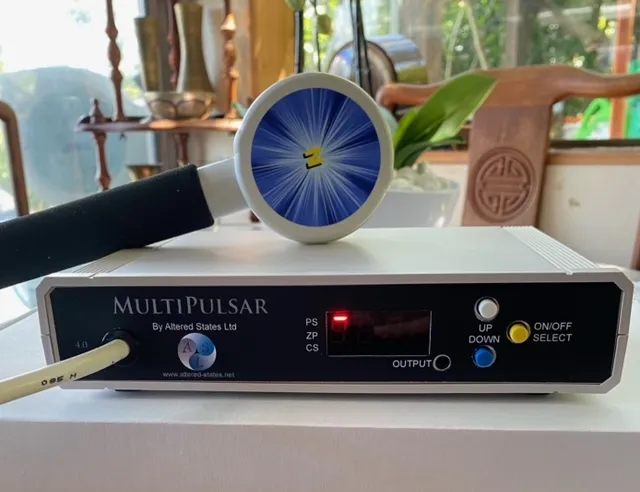 |
Multi-Pulsar
|
 |
 Totally
Solid State Design,
Totally
Solid State Design,