Mind tools, tapes, and CD's CAN help change, undesirable,
or unwanted tendencies, and, encourage the positive aspects
of our incredible awakening minds.But how many of us have bought
these tapes CDs and been very dissapointed or unsatisfied with
results...
we use the excuse ,"i,m getting old" "my memory's
not whay it was" well heres the facts on Brain ageing and your
possibilties
"Brain May
Grow New Cells Daily," by Nicholas Wade,
A new challenge to the longstanding belief that adults never generate
new brain cells, biologists at Princeton University have found that thousands
of freshly born neurons arrive each day in the cerebral cortex, the outer
rind of the brain where higher intellectual functions and personality
are centered.
Though based on research in monkeys, the finding is likely to prove true
of people, too. Salk
Institute Study Finds Brains Can Grow New Cells
Chronic, ongoing
stress, even when it is not so dramatic,
can affect one's health in very significant ways. One common
example of this is the effect of a very stressful job.
Several large studies have demonstrated that a stressful
job more than doubles one's risk of a heart attack. A stressful
job might lead to cigarette
smoking, obesity and lack of exercise, all of which increase
one's risk for a heart attack. It is also the stress itself
that directly leads to an increased risk. Stress has been
associated with the risk of many other diseases, ranging
from the common cold to chronic pain to some types of cancer.
Light and sound machines take the user into deep alpha
and theta mind states, this helps reduce stress
And the harmfull effects of stress..
99% of our customers report a decrease in their stress
levels…. |
BECAUSE BRAIN
CELL GROWTH IS REPORTEDLY
AFFECTED BY STRESS
For years, neurobiologists clung to a fundamental
truth: as animals and people reach adulthood, they lose brain
cells and they never grow new ones.There were a couple of exceptions
such as birds and rats, but the thought was that these were
peculiarities of nature and not evidence of a general principle.
Now, in experiments that experts call amazing, that dogma has been overturned
because scientists have found that monkeys are constantly making new
brain cells in the hippocampus, an area of the brain used for forming
long-term memories.Moreover, they report, the production of new cells
is squelched when the animals are under extreme stress.More
Some
Scientific Stuff - pdf files |
WHAT IF I TOLD
YOU,,
A BAD MEMORY COULD BECOME A THING OF THE PAST
How often have you asked yourself the question:
" Why can't I remember everything I read?"
Memory loss probably affects the majority of
us in one way or another. More often than not, it is a momentary
memory lapse; nothing to worry about – it happens to
the best of us. However, when memory lapses begin to become
a regular occurrence, it is wise to dig a little deeper and
seek ..More

Light
and Sound
You've just found the most
powerful personal growth and
mind development tools on Earth...
Why haven't You got one???
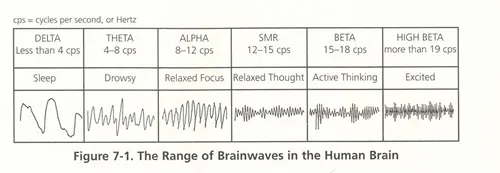
The study of "brainwaves" has played
a vital role in the understanding of how the brain and mind
function. Discovered in the 1920s by German researcher Hans
Berger, these tiny electrical signals mirror the shifting patterns
of mental activity. They are measured by attaching special
sensors, called electrodes, to the scalp; these pick up brainwave
activity which is then measured by an instrument called an
electroencephalograph, or EEG. Brainwave activity tends to
fall into four groups: beta, alpha, theta and delta. These
categories are associated with the rapidity of oscillation
(frequency) of brainwaves. As it turns out, certain patterns
of brainwave activity are also associated with specific mental
states.
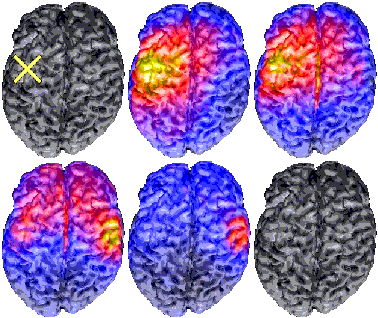 |
The left side of the brain governs the kinds
of thoughts and perceptions which historically our cultures
have associated with the mind,intellect. Whereas the right
side of the brain governs the kinds of thoughts and perceptions
which historically we have associated with the heart,imotions. |
In a 1999 study, Thomas Budzynski, Ph.D worked
with 8 struggling college students. After undergoing audio-visual
brainwave stimulation, the students outperformed a control
group and significantly increased their GPA. GPA for the 8
students continued to rise even after treatment was discontinued!
Psychologist Michael Joyce used brainwave entrainment with a group of
30 children. He observed improvements in reading and a half year advancement
in grade level as well as substantial improvements in attention, reaction
and a reduction in impulsivity and variability.
we've brought up the idea of using Light and sound(with
Baroque music or brainwave entrainment music) to put
ourselves
in a state of mind to be receptive to intentions and let
them "sink in." And since most of my experience
with manipulating brainwave frequencies has been to increase
productivity, I thought I'd let you know how well it works
for me.
JD Idaho |
Harold Russel Ph.D. and John Carter, Ph.D., of
the University of Houston, did several studies in which they
used brainwave entrainment to treat ADHD and other learning
disorders, testing their IQ before and after treatment. Astonishingly,
after treatment the subjects showed a 5 to 7 point increases
in IQ score.
Michael Tansey used a similar protocol to treat dyslexia and other learning
disorders, reporting a 19 point average increase in IQ score post-treatment.
Drs. Siegfried and Susan Othmer found that neurofeedback brainwave training
in the 15-18 Hz range can produce significant shifts in IQ score, particularly
with people who are suffering from ADD/ADHD and other disorders. In cases
where the starting IQ value is less than 100, the average IQ increase
was 33 points! They also found significant improvements in memory, reading
and arithmetic. In a one year follow-up, trainees showed major improvements
in self-esteem, concentration and self-expression.
One day about three years ago I had a specially difficult
problem to solve at work which required a balance of creativity,
programming, and critical thinking. I had an mp3 of Einstein's
Mind
frequency-balancing genius mindset (from the Altered
States range) -- One of the tracks was supposed to
induce "Big
picture thinking, and problem solving
." I
was skeptical but curious and figured that if I put it
on at worst I'll have to cut the garbage off and put on
some other music. I ended up listening to the track on
repeat for 3 hours while solving the problem in a state
of "effortless effort" (my way of thinking about "in
the zone" or "in flow"). Of course, I tried
this again with similar success, and use these ideas in
meditation, relaxation, and working.
Philip G, London, England |
A state of consciousness that differs
significantly from baseline or normal consciousness often
identified with a brain state that differs significantly
from the brain state at baseline or normal consciousness.
The optimum brainwave
pattern
The optimum brainwave pattern for creativity, healing,
insight and all forms of high performance combines the intuitive,
empathetic radar of delta waves, the creative inspiration,
personal insight, and spiritual awareness of theta waves, the
bridging capacity and relaxed, detached, awareness of alpha
waves, and the external attention and ability to consciously
process thought of beta waves, all at the same time. Originally
discovered in yogis, swamis and those in higher states of consciousness
by C. Maxwell Cade, this awakened mind pattern can also be
found during the "ah-ha" experience and all forms
of peak performance, regardless of activity, content, intention,
philosophy or theology.
Illness
and the left and Right Brain
| The Power of Thought to
Heal
Disease and health, like circumstances, are rooted
in thought. Sickly thoughts will express themselves
through a sickly body. Thoughts of fear have been known
to kill a man as speedily as a bullet, and they are
continually killing thousands of people just as surely
though less rapidly. The people who live in fear of
disease are the people who get it. Anxiety quickly
demoralizes the whole body, and lays it open to the
entrance of disease,
|
From the shamans of Outer Mongolia to the Manbos of the Caribbean,
rhythm has been used for thousands of years as a means to create
and maintain health and well being. There is hardly a place
on this planet where rhythm,
hasn't embedded itself into the very fabric of society - often
becoming an essential part of creating and maintaining spiritual,
mental, and physical health.
| Like Rhythm-healing, Shamanic drumming is an ancient,
almost universally used technique. This technique is part
of the larger shamanic healing tradition. Shamanism is
considered the world's oldest organized healing system
- estimated to be between 20,000 and 30,000 years old -
and can be found in nearly every pocket of the earth |
In spite of the many differences among ancient societies,
very few differences emerged among their therapeutic rhythm
techniques. In fact, only three core approaches developed:
Community drumming, shamanic
drumming, and rhythm-healing.
Community drumming focuses on shared rhythm-making and the
effects of playing an instrument with other people, whereas
shamanic drumming and rhythm-healing employ very specialized
rhythmic techniques designed to have a prescribed effect on
the listener.A
good light and sound system produces healing
rythms;
I've been listening to Monroe
Institute Hemi-Sync with Light
and Sound programs a great deal ever since getting
my iPod nano and I think now my mind operates very
differently than it used to. Of course it's hard to be
sure if there's a causal relationship between the programs
and some great changes I've made in my life since listening
intensively, but I can't think of any other catalyst.
For me, the combination of brainwave entrainment
with the iPod is the greatest tool ever. Listening
to the
synchronization programs really seems to help while doing
technical work with databases and coding, but also with
creative work (same thing i guess). I developed some
marketing ideas for new products while continuously listening
to the Creativity programs, and the feedback from
the proposals included "these ideas are so creative
that they're scary!".
Claudio R, Rome Italy |
How Clever we really are
Paul Maclean discovered in his research on the
human brain that by far, most of Western Society never escapes
the trap of the Left Brain and its Ego. Consequently, all types
of illnesses result because of the lack of contact with the
Right Brain, which contains the Self. Because of the polarity
between the Left Brain and the Right Brain techniques must
be used to make contact between them and begin the Integration
process.
| I have no doubt whatever that most people live, whether
physically, intellectually, or morally, in a very restricted
circle of their potential being . . . the so-called "normal
man" of commerce, so to speak, the healthy Philistine,
is a mere extract from the potentially realizable individual
he represents, and we all have reservoirs of life to
draw upon of which we do not dream. (O'Brien, 1964, p.
155) |
Michael Dullnig, M.D., of Sacramento, California, for example,
has used various dual-induction and binaural-beat audio tapes
in conjunction with his counseling of HIV-positive patients.
In a 1990 study he noted that all patients in the study showed
improvement in psych9ological target symptoms, and some showed
significant increases in T4 cell counts, important components
of the immune system. William Harris, M.D., director of the
Penwell Foundation, an organization for the investigation,
research, and application of different modalities for the treatment
of those with AIDS/HIV, has used light/sound (LS) devices with
HIV-positive patients and found them extremely effective. He
speculates that the devices may boost immune function by producing
states of deep relaxation, by enhancing the patients' receptivity
to suggestions for healing, by improving their ability to visualize
and the clarity of their visualizations. Says Harris, "I
think that this type of machine may actually be stimulating….
The body to produce its own chemical substances," and
that these natural substances may enhance immune function and
healing.
These Mind tools should be effective for people to use in
conjunction with treatment, for people who feel that they are
not as healthy as they would like to be, and for those who
feel healthy enough but would like to protect themselves from
the possibly damaging effects of stress and environmental toxins
and attain a state of peak or optimal health and well-being.
Step out off the Dark Ages

Learning Difficulties..
" Light and Sound tools can be enormously effective in overcoming
learning disorders. Perhaps the most important discovery has
been that
ADDH and other learning disorders are linked to underarousal,
or abnormally slow brain-wave activity (theta and delta) and
insufficient beta activity in the sensorimotor rhythm range
and above (13-20 Hz).
Learning disabilities also have a stress component - clearly
those who have lea5rning disabilities experience stress as
a result of their own learning and behavioral difficulties,
and stress can also increase learning disabilities.
Learning disabilities are also linked to problems of behavior,
negative self-image, and low self-esteem. Thus I suggest techniques
for using brain tools to help change problematic behavior patterns
and attitudes through eliminating negative scripts and attitudes,
and using positive suggestions, visualizations, and rescripting
during deeply relaxed or trancelike states."
Michael Hutchison,
Mega Brain Power, p. 367
I have at least one psychologist who will vouch that
I have ADHD, and this has been the bane of my existence,
for a while now, i went for the best unit the and wow I feel so much calmer,and relaxed about
life ,,perhaps there is hope :)
Anthony W, Birmingham UK
|
A
good light and sound system
Since many mind tools, such as LS and binaural-beat
tapes, permit the user to select a target brain -wave frequency,
the question arises as to what is the best state, or the "appropriate
depth," for learning: the relaxed, receptive alpha state,
or the hypersuggestible, drowsy, dream-like twilight or theta
state.
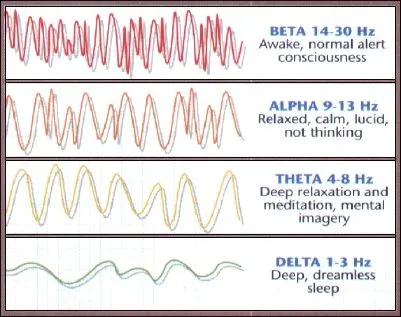
Evidence suggests that alpha is ideal for learning new information,
data, facts, material that you want to be fully aware of and
have readily available in waking consciousness. On the other
hand, theta is the ideal frequency range for the uncritical
acceptance of external suggestions, for bypassing defense mechanisms
and resistance and presenting important t self-change messages
to the deeper parts of the mind. That is, to present messages
having to do with attitude or behavior change to the unconscious
mind, without the critical screening present in waking consciousness,
it is best to get into the theta range. As Dr. Budzynski points
out, "the material is being sorted in the brain much the
same as verbal information assimilated during anesthetic surgery,
i.e., it cannot be recalled, but does influence behavior."
Thus a suggestion for those who have LS and other
variable frequency devices and want to find the best program
for peak
learning: If the material to be learned is informational, a
useful program might be to begin by entraining brain waves
from a waking EEG (anywhere from 14 to 18 Hz - experiment to
find what "feels" right), ramping down slowly to
a low alpha frequency (from 8 to 10Hz, again find out what
feels right), remaining at this frequency for the duration
of the learning tape, and then ramping back to a final relaxed
but alert frequency (from 10 to 14 Hz).
What's your excuse for not living your purpose? How
do you want to be remembered by friends and family when
you move on? What impact on humanity will you make? These
are questions you must ask yourself. They will help guide
you towards your life's mission.
De silva |
Those wishing to learn material having to do with attitude
or behavior change would begin by entertaining brain waves
in beta, ramping down slowly to theta (around 4 to 6 Hz seems
most effective), remaining at theta for the duration of the
learning session, and then ramping back up to 10 to 14 Hz.
For both types of learning, the material seems to be better
assimilated if the user spends sever minutes after the learning
material has been presented remaining in a relaxed alpha or
theta state before ramping back up to beta, ending the session,
and returning to ordinary consciousness.

Above and below
are the Best CDs we have found
Do you have a pile of self improvement tapes thrown
in a drawer or box under the bed, You know, like stop
smoking, loose weight , stress relief or become a new
person, do you feel like you have "been there, done
that "and it didn't work.
Play theses same tapes through A
good light and sound system , (doesn't have to be the top of the line unit, an inexpensive Proteus will
do the job), and see what listening in a relaxed theta
state does to your self improvement program.Using
your walkman or MP 3 player
Just simply set your light and sound system to a built in learning
program,,sit back
and enjoy the deep theta mind state which is also the ultimater learning
Frequency
In the book "in
the palaces of memory " they suggest 5hz
as being the optimum learning frequency. |
Only as far as I seek ---- can I go.
Only as deep as I look ---- can I see.
Only as much as I dream ---- can I be.
Only as high as I reach ---- can I grow. |
To really touch our souls, we must journey deep within ourselves.
It's an exciting trip, full of all sorts of revelations and
surprises.
Along the way, friends and lovers are essential. Good books
will speak to us. So will quiet |mountains and still lakes.
Even loud rock 'n' roll. We will also be made flexible. And
our sense of humor will help guide us.
The
Awakened Mind

| In the practice of Electric Nirvarna, we observe
that the mind is very, very busy. It's sometimes referred
to as "monkey mind." It's all over the place
like a monkey in a tree. And through the variety of the
programs in light and sound machines, we eventually come
to a place of slowing down, of becoming quieter, a little
more focused, a little steadier. |
The awakened mind brainwave pattern combines
the intuitive,empathetic radar of the delta waves, the creative
inspiration, personal insight, and spiritual awareness of the
theta waves, the bridging capacity and relaxed, detached, awareness
of the alphawaves, and the external attention and ability to
consciously process thought of beta waves, all at the same
time. This brainwave pattern can be found during "peak
experience" or "peak performance", regardless
of the content or intention, in all forms of creativity and
high performance. The awakened mind is also the"ah-ha",
appearing at the exact instant of solving the problem, or getting
the insight.
I have no doubt whatever that most people live, whether physically,
intellectually, or morally, in a very restricted circle of
their potential being . . . the so-called "normal man" of
commerce, so to speak, the healthy Philistine, is a mere extract
from the potentially realizable individual he represents, and
we all have reservoirs of life to draw upon of which we do
not dream. (O'Brien, 1964, p. 155)
The
Top 10 Ways to Tell If Your Mind Is Quiet
Enlightenment or the Fully Awakened mind has been given many
names. Buddha means "the enlightened one;" Christ
and Messiah also mean that. St. Paul called it "the peace
of God that passeth under-standing" and Richard Maurice
Bucke named it "cosmic consciousness." In Zen it
is satori, in yoga it is samadhi or moksha, in Sufism it is
fana, in Taoism it is wu or The Ultimate Tao. Jurdjieff labeled
it "objective consciousness," Sri Aurobindo spoke
of the Supermind, mystery schools and occult paths speak of "illumination," "liberation," and "self-realization." Likewise,
enlightenment has been symbolized by many images; the thousand-petaled
lotus of Hinduism, the Holy Grail of Christianity, the clear
mirror of Buddhism, Judaism's Star of David, the yin-yang circle
of Taoism, the mountaintop, the swan, the still lake, the mystic
rose, the eternal flame. (p. xvi)

The perennial belief in the existence of an uninterrupted
intuition of Oneness is rooted in the recurring notion that
humankind is uniquely situated to simultaneously experience
the finite and the infinite
It has been called a sacred hunger, the quest for truth,
the longing for God, the search for fulfillment.
In the space between two thoughts. An inexplicable occurrence of perfect
peace in the depths of Chaos
Light and sound systems use intense
programs of light and sound frequencies in multi-sensory
stimuli to encourage Hemispheric balancing.
It has been estimated that the average person has sixty thousand
separate thoughts each and every day. The problem with this
is that we have the same sixty thousand thoughts today that
we had yesterday, and we'll repeat them again tomorrow. Our
minds are filled with the same chatter day in and day out.
Learning to be quiet and meditate involves figuring out a way
to enter the spaces between your thoughts; or the gap, as I
call it. In this silent empty space between your thoughts,
you can find a sense of total peace' in a realm that is ordinarily
unknowable. Here, any illusion of your separateness is shattered.
However, if you have sixty thousand separate thoughts in a
day, there is literally no time available to enter the space
between your thoughts, because there is no space!
| " One of the most basic human experiences, one that
is genuinely universal and unites -- or, more precisely,
could unite -- all of humanity, is the experience of transcendence
in the broadest sense of the word." -- Václav
Havel, President, Czech Republic |
Most of us have minds that race full-speed day and night.
Our thoughts are a hodgepodge of continuous dialogue about
schedules, money worries, sexual fantasies, grocery lists,
drapery problems, concern about the children, vacation plans,
and on and on like a merry-go-round that never stops.
Those sixty thousand thoughts are usually about ordinary daily activities
and create a mental pattern that leaves no space for silence.
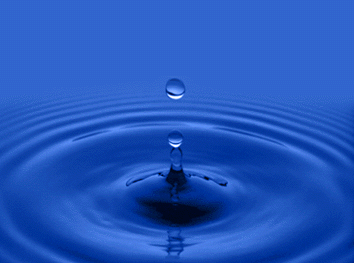
The mind is like a pond. On the surface you see all the disturbances,
yet the surface is only a fraction of the pond. It is in the
depth below the surface, where there is stillness, that you
will come to know the true essence of the pond, as well as
your own mind.
By going below the surface, you come to the spaces between thoughts,
where you are able to enter the gap. The gap is total emptiness or silence,
and it is indivisible. No matter how many times you cut silence in half,
you still get silence. This is what is meant by now. Perhaps it is the
essence of God, that which cannot be divided from the oneness.
|





 Stress
Free
Stress
Free