|
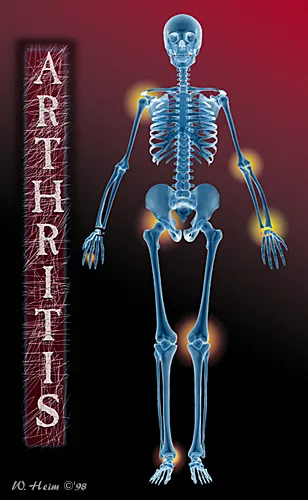
Arthritis Facts
There are
more than 100 related diseases and conditions collectively
known as “arthritis.” The
most common forms include osteoarthritis, rheumatoid arthritis,
juvenile rheumatoid arthritis, fibromyalgia, bursitis, lupus,
and gout. Though their causes may vary, these diseases often
occur in or around one or more joints. Sometimes the problem
is in the joints (as in osteoarthritis). Other times it is
in the surrounding ligaments, tendons, or muscles (as in fibromyalgia).
Some forms of arthritis are systemic and can affect the internal
organs (as in rheumatoid arthritis).
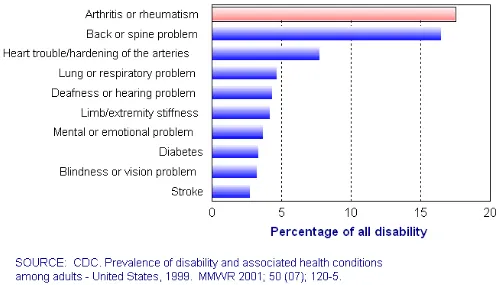
Arthritis
is the leading cause of disability1 (see Figure 1) among Americans
and the third leading cause of work disability, after back
disorders and heart disease.2
When
only the best will do
Coping with
Arthritis in Its Many Forms
by Carolyn J. Strange
It may begin
as a slight morning stiffness. For the lucky person with arthritis,
that's as far as it goes. But for millions of others, arthritis
can become a disabling, even crippling, disease. Roman Emperor
Diocletian exempted citizens with severe arthritis from paying
taxes, no doubt realizing that the disease itself can be taxing
enough.
One in seven Americans--nearly 40 million--have some form of arthritis. That
number will climb as the baby boomers age.
The disease is physical, but also exacts a mental, emotional and economic toll.
"Chronic
illness impacts a person's entire lifestyle--work, family and
recreation," says Gail Wright, Ph.D., a rehabilitation
psychologist at the University of Missouri, Columbia. To improve
quality of life, doctors and health educators increasingly
advise combining drug treatment with education, social support,
and moderate forms of exercise.
Arthritis
means joint inflammation. In a normal joint, where two bones
meet, the ends are coated with cartilage, a smooth, slippery
cushion that protects the bone and reduces friction during
movement. A tough capsule lined with synovial membrane seals
the joint and produces a lubricating fluid. Ligaments surround
and support each joint, connecting the bones and preventing
excessive movement. Muscles attach to bone by tendons on each
side of a joint. Inflammation can affect any of these tissues
.

Inflammation
is a complex process that causes swelling, redness, warmth,
and pain. It's the body's natural response to injury and plays
an important role in healing and fighting infection. Joint
injury can be caused by trauma or by the wear and tear of aging.
But in many forms of arthritis, injury is caused by the uncontrolled
inflammation of autoimmune disease, in which the immune system
attacks the body's own tissues. In severe cases, all joint
tissues, even bone, can be damaged.
Double Blind Study of Pulsed Magnetic Field Therapy
of Osteoarthritis of the Knee
The general
term arthritis includes over 100 kinds of rheumatic diseases,
most of which last for life. Rheumatic diseases are those affecting
joints, muscle, and connective tissue, which makes up or supports
various structures of the body, including tendons, cartilage,
blood vessels, and internal organs. The Food and Drug Administration
has approved a wide variety of drugs to treat the many forms
of arthritis.
The most common
type of arthritis is osteoarthritis, affecting more than 16
million Americans. This degenerative joint disease is common
in people over 65, but may appear decades earlier. It begins
when cartilage breaks down, sometimes eroding entirely to leave
a bone-on-bone joint in extreme cases. Any joint can be affected,
but the feet, knees, hips, and fingers are most common. It
may appear in one or two joints and spread no further. Painful
and knobby bone growths in the fingers are common, but usually
not crippling. The disease is often mild, but can be quite
severe.
Treatment of nonunited scaphoid fractures by pulsed
electromagnetic field and
cast.
Second most
common is rheumatoid arthritis, which affects 2.5 million Americans.
It can strike at any age, but usually appears between ages
20 and 50. The hands are most commonly affected, but it can
affect most joints of the body. Inflammation begins in the
synovial lining and can spread to the entire joint. Highly
variable and difficult to control, the disease can severely
deform joints. Some people become bedridden. Others continue
to run marathons.
An autoimmune
disease affecting the whole body, rheumatoid arthritis can
also cause weakness, fatigue, loss of appetite, muscle pain,
and weight loss. Blood tests may reveal anemia and the presence
of an antibody called rheumatoid factor (RF). However, some
people with RF never develop rheumatoid arthritis, and some
people with the disease never have RF. In about one in six,
the disease becomes severe and can shorten life. Researchers
hope to find ways to predict which patients should be treated
more aggressively.
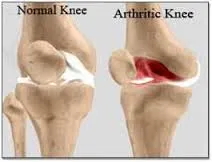
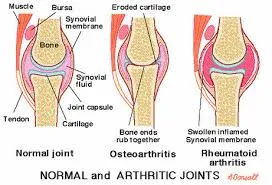
Compare the
appearance of a normal joint with these two most common forms
of arthritis.
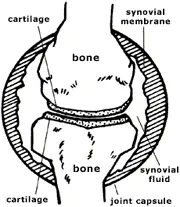
Normal Joint:
In a normal joint (where two bones come together), the muscle,
bursa and tendon support the bone and aid movement. The synovial
membrane (an inner lining) releases a slippery fluid into the
joint space. Cartilage covers the bone ends, absorbing shocks
and keeping the bones from rubbing together when the joint
moves.
How to Recognize
the Signs of Arthritis
Arthritis
is an inflammation of the joint. The most common forms
of arthritis are osteoarthritis, a non-inflammatory degeneration
of the joint, followed by rheumatoid arthritis, an auto
immune disease in which joins become inflamed. Both usually
occur after the age of 40, and symptoms usually appear
gradually over several years.
|
 |
Steps:
1. Notice whether exercise causes an intensified ache in your joints. This
is the first telltale sign of arthritis.
2. Take note if you experience stiffness in one or more joints in the morning
that typically subsides after 15 to 30 minutes of movement. This may be an
early sign.
3. Evaluate your afflicted joint for range of motion. Does the joint creak
or cause you pain when you bend it to its normal limits? This may be a sign
of arthritis.
4. Is your skin pulled taut over a joint due to swelling? Is the taut skin
shiny? These symptoms are indicative of joint swelling due to either osteoarthritis
or rheumatoid arthritis (though they can also be signs of gout or an infection).
5. Test your afflicted joint for temperature. For instance, test your right
knee joint by placing one hand on your right knee and one on your left knee,
and feel for a temperature difference between the two. Hot joints can be a
sign of rheumatoid arthritis, gout or joint infection. Cold, bone-hard joints
are apt to be a sign of osteoarthritis.
6. Notice whether the joint pain is associated with fever or noticeable swelling.
These are signs of rheumatoid arthritis or joint infection.
7. Pay attention if your joints have a gritty sensation, such that they seem
to crackle and make noise when moving. In osteoarthritis, irritated cartilage
and bones rub together, making a grating sound.
8. Check the location of the painful joints—are they located symmetrically?
For instance, if you have joint inflammation in some of the fingers of your
right hand, do you feel joint pain in the corresponding fingers of your left
hand? This is characteristic of rheumatoid arthritis.
Common
Types of Arthritis
Of more than 100 different kinds of arthritis, these are the most common:
Osteoarthritis
Also called degenerative arthritis. Occurs when the cushioning cartilage in
a joint breaks down. Commonly affects feet, knees, hips, and fingers. Affects
16 million Americans, mostly 45 and older. About half of those 65 and older
have this form.
Reported Healings
of Arthritis
Osteoarthritis
Osteoarthritis:
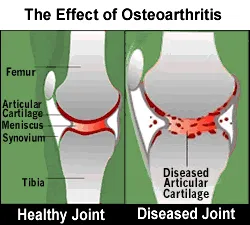
In osteoarthritis, cartilage breaks down and the bones rub
together. The joint then loses shape and alignment. Bone ends
thicken, forming spurs (bony growths). Bits of cartilage or
bone float in the joint space.
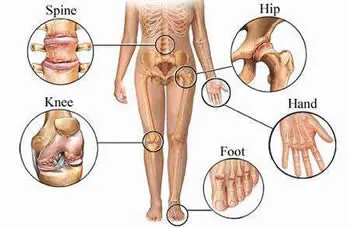
Osteoarthritis (OA) is the most common form, estimated to affect
at least 21 million Americans.3 Laypeople sometimes refer to
OA as “everyday” or “wear
and tear” arthritis. A slippery material called cartilage covers the
end of each bone and acts as a shock-absorbing cushion. In OA, cartilage starts
to break down. Loss of that rubbery cushion in a joint - where bone meets bone
- leads to symptoms of pain, stiffness, and swelling in the knee, hip, spine,
feet, thumb, or fingers.
Current research contradicts accepted wisdom that OA “is a natural part
of aging.” There is evidence that obesity is a significant risk
factor in the development and progression of OA. Even
modest weight loss can reduce the risk of developing OA. Once OA symptoms have begun, weight-bearing activities
can help improve function. Physical activity and specific strengthening exercises
strengthen the muscles around joints, which stabilize them, and enhance proprioception,
which is a sense of joint position that the body uses to maintain balance.
Moving joints through their full range of motion can reduce stiffness and pain.
In addition, losing excess weight may retard the damage caused to weight-bearing
joints (like knees) by obesity and may also reduce symptoms.
| OSTEOARTHRITIS
Reported Treatment Utilizing Rife Ffrequencies...
We have searched the net, and found many lists and frequency
sequences
that practitioners have put together, and others have added through their experiences...
Osteoarthritis (also see Arthritis) - 1500, 770
Osteoarthritis 1500 20 Min. 727 787 880
Bone disease, (see osteo) - 47.5, 1800, 1600, 650, 625, 600, 880, 787, 776,
for 3 min, 727/728 for 15 min
Osteomyelitis (bone infection) 11 + 16, 12, 14, 15, 17, 18,
20 + 22 + 24, 79, 4, 5, 6, 7, 8, 9, 10
Units that can utilise those frequencies
|
Rheumatoid
Arthritis
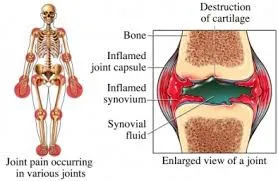
Rheumatoid
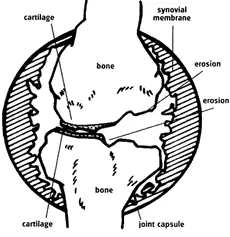
Arthritis: In rheumatoid arthritis, inflammation accompanies
thickening of the synovial membrane or joint lining, causing
the whole joint to look swollen due to swelling in the joint
capsule. The inflamed joint lining enters and damages bone
and cartilage, and inflammatory cells release an enzyme that
gradually digests bone and cartilage. Space between joints
diminishes, and the joint loses shape and alignment.
Decrease Inflammation
Inflammation is the body’s response to damage and an
attempt to repair cellular damage by increasing the blood flow
to the damaged area and increasing the number of good inflammatory
cells.. Inflammation is a necessary process, but it often lasts
longer than necessary, resulting in chronic inflammation which
can be the cause of chronic pain. PEMFs have been found to
reduce chronic, damaging inflammation. Inflammation can be
initiated by many causes, and knowing this is important when
deciding on therapeutic approaches.
Research shows us that PEMFs can induce the appropriate death
of aged, chronic T lymphocytes, by actions on T cell membranes
and key enzymes in cells. For example, PEMFs affect ion flow
through specific cell membrane channels (like those for sodium,
potassium, and calcium), which positively affect these
enzymes. |
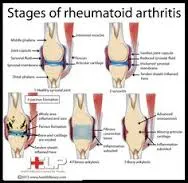
Immune system attacks the
lining, or synovial membrane, of the joints. Joint damage can become
severe and deforming. Involves the whole body, and may also cause
fatigue, weight loss and anemia, and affect the lungs, heart and
eyes. Affects about 2.1 million Americans, three times more women
than men.
Rheumatoid arthritis
result from changes in the body's immune
system. For reasons not fully understood, the body's immune
system attacks its own organs, in this case the tissues
of the joints.
This auto-immune
reaction causes inflammation of the joints, particularly of
the synovial membrane that lines them. This causes an over-production
of synovial (joint) fluid which, combined with the inflammation,
causes the joints to become swollen and painful. If the process
continues, damage to the cartilage and other soft tissue can
cause joint deformities.
Acute Rheumatoid Arthritis |
Rheumatoid
arthritis does not only involve the joints - it has other
features,
often described as "flu-like" symptoms.
These are called systemic features which are:
tiredness,
lack of energy,
loss of appetite,
inability to sleep,
perhaps some weight loss and
a low fever. |
Chronic Rheumatoid Arthritis |
Gout
Causes sudden, severe attacks, usually in the big toe, but any joint can be
affected. A metabolic disorder in which uric acid builds up in the blood
and crystals form in joints and other places. Drugs and attention to
diet can control gout. Affects about 1 million Americans (70 to 80 percent
men), with first attack starting between 40 and 50 years of age. (See "Getting
to Know Gout," FDA Consumer, March 1995.)
Reported
frequencies for aiding Gout
We have searched the net, and found many lists that practitioners
have put together
and others have added through their experiences...
Arthralgia due to gout - 9.39
Gout 9.39, 3000, 10000, 880, 787, 727, 20
Gout 020 727 787 880 05k 10k
Goiter 5K GOUT 10K Headaches 10K
Gout 10000, 20
Units
that can utilise those frequencies |
Ankylosing
Spondylitis
A chronic inflammatory disease of the spine that can result in fused vertebrae
and rigid spine. Often milder and harder to diagnose in women. Most people
with the disease also have a genetic marker known as HLA-B27. Affects about
318,000 Americans, usually men between the ages of 16 and 35.
Reported
frequencies for aiding
We have searched the net, and found many lists that practitioners
have put together
and others have added through their experiences...
Ankylosing spondylitis - 3000, 95, 1550, 802, 880, 787,
776, 727, 650, 625,
Ankylosing spondylitis - 3000, 95, 1550, 802, 880, 787,
776, 727,
Ankylosing spondylitis - 3000, 95, 1550, 802, 880, 787,
776, 727, 650, 625, 600, 28, 10, 35, 28, 7.69, 1.2, 110,
100, 60, 428, 680
Ankylosing spondylitis 3, 45, 11 + 16, 14, 17, 18, 20,
25 + 26 + 27, 55, 82, .61, 54, 55, 93, 82, 43, 44, 49,
105, 106, 109, 110, 112.
Ankylosing spondylitis of psoriasis 82, 61, 54, 55, 69,
82.
Units
that can utilise those frequencies |
Psoriatic
Arthritis
Bone and other joint tissues become inflamed, and, like rheumatoid arthritis,
it can affect the whole body. Affects about 5 percent of people with psoriasis,
a chronic skin disease. Likely to affect fingers or spine. Symptoms are mild
in most people but can be quite severe.
Systemic
Lupus Erythematosus
Involves skin, joints, muscles, and sometimes internal organs. Symptoms usually
appear in women of childbearing age but can occur in anyone at any age. Also
called lupus or SLE, it can be mild or life threatening. Affects at least 131,000
Americans, nine to ten times as many women as men.
Juvenile
Arthritis
The most common form is juvenile rheumatoid arthritis. Arthritis diagnosis,
treatment, and disease characteristics are different in children and adults.
Some children recover completely; others remain affected throughout their lives.
| Arthritis
Reported Frequencies
We have searched the net, and found many lists that practitioners
have put together
and others have added through their experiences...
Arthritis - 120 for 20 min, 727, 787, 880, 1550, 802, 1664,
80, 60, 40, 30,
25, 26, 20, 10, 5000, 10000, 7.69, 3, 1.2, 28 for 3 min,
1.5 for 10 min.
Arthritis, arthralgia due to gout - 9.39
Arthritis, arthrosis, and parathyroid disturbances affecting
calcium
metabolism - 9.6
Arthritis, focal origin gastrogenic, tonsiltogenic, and paresis
- 9.39
Arthritis, rheumatoid (muscles and tendons. Cause could be
bacteria like
chlamydia pneumonia which must be addressed too. Try general
antiseptic and
parasites general if no response.) - 250, 1.2, 650, 625,
600, 787, 727, 262,
776
Arthritis, secondary - 2720, 1000, 1500, 770
Bursitis (May be caused by any number of organisms and viruses;
experiment
with arthritis frequencies as well.) - 880, 787, 727 ]
Hip pain (see also Arthritis) - 880, 787, 727, 20
Joint inflammation (also see arthritis sets) - 10000
Arthritis 020 727 787 800 880 10k
Arthritis, arthralgia due to gout - 9.39
Arthritis, arthrosis,
and parathyroid disturbances affecting calcium metabolism
- 9.6
Arthritis, focal origin gastrogenic, tonsiltogenic,
and paresis - 9.39
Arthritis, rheumatoid (Cause could be bacteria
like chlamydia pneumonia, mycoplasma fermentans, or dental
bacteria which
must be addressed too. Also try General antiseptic and Parasites
roundworms general if no response.) - 250, 1.2, 650, 625,
600, 787, 727, 262, 776
Arthritis, secondary - 2720, 1000,
1500, 770
Units
that can utilise those frequencies |
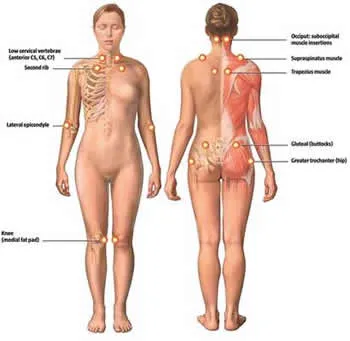
Fibromyalgia
Fibromyalgia affects
muscles and is characterized by diffuse pain, fatigue,
memory difficulties, disturbed sleep, and specific tender
points. It occurs more often in women.
The study was conducted with partial support from a grant
from the National Institutes of Health Center for Complementary
and Alternative Medicine.
Three measures of pain were used: functional status reported
by study participants on a standardized fibromyalgia questionnaire
used nationwide, number of tender points on the body and
pain intensity ratings. Data were compiled for 94 fibromyalgia
patients randomly divided into four groups. One control group
received sham pads containing magnets that had been demagnetized
through heat processing. The second control group received
only their usual treatment for fibromyalgia. Two other groups
received active magnetic pads: one group used Pad A, which
provided whole-body exposure to a low, uniformly static magnetic
field of negative polarity. The other used Pad B, which exposed
subjects to a low static magnetic field that varied spatially
and in polarity. The subjects were treated and tracked for
six months.
"When we compared the groups, we did not find significant
statistical differences in most of the outcome measures," said
Ann Gill Taylor, R.N., Ed.D., co-investigator for the study,
professor of nursing and director and principal investigator
of the Center for Study of Complementary and Alternative
Therapies at the University of Virginia. "However, we
did find a statistically significant difference in pain intensity
reduction for one of the active magnet pad groups. |
Exercise
is a key component of fibromyalgia treatment. Aerobic exercise
has been shown to improve muscle fitness, reduce pain, and improve
sleep; low impact
activities, like walking, bicycling, or swimming, are recommended. Even for
people who have been completely inactive and can only exercise a minute or
two at the beginning, the goal is to slowly work towards aerobic fitness.
Other treatments include medications to reduce pain and improve
sleep, stretches
to improve muscle tone, relaxation techniques, and pain management strategies.
We have searched the net, and found many lists and frequency
sequences
that practitioners have put together, and others have added
through their experiences...
Fibromyalgia - 328, 880, 800, 728, 5000, 2720, 2180, 2128,
664, 464, 304,
120, 20
Fibromyalgia (1) - 120, 140, 304, 464, 728, 800, 880, 2489,
3176, 5000,
6000, 9000 for 5 min
Fibromyalgia - 328, 880, 800, 728, 5000, 2720, 2180, 2128,
664, 464, 304, 120, 20
Fibromyalgia (1) - 120, 140, 304, 464, 728, 800, 880,
2489, 3176, 5000, 6000, 9000 for 5 min
Fibromyalgia and Joint Pains - This set has many positive
reports of symptomatic relief lasting from several days
to almost a week. 650, 625, 600, 240, 95, 522, 2900, 28
Fibromyalgia 120, 140, 304, 464, 728, 800, 880, 2489,
3176, 5000, 6000, 9000 hz
Units
that can utilise those frequencies |
Other
forms
Arthritis can develop as a result of an infection. For example, bacteria that
cause gonorrhea or Lyme disease can cause arthritis. Infectious arthritis can
cause serious damage, but usually clears up completely with antibiotics. Scleroderma
is a systemic disease that involves the skin, but may include problems with
blood vessels, joints, and internal organs. Fibromyalgia syndrome is a soft-tissue
rheumatism that doesn't lead to joint deformity, but affects an estimated 5
million Americans, mostly women.
The approximate number of cases in the United States of some common forms of
arthritis.
The
immune system and autoimmunity
The immune system includes two types of white blood cell, B
and T cells, which recognise the difference between "self" molecules belonging to the
body and "non-self" molecules from bacteria and viruses. B cells
make antibodies which should only attach to non-self molecules. Each B cell
makes antibodies to one type of non-self molecule. However, it can only do
so if given "help" by T cells recognising parts of the same non-self
molecule. T cells are, therefore, seen as directing antibody production.
Because T cells
direct normal immunity, it has been thought that autoimmunity
starts with T cells mistaking self for non-self. These T cells
would then direct the production of autoantibodies by helping
B cells which recognise self molecules. This sort of autoimmunity
can be created in animals if the animal is immunised with self
molecules, but usually dies down after a few weeks. This is
quite different from autoimmunity in people and we think that
human autoimmunity works in a different way.
Massage
therapy
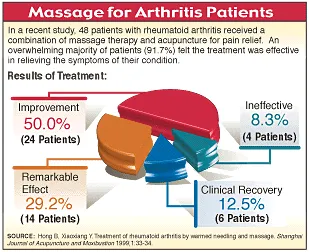
Massage
therapy is one of the oldest methods in the gallery of health
care practices.
References to massage are found in Chinese medical texts 4,000
years old. Massage has been advocated in Western health care
practices in an almost unbroken line since the time of Hippocrates,
the "father of medicine." In the 4th century B.C.,
Hippocrates wrote, "The physician must be acquainted with
many things and assuredly with rubbing" (the ancient Greek
and Roman term for massage).
Some
of the greatest physicians in history advocated massage, including
Celsus (25 B.C.-50 A.D.), who wrote De Medicinia, an encyclopedia
of Roman medical knowledge that dealt extensively with prevention
and therapeutics using massage; Galen (131-200), the most influential
physician in the ancient, medieval, and Renaissance worlds,
who addressed techniques and indications for massage in his
book De Sanitate Tuenda (which is translated as The Hygiene,
meaning prevention); and Avicenna (980-1037), a Persian physician
who wrote extensively about massage in his Canon of Medicine,
which was considered the authoritative medical text in Europe
for several centuries. A sampling of other noted advocates
includes Ambrose ParJ, who wrote the first modern textbook
of surgery; William Harvey, who demonstrated the circulation
of the blood; and Herman Boerhaave, who introduced the clinical
method of teaching medicine.
From 1873, when the term massage first entered the Anglo-American
medical lexicon, through 1939, more than 600 journal articles appeared
in mainline English language journals of medicine, including the
Journal of the American Medical Association, Archives of Surgery,
and the British Medical Journal. During the past 50 years, reports
on nearly 100 clinical trials have been published in the medical
and allied health literature. Many well-designed studies have documented
the benefits of several methods of massage therapy for the treatment
of acute and chronic pain; acute and chronic inflammation; chronic
lymphedema; nausea; muscle spasm; various soft-tissue dysfunctions;
grand mal epileptic seizures; anxiety; and depression, insomnia,
and psychoemotional stress, which may aggravate significant mental
illness. A larger number of studies also have been carried out in
Europe, particularly in the former Soviet Union and East Germany.
Unfortunately, the published reports on most of these have not been
translated into English.
Magnetic
Therapy
"The human body is electro-magnetic in nature..
We all know the brain and nervous system are electrical. By adding
a balancing charge to your cells, your lifestyle improves because
your cells are constantly energized and calibrated. Magnetic fields
affect the charge of the cell membrane, which allows membrane channels
to open up. These channels are like the doors and windows of a
house. By opening cell channels, nutrients are better able to enter
the cell, and waste is more easily eliminated from the cell. This
helps to rebalance and restore optimum cell function.Thus, with
continued use you will find you feel more vital because your cells
are better utilizing the water, food and air you take in. Increased
elimination of waste by-products also occur. This process could
be referred to as "cell-breathing."
If you restore enough cells, they will all work more efficiently.
Cells of the same type come together to make tissues, and those
tissues come together to make organs. So, by restoring or maintaining
cellular function, you will, in turn, restore or maintain organ
function, allowing the entire body to function better. We all know
that the body ages over time. Maintaining the function of every
individual cell at an optimal level every day is an important part
of slowing aging.
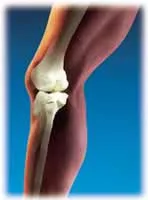
Cell“injury,” the
state of a cell when it is not healthy, leads to disease conditions.
Magnetic fields protect against cell
injury by improving circulation, repair processes and energy, and
increasing special stress proteins in the cells. These proteins
are used to prevent cell breakdown and wear and tear as well as
help speed recovery from injury. Magnetic fields balance cells,
tissues and bodily functions at very fundamental levels, even before
damage and problems become obvious to you.
Magnetic
fields have been found in extensive research in Europe, in
humans and all
kinds of animal species, to have many
positive actions in the body. The medical magnetic fields work
by stimulating the acupuncture system, the immune system of the
body, improving circulation and oxygen levels in tissues, relaxing
muscles, stimulating tissue healing, healing fractures and strengthening
bones faster, decreasing nerve irritability, removing swelling,
decreasing clotting and improving cell metabolism. Some very strong
magnetic fields can actually stimulate muscles and nerves – used
for incontinence, rebuilding muscles, nerves and depression

No-one
knows exactly how bioelectromagnetic therapy works, but there
are several interesting theories. Restoring electro-magnetic
balance:- Each cell acts as an electro-magnetic unit producing
its own magnetic field. During health, cells vibrate with their
own characteristic electromagnetic frequency.
By simple exposure of the body to pulsating low frequency
magnetic fields stimulate cell metabolism, increase oxygen
assimilation, and accelerate the removal of toxic chemicals
and waste. Pulsating electromagnetic fields can fully penetrate
the body and reinforce weak functional cycles in a natural
way. This allows the body to recover its self-healing capabilities.
As a result, health and wellness improves. |
During
disease, a cell's electromagnetic vibration changes. This effect
is used to diagnose heart problems for example. During health,
a heart trace (electrocardiogram or ECG) will show a particular
pattern. If cells lack oxygen due to reduced blood flow in
coronary heart disease, characteristic changes occur in the
ECG that help to diagnose the problem.
"Finding any positive results in the groups using the
magnets was surprising, given how little we know about how
magnets work to reduce pain," said the study's principal
investigator Dr. Alan P. Alfano, assistant professor of physical
medicine and rehabilitation and medical director of the U.Va.
HealthSouth Rehabilitation Hospital. "The results tell
us maybe this therapy works, and that maybe more research
is justified. " |
In
the most simple terms, magnetic therapy helps to restore health
by helping cells regain their natural electromagnetic frequency.
CHARLOTTESVILLE,
Feb. 23 -- University of Virginia researchers published results
from one of the first clinical research studies conducted
on magnet therapy for pain in today's issue of the Journal
of Alternative and Complementary Medicine. Although the results
of the study were inconclusive, magnet therapy reduced fibromyalgia
pain intensity enough in one group of study participants
to be "clinically meaningful," the researchers
said. more
here
In 2002, Health Canada certified the
use of PEMF to treat severe depression and currently several
private Canadian clinics
offer PEMF therapy. In 2011, the FDA approved TMS Therapy
system for use if the patient failed to respond to antidepressants.
This treatment, known as transcranial pulsed electromagnetic
therapy uses a strong electromagnetic field that is pulsed
into the patients head. The treatment usually consists of
two
15-minute treatments each day for two weeks. See BTPro |
New research
gives hope that early diagnosis, proper medical treatment, and
self-management strategies can help optimize function, reduce
pain, and improve quality of life. Individuals should consult
with a health care provider for advice appropriate to their medical
needs.
|
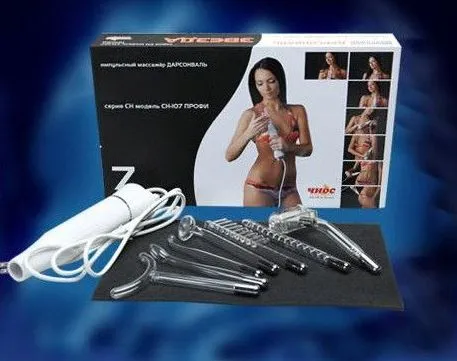
Violet Ray
Violet-ray therapy this is another convenient
means of translating electric energy into the body, but in
a more focused, localized
mode. A low-pressure inert gas, such as neon oir argon, is
contained in a glass bulb or tube and is electrified by high-potential,
high-frequency Tesla currents. The device emits, when brought
into contact with the body, an electric ray, seen as a reddish/
violet beam, a fascinating phenomenon to watch and feel. More
|
| |
|
|
Acupuncture
Acupuncture deals with homeostasis or the body's ability
to maintain balance. The person who is out of balance electromagnetically
becomes ill and expresses specific symptoms. This explanation
is simple to understand and best of all, simple to remember
. Hopefully this allows us to have a much better understanding
of electromagnetic balance and what might occur when each
meridian becomes challenged. More
|
| |
|
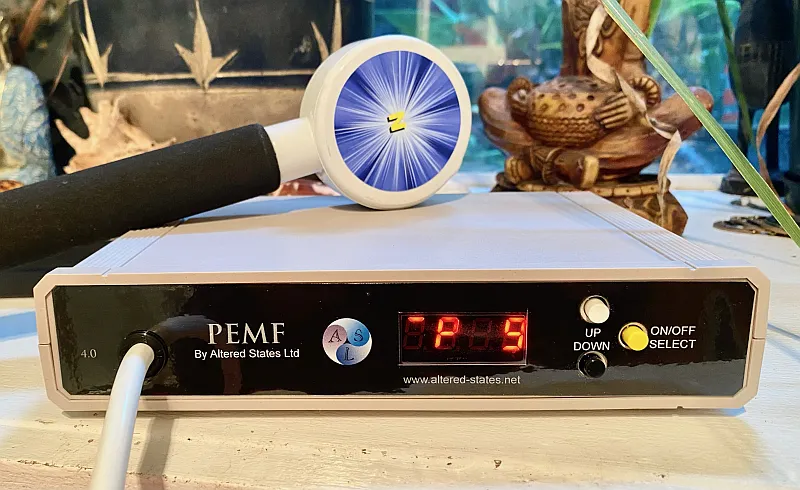 |
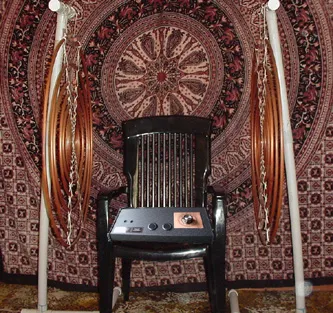
PEMF Pulser (Magnetic Therapy)
"By simple
exposure of the body to pulsated low frequency magnetic fields
stimulate cell metabolism, increase oxygen assimilation,
and accelerate the removal of toxic chemicals and waste.PEMF,
Pulsating electromagnetic fields can fully penetrate the
body and reinforce weak functional cycles in a natural way.
This
allows the body to recover its self-healing capabilities.
As a result, health and wellness improves". More
|
| |
|
|
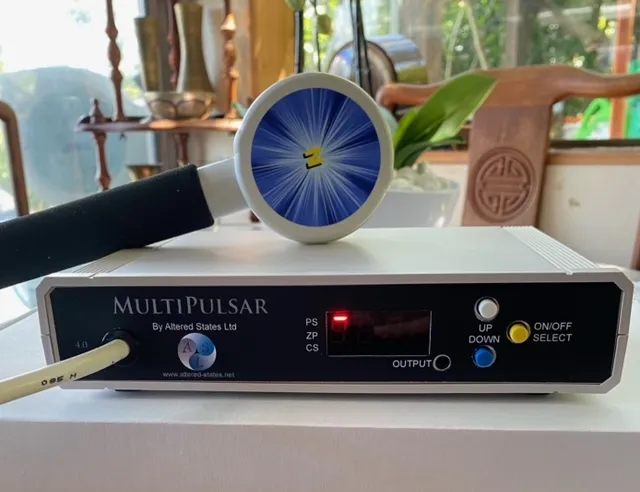
Multi Pulser
(Magnetic Therapy) 3 in 1 system
"Cell“injury,” the
state of a cell when it is not healthy, leads to disease
conditions.
Magnetic fields protect
against cell injury by improving circulation, repair processes
and energy, and increasing special stress proteins in the cells.
These proteins are used to prevent cell breakdown and wear
and tear as well as help speed recovery from injury. Magnetic
fields balance cells, tissues and bodily functions at very
fundamental levels, even before damage and problems become
obvious to you.” More
|
| |
|
|
Rife Option 2H (Magnetic Therapy)
Rife Pro The latest, powerful Rife frequency Resonator software
technology.
Its a Rife/Crane system
Rife 10.2" Laptop Included
Its a Bob Beck Zapper
Its a Hulda Clarke Zapper
Its a BT9 For Sleep and Depression
Its a TENS unit for Aches and pains etc
Its a CES (cranial electro stimulation) system
It can be used as a Bob Beck type pulser (options 2-4)
Over 700 Presets for hundreds for diseases with a Hulda Clark
to Rife Frequency converter, giving you thousands of more frequencies
with a few mouse clicks.
TBSW Generator Pro : Similar to binaural beats, but used for
theta healing, insomnia, pain relief and more. The TBSW Generator
in Professional has features not available in our other systems.
Export presets to wave audio format for making CDs for your
clients or patients
Chakra Tools : Align and balance chakras (the human energy
centers)
Sweep Generator : For assistance in finding your own healing
frequencies (great for emerging diseases like H7N1 bird flu
etc...)
Ancient Tones -
Hoyland System
A Client / Patient Database
|
| |
Diabetes 20 Diabetes mellitus (DM) patients were exposed
to impulsed magnetic field, 100 control DM patients received
conservative therapy alone. 270 patients had microangiopathy,
macroangiopathy was diagnosed in 50 patients. Magnetotherapy
in combination with conservative methods gave good and satisfactory
results in 74% of patients versus 28% in control group. Metabolism
stabilization resulted in some patients in reduced blood sugar.
Use of magnetic field produced faster and longer response than
conservative therapy.
PMID: 8999182, UI: 97062022 |
|
MWO (Magnetic Therapy)
The 70 trillion cells in your
body are like little wet cell batteries that operate ideally
at a voltage of around 70 millivolts.
The cell membrane acts like a one-way rectifier that converts
the earth's magnetic pulse into electrical potential energy,
which "charge's your cells".
This energy drives cell metabolism and helps to enhance oxygenation,
ATP production and overall absorption of nutrition and essential
elements into the cell and removal of wastes out of the cell.
Without this energy, the cell voltage weakens and disease
and illness sets in.
More
|
|