
| A
Brief Introduction to Light and Sound The
study of "brainwaves" has played a vital role in the understanding of
how the brain and mind function. Discovered in the 1920s by German researcher
Hans Berger, these tiny electrical signals mirror the shifting patterns of mental
activity. They are measured by attaching special sensors, called electrodes, to
the scalp; these pick up brainwave activity which is then measured by an instrument
called an electroencephalograph, or EEG. Brainwave activity tends to fall into
four groups: beta, alpha, theta and delta. These categories are associated with
the rapidity of oscillation (frequency) of brainwaves. As it turns out, certain
patterns of brainwave activity are also associated with specific mental states.
Beta
is associated with normal, waking consciousness; attention directed towards the
external environment. You are most likely in the "beta state" as you
read this. Beta waves oscillate between approximately 13 and 30 times per second
(Hz). Alpha
is relaxed, not thinking about anything in particular, sometimes a pleasurable
feeling of "floating". Often dominant in certain kinds of meditation,
alpha waves have for the past twenty years been associated with calm, lucid mental
states (the "alpha state"). They are also often detected during dream
sleep. Alpha waves oscillate between 8 and 12 times per second. Theta
Found in states of deep relaxation, theta activity is also associated with bursts
of creative insight, twilight ("sleep") learning and vivid mental imagery.
It is also found in more advanced meditators. Theta waves oscillate between 4
and 8 times per second. Delta
This slowest of brainwave activity, is found during deep dreamless sleep and sometimes
in very experienced meditators. They oscillate between 1 and 4 Hz. Your
brainwave activity is constantly shifting and changing during the day and night.
Virtually every form of mental and physical activity will cause changes in this
activity. Abrupt, unexpected noises or other events will quickly alter your brainwave
patterns. Even watching TV can dramatically alter brainwave activity in an undirected
manner. Over
the years many techniques have been developed to allow you to enter these states,
particularly alpha and theta, at will. Most methods, such as meditation, require
years of regular practice to master. Alpha wave biofeedback, quite popular in
the 70s, requires the sometimes awkward placement of electrodes as well as considerable
practice. The
Frequency-Following Effect In
the 1940s researcher Gray Walter discovered that brainwave activity tends to mirror
flickering light, particularly in the alpha and theta frequencies. This effect
has become known as the "frequency-following effect." A familiar example
is the tendency to slip into a relaxed or dream-like state while gazing into a
fire the flicker rate of which happens to average in the alpha/theta range! More
recently, sound has been shown to produce similar results, particularly pulsed
sound and binaural
beats. This last effect, binaural, results when one ear hears a pure
tone of a slightly differing pitch than the other ear. The brain then actually
synthesizes the difference between the two. The portions of the brain associated
with hearing tend to fall into step with this pleasant, gently pulsing rhythm.
The combination of pulsed light and binaural beat frequencies can be a particularly
effective tool for relaxation and preparation for meditation. Pulsed sound in
the form of musical rhythms has been entraining people for thousands of years.
Creativity and Hemispheric
Balancing Research
conducted at the Monroe
Institute and elsewhere suggests that both binaural beats and flickering
light stimulation can synchronize the activity of the left and right hemispheres
of your brain. It is thought that this synchronization can increase the flow of
information between the two hemispheres, thereby accelerating learning and increasing
creativity.
| | Here's
how Michael Hutchison describes the experience of using mind machines in Megabrain:
You
sit down comfortably, don the headgear, flip a switch, close your eyes and sink
into a state of what seems like deep relaxation. A half hour later, as you turn
off the machine, you feel extremely alert and lucid. Your
brain is now functioning more effectively than it was before. Your memory both
your ability to memorize new information and to recall information you have already
learned has increased dramatically. Your ability to think creatively, to solve
problems, has expanded. The speed with which your brain cells pass messages among
themselves has increased. In fact, many of your brain cells have actually grown
a microscopic examination would show that the brain cells have developed more
dendrites, the branching filaments that carry messages from one cell to another,
and more synapses, the junctures between the brain cells across which impulses
are transmitted. You are more intelligent than you were a half hour before. Such
devices now exist and are being used by increasing numbers of people. So
begins Michael Hutchison's book Megabrain ("Mega" derived from the Greek
word for great or powerful). | |
Altering
your mood Another
benefit of light/sound technology lies in its ability to interrupt negative emotional
response loops. Examples of such "loops" include moderate levels of
anger, worry, sadness, irritability and depression. Let's say that you've had
a tough day at the office. On your way home a driver cuts sharply in front of
you without signaling, nearly causing an accident. You arrive at home with a "short
fuse", growling at your children or spouse. You realize that you are experiencing
an undesirable mental state, but don't know quite how to change it. All too often,
the solution may be to have a few drinks or switch on the TV. A nap can be effective,
but you don't want to take the time. What are the alternatives?
Please
send this page to a friend  | |
Before
showing you how to reduce this sort of emotional response, let's examine what
happens when an event has a negative emotional impact. When the event first occurs,
you respond directly. So when your boss snarls at you, you respond internally,
even if you cannot voice your response directly. The problem lies in what can
happen next: you mentally "act out" the exchange a number of times,
and respond emotionally to each of these imaginary events. This is what we call
a negative emotional response loop, because you are repeating (looping) your emotional
response in a series of make-believe events that can stretch out over hours or
days. Often times you may not even be aware that this process is taking place.
If your boss is a real jerk, then after a number of unpleasant encounters you
may become upset just by being near him or her. An
awareness of your mental process is an important step in changing your emotional
response. Another step is to interrupt the feedback loop. Sleep is an effective
way to do this, which is why you often wake up feeling refreshed and renewed.
Nobel Prize winner Sir Francis Crick hypothesizes that dreaming serves a necessary
function by clearing away the various loops and impressions of the day on a synaptic
level. A
much faster technique is to run a session with a "good" light and sound
machine. One of the Relax or Energize sessions should do, especially in the 10-30
minute range. The trick is to run a session that is long enough to divert and
refresh you, but not long enough to put you to sleep. Why is this effective? Because
the pulsing light and sound saturates your senses and constantly directs and diverts
your attention towards the rhythms and patterns of the experience. Try it! Chances
are that after a few weeks of regular use, you will generally feel calmer and
more centered.
| "The
treatment of ADHD with photic stimulation has been developed extensively by Harold
Russell and his associates, using frequencies of 18 Hz and 10 Hz alternating for
two minute periods, with demonstrable improvements in IQ scores and behavior (Russell
and Carter, 1993). Many clinicians appear to be using photic stimulation informally
for ADHD and the other slow brainwave disorders, with anecdotal reports of successful
treatment but with very few published results. Treatment
of Slow Brainwave Disorders with Neurofeedback Many neurofeedback (EEG biofeedback)
practitioners report successful treatment of some or all of these slow brainwave
disorders. For example, the Lubar's have for many years worked with children with
ADHD, training them with beta frequency biofeedback, with excellent results (Lubar
1991 and 1989); the Othmer's have a long history of success with beta frequency
biofeedback with patients with all of the disorders in this group (Othmer 1994);
and there are many other practitioners using this approach. Generally the feedback
protocol involves positive reinforcement of beta frequencies and negative reinforcement
of theta frequencies, though various other protocols are also used successfully. The
Brainwave Frequency Hypothesis A reasonable explanation that is commonly proposed
for the above experimental and clinical results is that the key to treating these
disorders (all characterized by excessive slow brainwave activity) is to speed
up the brainwave frequency. It is proposed that this can be accomplished either
by training the patients to speed up their own brainwaves (beta-training neurofeedback)
or by entraining the patients' brainwaves with a photic stimulation device flashing
at beta frequencies. |
|
|
 |
The Mind
Electric
We
have "electric-powered" brains: all our thoughts and perceptions consist
of complex networks of electrical currents and electromagnetic fields that sweep
across the brain. So it makes sense that electrical stimulation of the brain can
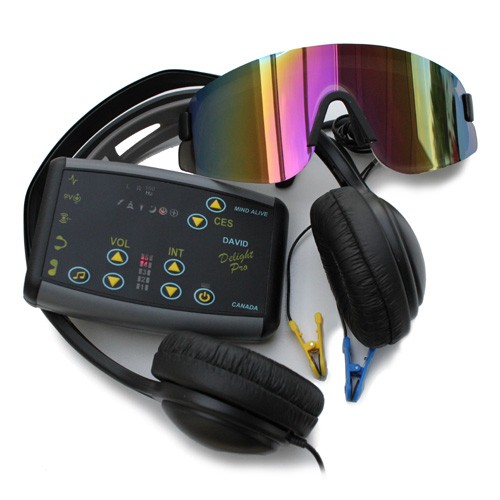
alter your mental state. The most popular technique for electrically boosting
brain power is called cranial electrotherapy stimulation (CES). Tiny battery-powered
consoles generate a minute electrical current that flows through pads placed on
the earlobes. Studies have indicated that such electrical currents stimulate the
release of a variety of performance-boosting neurochemicals, including beta-endorphin,
the body's natural pleasure chemical. Scientists speculate that electrical flows
may optimize brain function by "tuning up" the electrical activity of
brain cells. CES
units have long been prescribed by doctors for therapeutic reasons, including
the treatment of anxiety, depression, insomnia, and chemical dependency. Many
users have reported that CES can help them learn to enter a relaxed but alert
state conducive to high level mental performance that may include increased memory,
concentration and IQ. As a result, increasing numbers of healthy people are turning
to CES machines for quick, non-drug relaxation, and as tools for "supercharging"
the brain. The
most ADVANCED CES ever THE ALPHA-THETA STIM
Great thinkers Ludwig
van Beethoven Alexander Graham Bell Giordano Bruno Charles Darwin W. E. B. Dubois
Thomas Edison Albert Einstein Elizabeth I Galileo GalileiÉ variste Galois
Thomas Jefferson Genghis Khan Martin Luther King, Jr. Isaac Newton William Shakespeare
Mark Twain Fanny Wright Konrad Zuse The
right hemisphere of the brain is linked to creativity, while the left hemisphere
of the brain is paired with analytical thinking. |
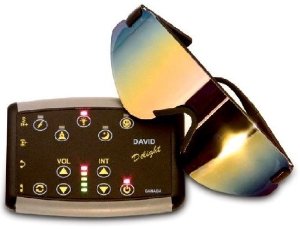
Ganzfeld Meditation Goggles
The Ganzfeld Effect

Anyone who is trying to learn
how to meditate or is interested in experiencing an altered state should try The
Ganzfeld Effect.
Historically,
Arctic explorers were the first people to describe the effect. After they gazed
into a frosty field of snowy white, they reported experiencing a form of snowblindness.
Upon
further research in the 1930's, it was discovered that when people gazed into
a featureless field of vision (a Ganzfeld), they quickly and consistently entered
a profoundly altered state. When
Ganzfelds have been tried by experienced meditators, they have described the effect
as instant meditation. This is not surprising, since most forms of meditation
require you to focus your attention on a spot, flower, mantra, etc. While
traditional meditation can take many years of practice, a Ganzfeld works for most
people in a matter of minutes. (Researchers have also tested the effects of Ganzfelds
on psychic abilities, and have found a statistically significant increase in test
scores. See Other Sites of Interest below) The
Effect Described When someone is exposed to a Ganzfeld, they often experience
a progression of effects that can be described as follows: All
color drains from your field of vision The size of your field of vision oscillates
You "see" a swirling Kaleidoscope of colors and with practice
You completely ignore your vision as you us your mind in an extremely focused
way People have reported using Ganzfelds in the following ways: Instant
Meditation Self Hypnosis Astral Journeys Past Lives Regressions
Psychic Abilities Guided Imagery Creativity Relaxation
Self Healing & Improvement THE
DAVID PARADISE XL SYSTEMS HAVE THE GANZFIELD EFFECT

DOES
SILVER WORK AGAINST CANCER ? The
mutation of healthy cells into cancer cells occur continuously, even in healthy
bodies. But such cancer cells are destroyed by the body's natural immune system
at a rate about the same as they occur, and when the body condition is stable,
there is nothing manifest that a healthy person would experience as cancer. Some
types of Cancer are reported to be caused by a virus. Like with any virus, upon
invading a body tissue cell it will take over the cells reproductive chemical
factory thereby forcing the cell to replicate the virus instead, the cell will
revert to the primitive state thus enabling the Colloidal Silver to be effective
and kill the cancerous cell. A higher concentration of Colloidal Silver means
more immediate contact with any virus or other pathogen.
OTHER
ESTABLISHED USES OF COLLOIDAL SILVER Standard
CS Generators Heavy
Duty CS generators Top
of Page |