Without emotion, man
would be nothing but a biological computer. Love, joy,sorrow,
fear, apprehension, anger,satisfaction, and discontent
provide
the meaning of human existence.
Arnold M. Ludwig---1980 |

Better living through chemistry?
Every twenty-four to thirty-six hours,
from 50 to 80 % of adults in the United States and the
United Kingdom swallow a medically prescribed chemical.
In the United States, the volume of the drug business
has grown by a factor of 100 during the current century;
20,000 tons of asprin are consumed per year, almost 225
tablets per person. In England every tenth night of sleep
is induced by a hypnotic drug and 19% of women and 9%
of men take a prescrbed tranquilizer during any one year.
In the United States, central-nervous-system
agents are the fastest growing sector of the pharmaceutical
market, now making up 31% of total sales. Dependence
on prescribed tranquilizers has risen by 290% since 1962,
a period during which the per capita consumption of liquor
rose by only 23% and the estimated consumption of illegal
opiates by about 50 percent, leading Ivan Illich in Medical
Nemesis, to note how that by 1975, "Medical addiction
...had outgrown all self-chosen or more festive forms
of creating well-being."
Some people take the wrong medication;
others get an old or contaminated batch, and others a
counterfeit; others take medications in dangerous combinations.
Some medications are addictive, others are devestating
emotionally and physically from their side effects. Every
year a million people--that is 3 to 5% of all hospital
admissions --are admitted primarily because of a negative
reaction to medications. The situation has become especially
exacerbated by the medical profession's propensity to
dole out medication like candy for the slightest sign
of depression, anxiety, or insomnia, helping make drugs
like prozac as chic in the suburbs as crack is in the
inner city. This has led to that plague of legal drug
addiction, documented so well by Peter Breggin in his
definitive study of the topic in "Toxic Psychiatry"
Well, I do not espouse an extremist position with regard
to psychotropic medication such as Peter Breggin does
but I believe that consumers should be aware that some
of these substances are very powerful and will benefit
people as much as they are intelligently prescribed and
intelligently taken.
Worse yet, is the subversion of our independence. We
are self-regulating beings in possession of our own pharmaceutical
laboratory which our brain draws on judiciously on our
behalf. An increased reliance on external drugs interferes
with that self-regulatory process, reducing our ability
to cope --to develop, strengthen, and effectively employ
our own inner resources.
People speak today of being captive of unpleasent emotional
states. The answer to this problem, however, does not
lie exclusively with the development of better and more
efficient drugs. Emotions are in part products of the
chemical soup, and the elaborate electrical neuro circuitry
which make up the working environment of our brain.
To reclaim control of our life we have
but to learn how to alter that chemical composition and
reorient that circuitry.
CES is a tool to help us achieve that end. As a similar
ethic can ideally and practically guide pharmaceutical
usage, CES offers a unique and viable "bioelectric" alternative.
Personal autonomy and a gain with insight and self awareness
is resultant because the learning of the intelligent
applicatiuon of CES permits individuals to have an amazing
increase in their ability to experience a positive perception,
to in effect reset the controls of their perception.
CES's primary goal is wellness, defined as peak emotional,
mental, and physical health--a state of proper alignment
--the balanced interplay of body and mind attained through
personal empowerment rather than dependency. You know
that nothing is good or bad intrinsically, it's more
how it is utilized or misused. So I do not want to really
put down the pharmaceutical industry, but actually want
to extend the options available to people looking for
answers and positive change. Pharmaceuticals may be used
untelligently and wisely, both on the part of the professional
and the patient.
What is homeostasis? Homeostasis can be defined as
the tendency for intrinsic balance within a system. Application
of a therapeutic range of microcurrent intracranially
seems to enhance the homeostasis of the biological central
nervous system. An effect on one system within the individual
will correlative effects upon other systems within the
individual. Improved mood can be measured. Many times
improved cognitive function can be measured. Improved
self image, and sense of well being can be measured.
An improved sense of locus of control or self determination
can be easily measured. If a tool works it enhances one's
ability to handle or deal with situations previously
that were beyond the range of one's control
Intelligent choice, what is it? We have the ability
to learn. We have the ability to gain experience. We
have the opportunity to change and grow. We have the
ability be in control of our lives. We can learn about
anything we like.
This researcher wants to acknowledge Delbert T. Goates,
M.D. who was instrumental in many areas of research during
his career, including work with the CES. He was an exceptional
human being who finished this life earlier this month.
He will be greatly missed.
|
CES A Unique Non-drug Therapy
CES is a simple treatment employing mild battery-powered
electronic stimulation through clip-on electrodes that attach
to the earlobes or by pre-gelled electrodes placed behind the
ears. Current flow is limited so that the most a user will
experience during the process is a brief tingling sensation.
Its most immediate impact is reduction of anxiety. For most
people, anxiety reduction is experienced in the course of treatment,
but it also may be first seen hours, or as late as several
days after. After a CES session you are left feeling both alert
and relaxed . Psychologists call this an "alpha state".
The effect differs from pharmaceutical treatments in that people
report feeling that their bodies are lighter and more relaxed
and their mind more alert and clear. The results are cumulative
and lasting.
CES has major implications in a number of areas.
In the war on drugs, it is a formidable new weapon in the treatment
of the symptoms accompanying detoxification and withdrawal.
For those suffering from depression and anxiety, it means relief
with none of the unpleasant side effects of prescription drugs.
For those seeking nothing more than a good night's sleep, it
is an alternative to habit-forming tranquilizers. For a public
increasingly concerned with the effects of stress on physical
health and emotional well being, it provides a way of addressing
that stress in a safe and effective manner. CES---a treatment
modality whose time has come.
CES has a proven track record as far as safety
is concerned. There are no known negative side effects associated
with its use. It also has a substantial body of research to
support its claims. But because of the pharmaceutical bias
in Western medicine, its deployment has been restricted and
its use limited. It has also been difficult for people to find
information on the topic. It has been challenging to define
easy to understand parameters across traditional boundaries.
This website seeks to be the definitive site for dissemination
of information on CES and by doing so, nurture an expanded
dialogue on health and wellness.
-------- Charles McCusker, Ph.D.
Psychologist, Salt Lake City, UT September, 1996
Disclaimer:
The following information is the result of years of thorough
research and investigation. It has been supplemented with
materials from experienced practitioners and acknowledged
authorities in the field. This information however should
not be interpreted as a substitute for physician's evaluation
or treatment by a healthcare professional, nor provide or
confirm a medical diagnosis.
.
A Unique Non-drug Therapy
For a Centered State |
CES Controls:
stress and stress related disorders
anxiety
depression
insomnia
substance abuse |
Helps: |
Supercharge the brain
Attain a state of relaxed awareness
Optimize cognitive functioning
Achieve higher levels of mental performance
Enhance memory capacity
Facilitate recall
Increase IQ |
Q. What is depression?
Being clinically depressed is very different
from the down type of feeling that all people experience from
time to time. Occasional feelings of sadness are a normal part
of life, and it is that such feelings are often colloquially
referred to as "depression." In clinical depression,
such feelings are out of proportion to any external causes.
There are things in everyone's life that are possible causes
of sadness, but people who are not depressed manage to cope
with these things without becoming incapacitated.
As one might expect, depression can present
itself as feeling sad or "having the blues". However,
sadness may not always be the dominant feeling of a depressed
person. Depression can also be experienced as a numb or empty
feeling, or perhaps no awareness of feeling at all. A depressed
person may experience a noticeable loss in their ability to
feel pleasure about anything. Depression, as viewed by psychiatrists,
is an illness in which a person experiences a marked change
in their mood and in the way they view themselves and the world.
Depression as a significant depressive disorder ranges from
short in duration and mild to long term and very severe, even
life threatening.
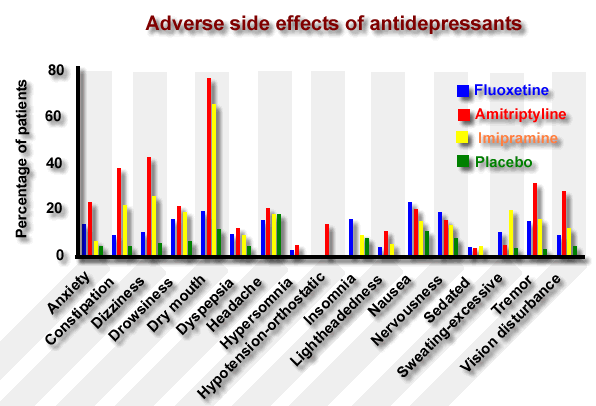
What causes depression?
Despite 35 years of research
antidepressant drugs still
cause
adverse side effects
Depression
is big business
It takes about 10 years and costs around £350 million
pounds to develop a new drug
Many drugs fail at some stage in their testing phase
The patent on a new drug only lasts 10 years - during
this time development costs must be recouped and profit
earned for new drug developments
Prozac launched in 1987, and Seroxat available from 1998,
earn their manufacturers about one billion pounds per
year.
It costs the NHS £20 to treat a patient for one
month with Prozac or Seroxat
World-wide, 37 million patients have received Prozac
since its launch in 1987
Once out of patent, generic forms of the drug can be
sold at a fraction of the cost of the original because
the manufacturer does not have to bear the development
and testing costs
It costs the NHS £1 to treat a patient for one
month with a generic antidepressant
The global market for antidepressants was worth $10 billion
in 1998 and it is estimated that it will grow 20% each
year to 2006. The Japanese consume very few antidepressants.
Reboxetine, the first selective noradrenaline reuptake
inhibitor is being tipped as the next big money spinner
It is conceivable that in the future antidepressants
will be available 'over-the-counter' i.e. without prescription.
(Source: Kohn, 2000)
More
Here
BENZODIAZEPINES:
HOW THEY WORK
AND HOW TO WITHDRAW
|
The group of symptoms which doctors and therapists
use to diagnose depression ("depressive symptoms"),
which includes the important proviso that the symptoms have
manifested for more than a few weeks and that they are interfering
with normal life, are the result of an alteration in brain
chemistry. This alteration is similar to temporary, normal
variations in brain chemistry which can be triggered by illness,
stress, frustration, or grief, but it differs in that it is
self-sustaining and does not resolve itself upon removal of
such triggering events (if any such trigger can be found at
all, which is not always the case.)
|
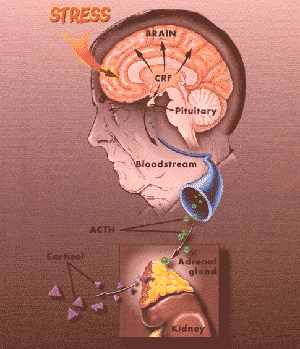
Depression and Stress Hormones
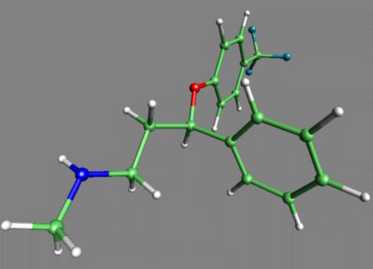
The most common drugs used today to treat depression focus
their attention on the brain chemicals, serotonin and
norepinephrine. Increasing evidence, however, now indicates
that another player in the brain, corticotropin-releasing
factor, should share the spolight. Studies have shown
that abnormally high activity of this stress hormone
is present in many cases of depression. Furthermore,
research shows that drugs that block the action of
corticotropin-releasing factor have the potential to
lift the dismally low spirits of the depressed. The
new insights help explain how depression arises and
may lead to new options for prevention and treatment. |
Instead, the alteration continues, producing
depressive symptoms and through those symptoms, enormous new
stresses on the person: unhappiness, sleep disorders, lack
of concentration, difficulty in doing one's job, inability
to care for one's physical and emotional needs, strain on existing
relationships with friends and family. These new stresses may
be sufficient to act as triggers for continuing brain chemistry
alteration, or they may simply prevent the resolution of the
difficulties which may have triggered the initial alteration,
or both.
The depressive brain chemistry alteration seems
to be self-limiting in most cases: after one to three years,
a more normal chemistry reappears, even without medical treatment.
However, if the alteration is profound enough to cause suicidal
impulses, a majority of untreated depressed people will in
fact attempt suicide, and as many as 17% will eventually succeed.
Therefore, depression must be thought of as a potentially fatal
illness. Friends and relatives may be deceived by the casual
way that profoundly depressed people speak of suicide or self-mutilation.
They are not casual because they "don't really mean it";
they are casual because these things seem no worse than the
mental pain they are already suffering. Any comment such as, "You'd
be better off if I were gone," or "I wish I could
just jump out a window," is the equivalent of a sudden
high fever;
SYMPTOMS OF DEPRESSION
 |
Symptoms of Depression
An estimated one in ten Americans suffer from depression,
an illness that affects both physical and mental well-being.
Often chronic in nature, depression can be triggered
by adverse life circumstances or occur simply "out
of the blue." Frequently, a combination of genetic,
psychological and environmental factors contribute
to the onset of depression. |
The most common symptoms are set out below .
If these have been experienced for more than two weeks it is
essential to seek help. People may suffer from two or three
of these symptoms but are unlikely to experience them all.
Feelings of helplessness and hopelessness.
Feeling useless, inadequate, bad.
Self hatred, constant questioning of thoughts and actions, an
overwhelming need for reassurance.
Being vulnerable and "over-sensitive".
Feeling guilty.
A loss of energy and motivation, that makes even the simplest
tasks or decisions seem difficult.
Self harm.
Loss or gain in weight.
Difficulty with getting off to sleep, or (less frequently) an
excessive desire to sleep.
Agitation and restlessness.
Loss of sex drive.
Finding it impossible to concentrate for any length of time,
forgetfulness. A sense of unreality.
Physical aches and pains, sometimes with the fear that you are
seriously ill.
In severe depression, these feelings may also include:
Suicidal ideas.
Failure to eat or drink.
Delusions and/or hallucinations.
MORE INFORMATION
Depression is much misunderstood by the public, yet it affects
many people of all ages. It is estimated that one in five
people will suffer from depression at some point in their
lives.
Depression is an illness where the feelings of hopelessness and
helplessness, linkled to the inability to concentrate, may make
it hard for some people to carry out normal daily activities.
Depression is an illness with a wide range of physical and psychological
symptoms, which sometimes make it hard to recognise and understand.
Personality may play a part in depression. Although anyone can
become depressed under particular circumstances, some people
seem to be more vulnerable than others. This may be because of
things that have happened in childhood, such as abuse, or because
of our individual make up (including body chemistry).
A lot of effective, intelligent and creative people suffer from
depression and yet make an outstanding contribution to life.
Often, information about their depression is only revealed after
their death, as people misunderstand the illness. Amongst such
people are Florence Nightingale and Sir Winston Churchill, who
used to call depression his "black dog". Depression
can effect anyone and does not reduce your value as a human being.
How may I measure
my depression? |
The items below refer to how you have
felt and behaved **during the past
week.** For each item, indicate the extent to which it
is true, by
circling one of the numbers that follows it. Use the following
scale: |
0 = Not at all
1 = Just a little
2 = Somewhat
3 = Moderately
4 = Quite a lot
5 = Very much |
| 1. I do things slowly..............................................0
1 2 3 4 5 |
| 2. My future seems hopeless...............................0
1 2 3 4 5 |
| 3. It is hard for me to concentrate on reading.....0
1 2 3 4 5 |
| 4. The pleasure and joy has gone out of my life..0 1
2 3 4 5 |
| 5. I have difficulty making decisions...................,0
1 2 3 4 5 |
6. I have lost interest in aspects of life that
used to be important to me...................................0
1 2 3 4 5 |
| 7. I feel sad, blue, and unhappy............................0
1 2 3 4 5 |
| 8. I am agitated and keep moving around............0
1 2 3 4 5 |
| 9. I feel fatigued.....................................................0
1 2 3 4 5 |
10. It takes great effort for me to do simple
things......................................................................0
1 2 3 4 5 |
11. I feel that I am a guilty person who
deserves to be punished........................................0
1 2 3 4 5 |
| 12. I feel like a failure...........................................0
1 2 3 4 5 |
| 13. I feel lifeless--more dead than alive...............0
1 2 3 4 5 |
14. My sleep has been disturbed:
too little, too much, or broken sleep.....................0
1 2 3 4 5 |
15. I spend time thinking about HOW I might
kill myself...............................................................0
1 2 3 4 5 |
| 16. I feel trapped or caught...................................0
1 2 3 4 5 |
17. I feel depressed even when good things
happen to me.........................................................0
1 2 3 4 5 |
18. Without trying to diet, I have lost,
or gained, weight...................................................0
1 2 3 4 5 |
It is important for people to know that:
Depression is an illness that can affect anyone at any age.
It is not connected with and does not develop into insanity
ANXIETY
 |
Heart Palpitations - Gone!
Shortness of Breath - Gone!
Anxiety Attacks - Gone!
Sleepless Nights - Gone!
Fear of Social Situations - Gone!
Inability to Relax - Gone!
Worry, Worry, Worry - Gone!
Instead you'll have. . .
Personal Self-Confidence...
Top Performance on the Job...
Relaxation in Social Settings...
Ability to Have Fun Again...
Belief in Yourself...
Peaceful Sleep...
Daily Joy and Serenity.. |
.Cranial electro stimulators offer a non-drug
therapy for the treatment of ANXIETY, DEPRESSION and INSOMNIA.
CES has been used in numerous countries around the world for
over 30 years. It involves the application of mild microcurrent
electrical impulses to the head via electrodes applied behind
the ears or by means of ear-clip electrodes
CES should be used under direction of a licensed health care
practitioner. Individual results will vary, but many patients
report significant improvement of their Stress-Related Symptoms
over a period of 2 to 3 weeks daily use.
FREQUENCY AND DURATION: Optimal CES treatments
are 60 minutes once daily or 30 minutes two times daily for
the first three weeks. In some studies 40 minutes 1 time per
day, five days per week has been found to be adequate. For
chronic conditions many patients find CES is actually more
effective when used every other day. After first two weeks
of daily treatment application may be reduced to maintenance
level ranging from one 20-minute application every other day
to one 20-minute application every three days. Treatment should
not be discontinued as ineffective until 2 weeks of twice daily
applications have been completed.
PRECAUTIONS: Optimally CES treatment should
be applied in early hours after awakening and while in relaxed
and quiet environment. Normally it is best not to use CES within
three hours of bedtime. Exercise caution when driving or operating
machinery for one hour after treatment. Do not apply electrodes
directly over the eyes or the carotid sinus area (upper side
of the neck below the ear and behind the jaw). Do not sleep
during CES treatment
Cranial Electrotherapy, a Profound Alternative
Therapy
 |
ANXIETY & Cranial Electrotherapy
Cranial Electrotherapy Stimulation (CES) has been used
as a treatment for anxiety in several parts of the world
for over a quarter of a century. American medicine has
only recently begun to realize its use as a safe and
effective treatment. Studies show that Cranial Electrotherapy
treatment yields highly significant reductions in anxiety,
whether the patients were in a psychiatric setting, a
scholastic setting, an outpatient setting, or an in-patient
general hospital setting. Further, while many different
kinds of anxiety have been studied, as measured by the
six different psychological measuring instruments found
in these studies, they all responded significantly to
CES treatment.
Less intense or less permanent forms of anxiety - the so-called
'situational anxiety' in which a person habitually responds
to personally threatening events in his environment with
an anxiety reaction - respond to Cranial Electrotherapy
treatments within a week or less. The more permanent forms
of anxiety - the so-called trait anxiety, or that underlying
level of anxiety that a person typically carries with him
at all times - require a longer period of Cranial Electro
treatment. |
 |
DEPRESSION
Studies show that reactive depression (that which results
from acute changes in the patients life situation such
as a job change or divorce) is decreased after 6 days
of Cranial Electrotherapy treatment. More deep seated
depression (endogenous) in some cases required 3 or more
weeks of daily treatment. For this reason, many physicians
routinely prescribe a minimum of 2 weeks to a month of
daily Cranial Electrotherapy treatments in depressed
patients, since it is frequently difficult to gauge the
type or depth of depression with great accuracy.
Since many patients have a 'depression habit' physicians
should include a home CES unit in their treatment plan
so that the patient can meet any new sign of impending
depression with effective treatment and thereby break the
behavioral reinforcement chain that has both led to and
maintained the habit. In this way, a maladaptive habit
can be effectively controlled or broken without the use
of frequent medications and/or repeated visits to the physician.
Other research has shown that Cranial Electrotherapy, when
used this way is neither habit forming nor addictive. Such
patients use it only when they experience an impending
medical necessity. |
 |
INSOMNIA |
Because Cranial Electrotherapy was originally
called 'Electrosleep' in European countries, many earlier American
studies were designed to learn whether or not such small amounts
of electric currents would actually put people to sleep. That
is, just as 50ma of current - called 'electro-anaesthesia'
- put an individual into anesthesia so that surgical procedures
could be performed, 1ma of Cranial Electrotherapy current was
assumed to put them into a normal state of sleep if 'Electrosleep'
worked.
Such studies discovered that while Cranial Electrotherapy does
not necessarily "put a person to sleep", it does accomplish
some very therapeutic changes in the sleep patterns of people
who complain of insomnia. The studies below show that whether
measured by the patient's own ratings, psychiatrists ratings
or by electroencephalograph or polygraph recordings before and
after Cranial Electrotherapy treatments, the following effects
of CES in insomnia can be expected:
1. Sleep onset latency is reduced. That is, once a person has
retired for the evening, the amount of time it takes him to actually
fall asleep is reduced from one to two hours or more to the more
normal twenty minutes or less.
2. The number of awakenings during the night are reduced. That
is, while most insomniacs awaken three or more times during the
night and have difficulty falling asleep again, those treated
with Cranial Electrotherapy typically awaken no more than once
or twice following therapy, with most reporting no awakenings.
Furthermore, after awakening, they return to sleep much more
promptly than before.
3. Cranial Electrotherapy treated patients spend more time in
stage four sleep following CES treatments. That is, patients
spend more time in the deepest, most restful stage of sleep than
they did prior to Cranial Electrotherapy treatment. It should
be noted that some patients who have deprived themselves of REM
sleep - the stage during which dreaming occurs - by taking drugs
or alcohol as a sleeping aid, sometimes spend the first two or
three nights in unusually vivid dream states when first starting
CES treatments. This is considered another indication of the
therapeutic effectiveness of Cranial Electrotherapy in that persons
are known to become increasingly disorganized mentally, some
even to the point of psychotic-like symptoms, when they do not
engage in the normal amount of dreaming.
4. Finally, it was discovered that many patients receiving Cranial
Electrotherapy treatments report feeling more rested when they
awaken in the morning following Cranial Electrotherapy treatments.
Treatment parameters: While some patients begin to respond after
the second or third day of treatment, others do not have their
best response with fewer than 24 days of treatments lasting from
15 minutes to 1 hour. The beneficial effects have been measured
in some experimental groups for as long as two years. Some people
with insomnia have a habitual pattern of responding to situational
stress with an interruption in their sleep patterns. The best
results are obtained when Cranial Electrotherapy is used each
time unusual stressors occur in their life situations that would
ordinarily cause poor sleep. The Cranial Electrotherapy device
user is thereby trained over time to expect a good night's sleep
no matter what stressful interruptions occurred in the normal
flow of daily life.
Foremost among the treatment problems among
chemically dependent persons is the need to help them through
the psychologically and physically demanding period of withdrawal.
The body reacts to the depressed physical state engendered
by alcohol and other drugs with a rebound stress reaction.
This reaction commonly includes states of extreme anxiety,
depression, and insomnia, for which Cranial Electrotherapy
treatment is known to be effective.
Underlying the addictive state is an insidious and progressive
destruction of normal brain functioning including an often incapacitating
memory loss, inability to process information involving abstract
symbols, and other dysfunctions associated with the organic brain
syndrome, and advanced condition which is known as Korsakoff
psychosis.
Studies on the use of Cranial Electrotherapy in chemical dependencies
are among the best controlled and well designed research in the
U.S. They indicate that Cranial Electrotherapy is a highly effective
adjunct to methadone withdrawal in heroin addicts, significantly
shortening the time to symptom - free withdrawal when compared
with methadone alone, and significantly lowering withdrawal anxiety
as measured by the Taylor Manifest Anxiety Scale.
Further, the anxiety and depression accompanying and following
withdrawal of both alcohol and other drugs in polydrug abusers
is significantly reduced when patients receive Cranial Electrotherapy
as a post withdrawal treatment.
Most importantly, perhaps, is the finding that Cranial Electrotherapy
treatment halts and significantly reverses brain dysfunction
in these patients as measured on seven different psychological
scales of cognitive function, bringing many such functions back
to the level of the pre-addiction state in the majority of patients
studied.
Another problem in the treatment of chemically dependent persons
is frequently recurring 'dry withdrawal' in which the individual
suffers withdrawal symptoms within several weeks, then again
in several months. The phrases used to describe these phenomena
are a 'dry drunk' followed by the 'dry withdrawal'. These psychological
states lead to high recidivism rates among these individuals
as they return to treatment after "falling off the wagon".
Cranial Electrotherapy is now thought of as one of the most effective,
non-drug treatments for these periods of withdrawal, and a patient
who has a personal Cranial Electrotherapy unit available should
be able to use it to prevent a full-blown withdrawal reaction
at such times. By doing so he can reduce the need for additional
medical treatment in a clinic or hospital setting, and will be
less likely to resort to alcohol because of the discomfort accompanying
these withdrawal states.